

















A new industry report reveals the UK is on track with its EV charging rollout, but warns that chronic council budget shortfalls, grid limitations, and a growing north-south divide could stall progress and leave rural communities behind.
The 2026 Local Authority Insight Report, based on a survey of 101 councillors, has found that over 87,000 charge points were installed nationwide by the end of 2025, keeping the government broadly on track for its 300,000-by-2030 target. Three-quarters of councils now have formal EV rollout plans, and a similar proportion are issuing tenders.
However, the rollout is stalling at the local level. Financial pressures remain the top barrier, cited by 75% of councils. Many struggle to justify EV spending against other frontline services, with one councillor pointing out that, ‘diverting council funds to rolling out EV infrastructure may mean making cuts in other areas.’
Logistical and grid challenges form the second-largest obstacle. 42% of councils cited logistical hurdles, the majority of them citing issues with existing local Distribution Network Operator power infrastructure. Although energy regulator Ofgem has reformed connection processes to prioritise ‘ready’ projects, competition for grid access is intensifying.
The report also highlights a regional divide. While London and the Southeast host 43% of all public chargers, rural areas account for just 15%. Over three-quarters of councils agree government funding must be better targeted to prevent communities being left behind.
Other key hurdles include complex public procurement processes and a lack of in-house expertise, leading to delays and costly mistakes. Additionally, councils call for clearer guidance on installing accessible charge points for disabled drivers and on optimal charger placement in cramped urban streets.
On a positive note, the government’s LEVI (Local EV Infrastructure) funding programme is now delivering contracts, with Suffolk County Council recently signing a deal for up to 6,000 on-street chargers. Enhanced central support and dedicated local EV officers are also helping to accelerate planning.
Believ’s recommendations include simplifying planning laws, providing more targeted guidance on accessibility and siting, addressing administrative delays in LEVI tendering, and increasing specialist staffing in council teams.
Guy Bartlett, Believ CEO, says the latest report shows that to accelerate the positive progress we have seen in local authorities’ EV charging infrastructure rollouts, we must address known barriers: ‘The report is the only piece of research of its kind, talking to more than a quarter of local authorities, directly to the Councillors responsible for the EV charging rollout. And as such, we must act on the results’
‘The clear and urgent priorities of unlocking funding, streamlining processes, expanding and signposting guidance must be addressed. The responsibility for this lies in tandem with the charging industry and government – with the right partnerships, the UK can build an EV charging network that works for everyone.’
The report ranks the main barriers to EV charging point installation as follows:
- Budgetary issues (council budgets): 75%
- Budgetary issues (government funding): 63%
- Logistical/delivery challenges: 42%
- Low EV ownership/local demand: 31%
- Public sector procurement challenges: 17%
- Lack of siting guidance: 16%
- Regulatory constraints: 12%
- Resident reticence: 11%
The full report can be read here.
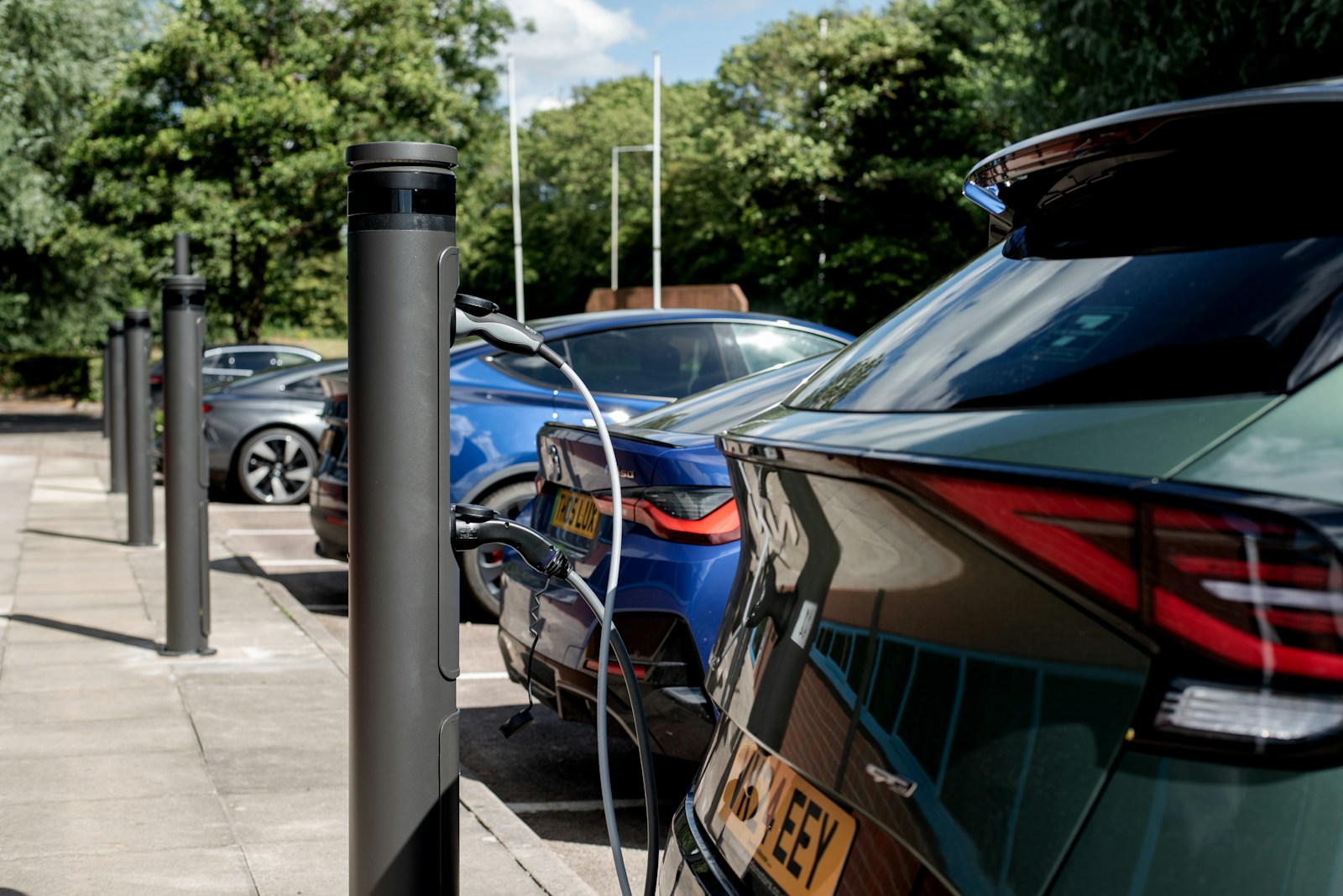
Photo: Ratio EV Charging
Leave a Reply