















Households will soon be able to buy balcony solar panels from high street retailers as the Government moves to cut energy bills and reduce reliance on fossil fuels.
A new wave of ‘plug-in’ solar panels is set to arrive in UK shops within months, offering households a simple, low-cost way to generate their own electricity and cut energy bills.
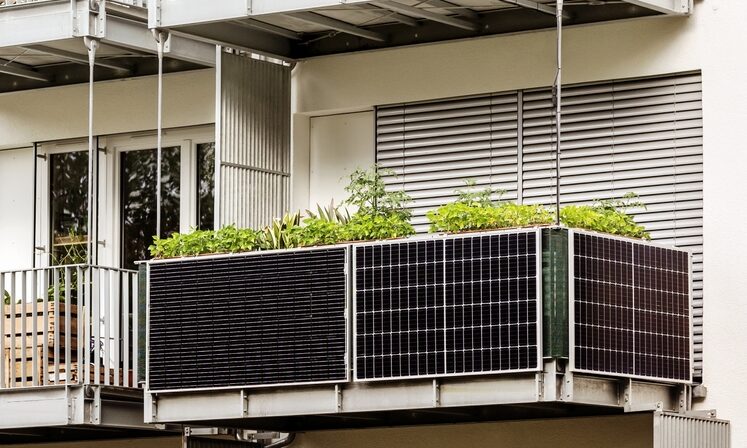
Historically, plug-in solar panels – such as those used on private balconies – have not been permitted for general use in the UK due to electrical safety regulations and grid connection standards.
Plug-in solar panels are designed to be plugged into a regular socket, feeding power back into a home’s electrical system. However, UK sockets aren’t typically designed for power input, only for output.
In Germany, where solar panels on balconies are a familiar sight, regulations have been adapted to allow small-scale plug-in systems with safety features such as smart plugs or grid-compatible inverters.
It has now been announced that retailers including Lidl and Amazon, alongside manufacturers such as EcoFlow, are working with the Government to bring this technology to UK consumers. This will enable the panels to be plugged directly into the mains socket without the need for a professional installer, feeding free solar power into a home’s electrical system and reducing the amount of electricity drawn from the grid.
The Government’s aim is to make plug-in solar available ‘within months’.
The announcement comes alongside new rules that took effect today implementing the Future Homes Standard, which requires the majority of new homes in England to be built with solar panels and clean heating as standard. Officials estimate these measures could save families up to £830 a year on energy bills compared to a standard home with an EPC rating of C, while cutting carbon emissions by at least 75%.
Responding to the new Future Homes Standard, UK100 chief executive, Christopher Hammond, said: ‘One of the very first things you do to solve a problem is to stop making it worse. Thankfully, that is exactly what the Government has done with the publication of these new standards. New build housing can finally be built with affordable energy running costs for the lifetime of the property — and in an uncertain world, that energy security matters more than ever.
‘But let’s be honest: 2028 is later than it should be. Every year of delay is another year of homes built to standards we’ll regret. UK100 and our local authority members have long argued that locking in common sense standards and future-proof technology is what consumers and communities want. This is a vindication of that. A ten-year policy gap has finally been filled. Now we need the government to hold the line.’
Greg Jackson, Founder and CEO of Octopus Energy, added: ‘People want to be free of these fossil fuel crises – since the conflict in the Middle East began, interest in solar has shot up 50%, heat pump and electric cars are also seeing surges.
‘Every solar panel, heat pump and battery cuts bills and boosts Britain’s energy independence. And the government’s latest steps can help cut the costs of electrification.
‘With solar, many homes can produce and use their own electricity, and cut their bills further by selling the excess back to us. With heat pumps and electric cars, their own electricity can slash heating and driving bills – stuff you simply can’t do with gas and petrol.’
Leave a Reply