















In Salt Lake City, air quality is more than an environmental issue. It’s a public health crisis. Smog is a pervasive force that affects how people live, work and thrive in the city, which the American Lung Association ranked 9th worst for ozone pollution in the U.S. this year.
‘Unfortunately, too many people in the Salt Lake City metro area are living with unhealthy levels of ozone and particle pollution. This air pollution is causing kids to have asthma attacks, making people who work outdoors sick and unable to work, and leading to low birth weight in babies,’ said Nick Torres, Advocacy Director for the American Lung Association, in a statement regarding the group’s 2025 State of the Air report.
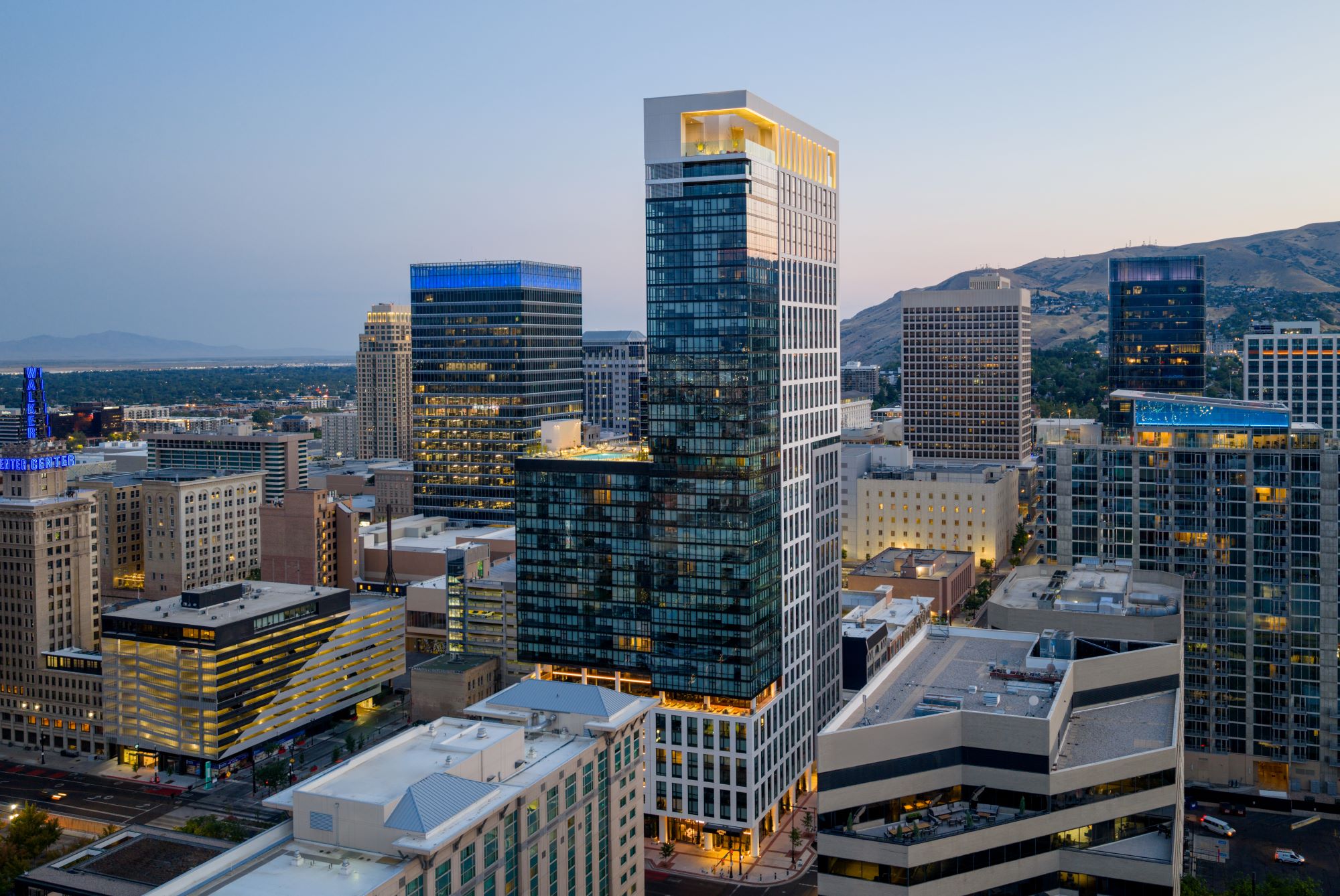
HKS prioritized health and well-being in the design of Astra Tower, a 41-story mixed-use development in downtown Salt Lake City. The project incorporates advanced technology and innovative design strategies to enhance local air quality and promote behaviors that further reduce pollution.
The design provides wide-ranging wellness benefits not just to Astra Tower residents but also to the broader community, showcasing the role of the built environment as an important contributor to public health and vitality.
As a working prototype for cities across the world, Astra Tower demonstrates how architecture can help confront and overcome a range of global challenges. The tower’s innovative design sets a precedent for enhancing urban living.
‘More and More of a Problem’
Salt Lake City is known for its stunning mountain views and natural beauty. However, the region’s unique geography creates an environmental challenge: air pollution. Surrounded by mountains, Salt Lake Valley forms a bowl-shaped terrain. This formation makes the region prone to temperature inversions, where warmer air traps cooler air below. Normally, air temperature decreases with altitude, but inversions reverse this pattern. Cool air stays trapped near the ground, holding pollution in and preventing it from escaping.
These inversions significantly worsen the city’s air quality, leading to health risks like respiratory and cardiovascular issues, particularly for children and the elderly. While the valley’s natural topography and seasonal weather drive inversions, rising emissions from vehicles, industries and buildings make pollution worse.
Emir Tursic, HKS Salt Lake City Office Director, said that when he moved to the city nearly 30 years ago, inversions occurred a handful of times each winter. ‘Now it happens more frequently, including during summers,’ Tursic said. ‘The city is growing, there are more cars on the road, it’s becoming more and more of a problem.’
When the region’s air quality is poor, area residents are encouraged to carpool, work from home and curtail outdoor activities. Tursic said he’s even had friends who, during their pregnancies, fled the city to spend a few days in the mountains during inversions, due to links between air pollution and pre-term births.
A New Standard
In collaboration with Utah Clean Air, the tower uses its skyline prominence to promote awareness of outdoor air quality issues in Salt Lake City. Connected to an air quality sensor, the building’s LED crown lighting changes color based on real-time conditions: white for good air quality and orange, red or purple for unhealthy air pollution levels. Matching lighting is displayed in the building’s elevators and on monitors in the lobby.
‘Astra Tower is really changing the perception of what design and architecture can do,’ said Tursic. ‘Being 41 stories, the tallest building in Utah, it’s hard to miss. We’re using that opportunity to make a statement. It’s always fulfilling when we can contribute to the community.’
Explore the case study to discover even more ways the tower safeguards the environment and enhances quality of life; these include a highly efficient water system, outdoor terraces and a variety of community spaces.
It’s a high-performing building that sets the bar high for other properties,’ said Tommy Zakrzewski, PhD, HKS Director of Building Engineering Physics. ‘This type of responsive and regenerative development paves the way for a new standard and higher expectations for livable and workable space.
‘It’s cool to be the first one out of the gate,’ Dr. Zakrzewski added. ‘And it’s even cooler to be the new measuring stick. I hope this project creates more progress, more innovation.’
This story was originally published by HKS
Photo: Jason O’Rear
Leave a Reply