



















A new study has demonstrated that vertical gardens, equipped with fans that force air through plants, can dramatically reduce indoor air pollution, with some plants removing over 90% of certain contaminants within minutes.
Researchers from the University of Seville tested five common houseplant species (peace lily, inchplant, heartleaf philodendron, climbing fig and spider plant) inside a sealed chamber where researchers introduced a mixture of pollutants including formaldehyde, nitrogen dioxide, sulphur dioxide and volatile organic compounds.
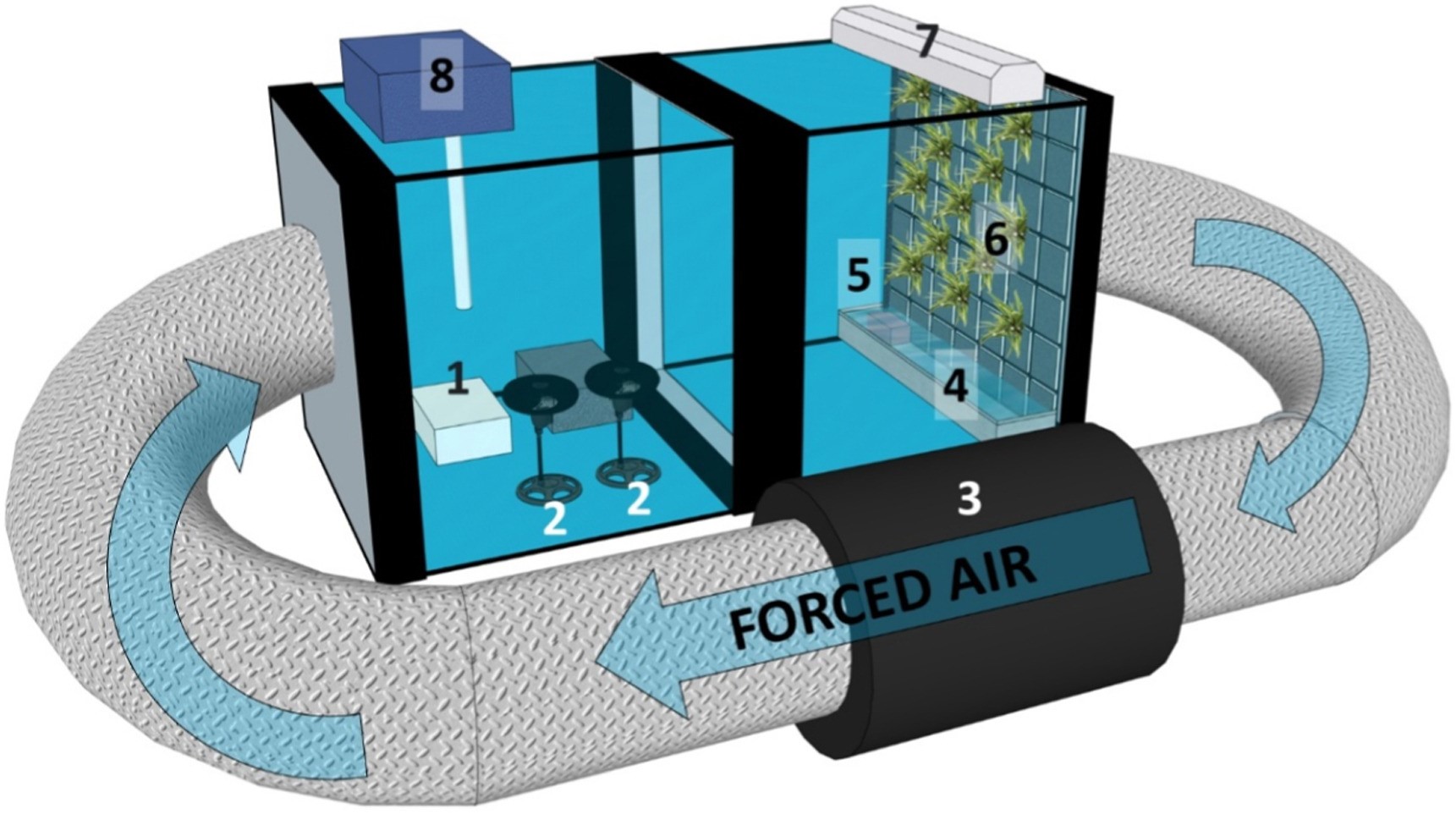
Within 15 minutes of pollutant injection, the active living wall achieved reductions of between 24 and 40% for total VOCs across all species. Formaldehyde and sulphur dioxide proved particularly easy to remove, with concentrations dropping by between 96 and 98% within 24 hours.
The peace lily emerged as the standout performer for nitrogen dioxide removal, achieving an extraordinary 92 to 94% reduction within the first 15 minutes of exposure – far outperforming the other species. Spider plants showed the fastest initial removal of formaldehyde, while all species performed similarly well for sulphur dioxide.
Perhaps most encouragingly, the plants’ pollutant-removing capacity did not diminish over time. Researchers added fresh contaminants daily for three consecutive days, and the plants continued to perform at similar or even improved levels – suggesting that these systems could provide reliable, long-term air purification.
‘This is very positive, since the exposure of occupants to undesirable compounds would be largely avoided,’ the researchers noted, emphasising that improvements in air quality occurred within minutes of pollutant release.
Unlike passive potted plants, active living walls use ventilation to force contaminated air through the vegetation and its root zone, dramatically increasing their air-cleaning capacity. The study’s closed-chamber design with repeated pollutant introductions more closely mimics real-world indoor conditions than previous single-pass experiments.
While the research demonstrates clear potential, the authors caution that laboratory results cannot be directly extrapolated to full-scale rooms. Nevertheless, they conclude that ‘the potential of active living walls to remove pollutants from the indoor environment has been clearly proved.’
Future research will explore whether mixtures of species can achieve even better results than single-species installations.
Leave a Reply