
















There’s no getting away from it, the whole of Venus would be an AQMA if there weren’t more pressing concerns, like sulphuric acid clouds and temperatures that can melt lead. But new research suggests that this hostile environment might not just be survivable, it could actually be useful.
Scientists from the Chinese Academy of Sciences and Macau University of Science and Technology have outlined a new system designed to ‘tame’ Venus’s atmosphere. Their idea combines filtering, gas enrichment and laser-based detection to both study the planet in detail and potentially turn its toxic air into valuable resources.
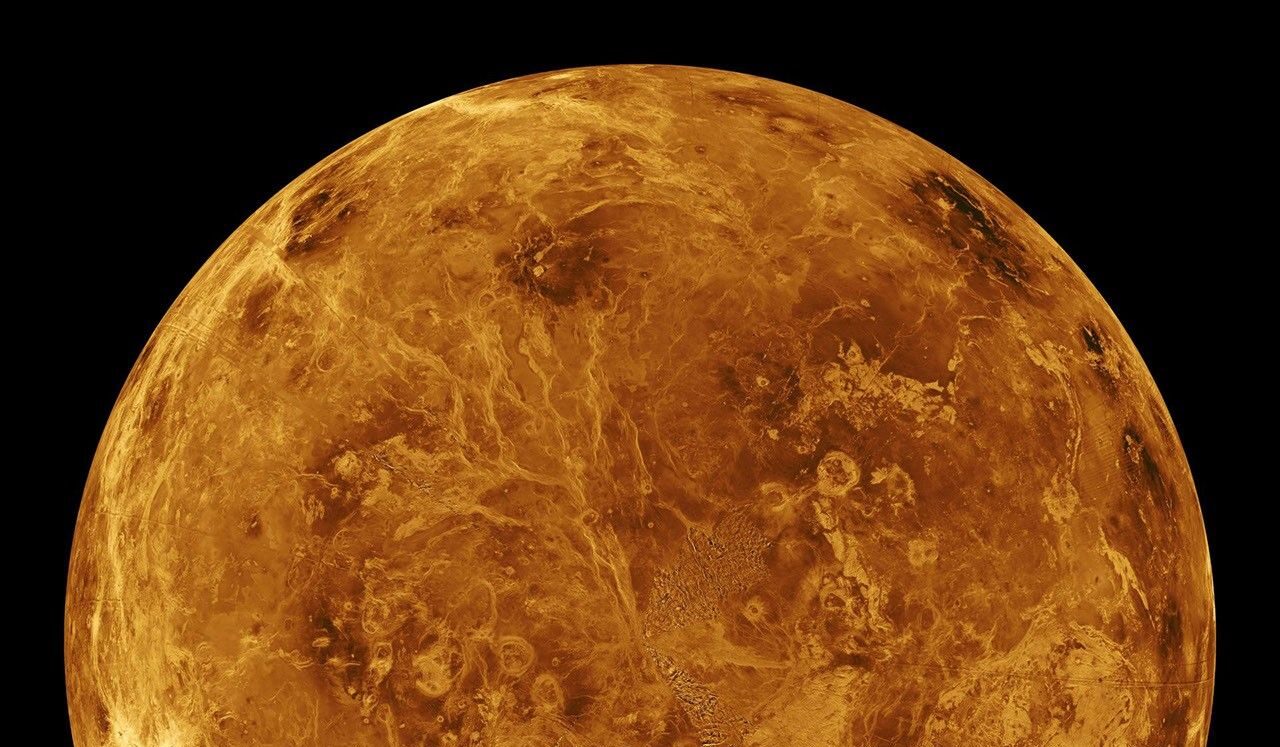
Right now, most of what we know about Venus’s atmosphere comes from remote sensing and a handful of short-lived probes. These have confirmed that carbon dioxide dominates, with traces of water vapor and sulphur dioxide. Other gases, like phosphine and ammonia – which some scientists have controversially linked to possible biological activity – remain unconfirmed.
One of the biggest challenges is the planet itself. Near the surface, pressures are about 90 times that of Earth and temperatures soar above 460°C. Even higher up, where conditions are more manageable, the air is filled with corrosive acid droplets that can damage instruments.
The new system tackles this head-on. First comes a three-stage filtration unit, designed to strip out sulfuric acid droplets and tiny particles with remarkable efficiency. Think of it as an ultra-tough air purifier, but one built for a planet where the air fights back. A built-in heating system helps keep the filters clean and working over time.
Next, the filtered gas is sent into an enrichment module. This step concentrates trace gases that are normally too faint to detect clearly. By removing most of the carbon dioxide and isolating rare molecules, scientists can boost the signal and get far more precise readings.
Finally, the system uses advanced laser spectroscopy – essentially shining highly controlled light through the gas – to identify its chemical makeup in extraordinary detail. This includes measuring isotopes, subtle variations of elements that can reveal clues about Venus’s history, such as how it lost its water or whether volcanic activity is ongoing.
But the implications go beyond science. The same gases being measured could also be used as resources. Water extracted from the atmosphere could be split into oxygen and hydrogen for breathing and fuel. Carbon dioxide could be converted into energy or propellant. Even sulphur compounds might play a role in future chemical systems.
In other words, Venus’s toxic air could double as a supply depot.
For readers concerned about air quality on Earth, the research provides some hope: if we can design systems to clean and analyse one of the harshest atmospheres in the solar system, it might raise the bar for what’s possible closer to home.
Venus may still be extreme, but with the right technology, its clouds might become less of a barrier and more of an opportunity.
The full research can be read here.
Photo: NASA/JPL-Caltech
In related news:
Leave a Reply