
















An alliance of eight charitable organisations has called on the UK government to ensure that England’s new integrated transport strategy, Better Connected, delivers tangible improvements for the estimated one in three adults without access to a car.
The Sustainable Transport Alliance, drawing on insights from thousands of community groups, argues that decisive action is now required to join up the country’s fragmented transport system. The group warns that without a clear focus on enhancing public transport, walking, wheeling, cycling, and shared community transport, a significant portion of the population risks being left behind.

Nearly three in ten UK adults do not have access to a car, a figure that rises to nearly half among those on low incomes, disabled people and minority ethnic groups. The alliance states that these populations benefit most from good quality, integrated transport networks.
The call to action comes alongside wider reforms to planning, rail, bus services, and ongoing transport devolution. The alliance is urging transport operators, authorities and housing and planning professionals to work together, prioritising connectivity between sustainable modes of transport over private car use.
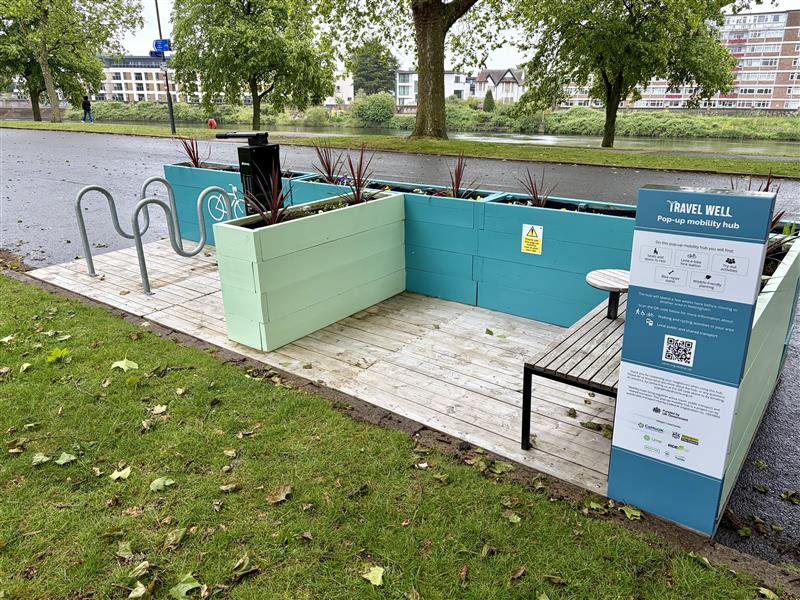
Specific recommendations include accelerating progress towards high-quality interchanges, active travel infrastructure, shared mobility schemes, aligned timetabling, integrated fares and real-time journey information.
The alliance also stresses that communities must be empowered to shape local transport improvements, contributing local knowledge to drive locally-led solutions.
The group highlights several benefits of creating an integrated, sustainable transport network. Transport has become the largest contributor to greenhouse gas emissions in the UK, with the majority coming from cars and vans. Shifting journeys onto public and shared transport, alongside walking and cycling, is presented as an effective way to cut congestion, air pollution, and emissions while helping meet Net Zero targets.
Additionally, evidence suggests that people who walk, cycle and use public transport spend more with local businesses. Building active travel into daily routines is also linked to improved health outcomes, including reduced body mass index and lower National Health Service costs.
Jools Townsend, chair of the Sustainable Transport Alliance, and chief executive of Community Rail Network, said: ‘An integrated transport strategy is a start, but for the millions trapped by ‘transport deserts,’ or tipped into poverty by having to run a car, it’s the delivery on the ground that matters.
‘We cannot have a world-class economy built on a third-class, disconnected transport network.
‘We need to seize on this new strategy, alongside devolution and rail and bus reform, to ensure real progress in improving transport for all and tackling our reliance on private cars, which has become a huge factor in the climate crisis, transport poverty, and unequal access to opportunity.’
Leave a Reply