

















Cycling in some of the world’s largest cities has continued to surge since the pandemic, with fatality rates dropping dramatically thanks to safer and improved infrastructure, a major new study has found.
Tracking data from 2005 to 2023, the research documents a striking fall in cyclist deaths per trip: down 88% in Paris, 82% in London, 62% in New York City, and 37% in Berlin, per 10 million bicycle journeys. Serious injury rates also fell by 62% in New York, 50% in London, and 37% in Berlin.
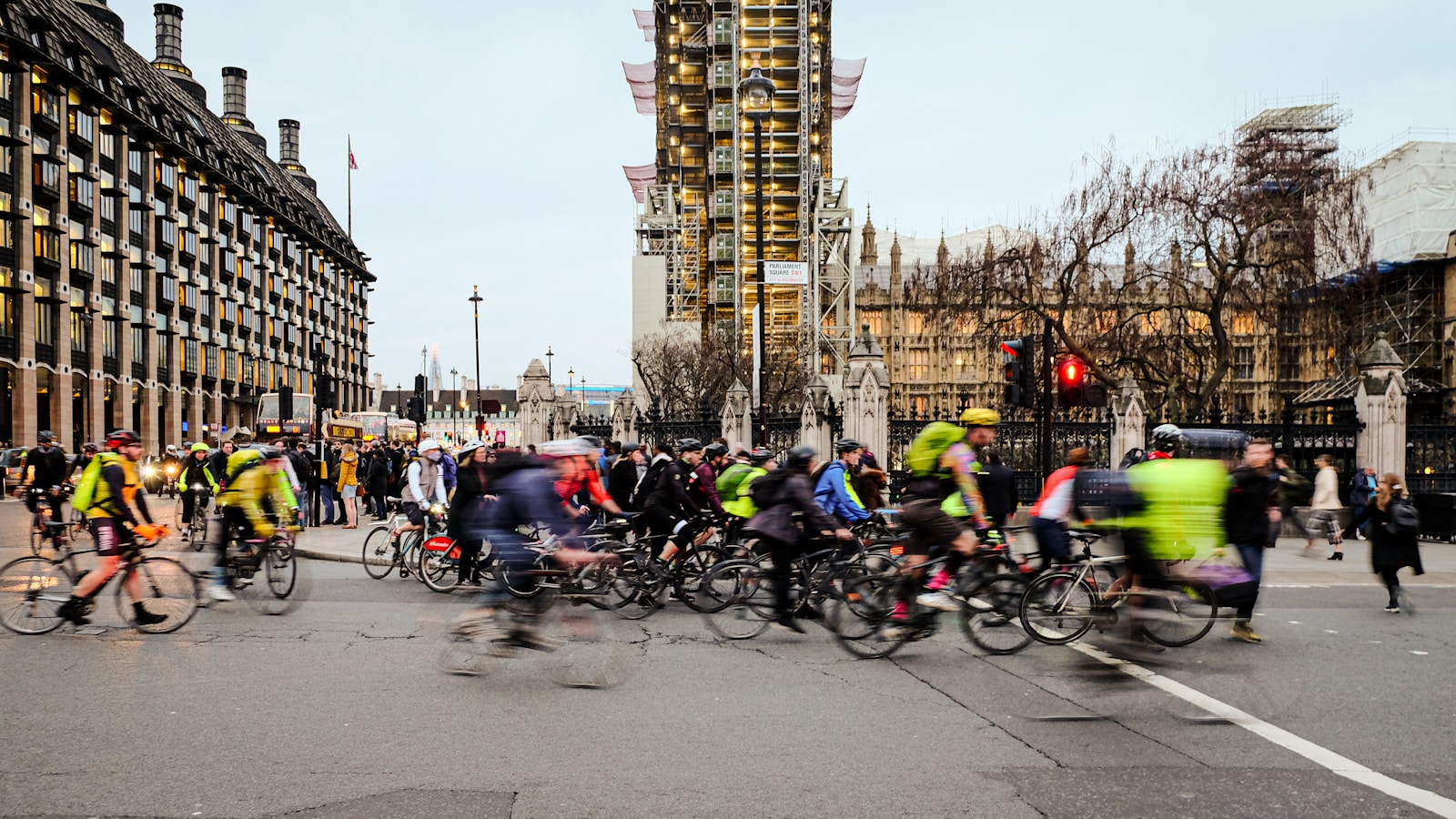
These safety gains have been achieved alongside a historic rise in cycling. Paris saw the most dramatic transformation, with the share of trips made by bicycle doubling from 5% in 2019 to 11% by 2023.
The findings, published in the International Journal of Sustainable Transport, come as fuel prices for motor vehicles continue to soar internationally.
Lead author Ralph Buehler, Professor in Urban Affairs and Planning, at Virginia Tech said: ‘The bike boom sparked by COVID-19 lockdowns was not a temporary phase; it has now become a permanent shift in how urban populations move.
‘While cycling levels had been increasing for three decades prior to 2019, the post-pandemic period saw an unprecedented acceleration in Paris and continued increases in the other three cities.
‘Our results point to a ‘safety in numbers’ effect where instead of more injuries and fatalities occurring due to more trips, the opposite has occurred.
‘In all four cities, the cornerstone for this achievement has been made through the expansion and improvement of cycling infrastructure, especially a focus on cycleways separated from motor vehicle traffic.
‘As experience in these cities shows, it is crucial that cycling infrastructure be integrated into a continuous network.’
London’s results were supported by the rapid expansion of its Cycleway network and Low Traffic Neighbourhoods, which were associated with a 35% decrease in all injuries.
New York City expanded its protected bike lanes from 223 km in 2019 to 413 km by 2023. Berlin, where nearly one in five trips (19%) is now by bicycle, adopted a new Mobility Law in 2018 and built 134 km of new bikeways between 2020 and 2023. Paris installed 503 km of bike lanes between 2005 and 2020, with 77% of pandemic ‘pop-up” lanes built with high-quality protection.
The study emphasises that pro-cycling measures must be accompanied by car-restrictive policies. ‘Pro-cycling measures alone will not be nearly as effective as when combined with car restrictions,’ the authors note.
Co-author, John Pucher, Professor Emeritus, at Rutgers University said: ‘The data show that building high-quality, interconnecting cycling infrastructure is key to attracting not only more cyclists, but a greater demographic diversity of cyclists, including women, children, and older adults.
‘The transition from emergency pandemic measures to permanent, high-quality cycling networks has fundamentally altered the safety profile of these cities. We are seeing a virtuous cycle: safer roads encourage more people to bike, and more people biking makes the roads even safer.’
While the results are positive, the researchers caution that cycling transformations remain incomplete, with spatial and social inequalities persisting. Nevertheless, the evidence suggests that the pandemic-fuelled ‘bike boom’ is not a temporary phase but a permanent shift in how millions of urban residents move.
The full research can be read here.
Photo: Ayad Hendy
Leave a Reply