
















London and Berlin face losing over 100,000 parking spaces each as cars grow longer and wider every year
European cities are running out of street space, not because there are more cars, but because the cars themselves are getting bigger. A new report warns that the relentless trend toward oversized SUVs could eliminate up to 14% of on-street parking across urban areas by 2040.
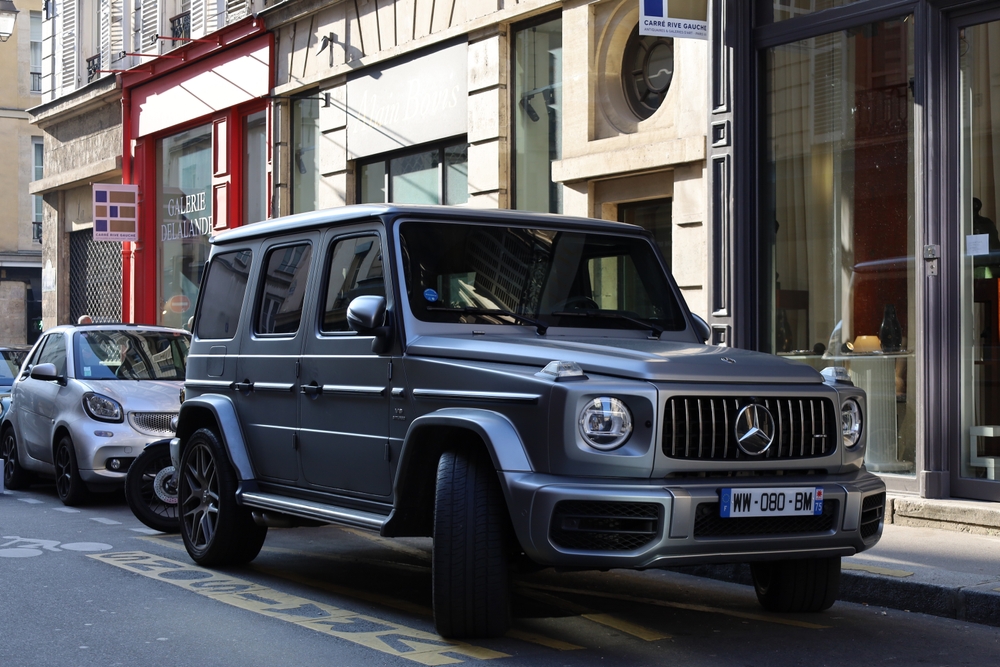
The study, published by Transport & Environment (T&E) and Clean Cities, analysed the growth of new cars since 2000. They found that the average length of newly sold vehicles increases by 1.2 cm every year, while width and bonnet height each rise by 0.5 cm annually. At this rate, longer and wider cars will drastically reduce how many vehicles can park end-to-end along city streets.
London is projected to lose between 72,000 and 118,000 on-street parking spaces by 2040. Berlin faces similar losses of up to 117,000 spaces, while Rome could see a reduction of 95,000 spaces. Madrid, Warsaw and Paris are also set to lose significant capacity.
But the problem goes far beyond parking. The study compared current trends against a ‘right-sizing’ scenario, where policies return new car sizes to 2015 levels. Without intervention, the gap in road deaths among pedestrians, cyclists and other vulnerable users would widen to an additional 400 fatalities annually by 2040.
Children are particularly at risk. Rising bonnet heights, which are projected to reach an average of 86.2 cm by 2040, mean young pedestrians could be struck in the head or chest rather than the torso. The report warns that 40% more child pedestrians could be killed each year under current trends compared to the right-sizing scenario.
The report points out that despite family sizes and car occupancy declining, carmakers have moved away from producing small cars to extract higher profits from larger vehicles.
Lucien Mathieu, cars director at T&E, said: ‘Car manufacturers have pursued a strategy of larger, more profitable vehicles over smaller models. After 25 years of relentless growth, our roads are increasingly dominated by huge SUVs that pose a physical danger to everyone else. The result is that cities and towns are under pressure to make parking spaces bigger and then sacrifice public space to replace the lost parking.’
The groups are calling for urgent policy changes, including a cap on bonnet heights (85 cm) and vehicle widths (192 cm) for new models from 2033. They also urge tax reforms to discourage oversized vehicles, updated safety tests for child visibility, and city-level parking charges based on vehicle size and weight.
Barbara Stoll, Senior Director of Clean Cities said: ‘You can’t argue with physics: bigger cars mean more danger on our roads, especially for children and people walking around. This trend isn’t inevitable; it’s marketing over safety and the public good. Regulators need to wake up and set maximum limits for the size of new cars. Cities and governments can act now by structuring parking charges and taxes to reflect the risk that bigger cars impose.’
Photo: Shutterstock
Leave a Reply