

















The government has announced a new package of health support for firefighters, including regular health checks and dedicated research into the unique risks faced by those serving in the profession.
Health and Social Care Secretary Wes Streeting unveiled the Firefighters Concordat on Health and Wellbeing, an agreement between key organisations to improve prevention, early diagnosis and support for firefighters during and after their service.
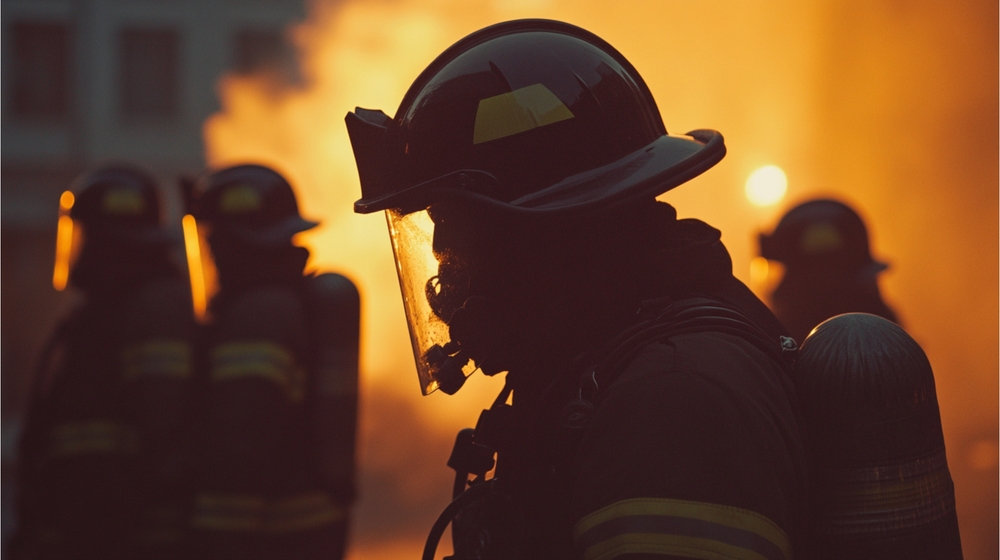
Under the plans, every firefighter in the country will receive consistent, regular health checks, recognising the unique hazards they face. The government will also fund research through the National Institute for Health and Care Research to build the evidence base on firefighter health, including mental health, musculoskeletal conditions, cancer, and cardiovascular disease.
The announcement follows concerns that, despite the well-documented dangers of tackling burning buildings and attending road traffic incidents, there is limited UK research into the long-term effects of working in the fire service.
The Concordat will also focus on underrepresented groups within the profession, including women, who have historically had to use protective equipment not designed for them. Firefighter occupation will be recorded in NHS records, enabling doctors to make better-informed decisions about their care.
Last year AQN spoke to Anna Stec, a Professor in Fire Chemistry and Toxicity at the University of Central Lancashire who, having begun by researching acute toxicity – the immediate danger to human health – became a world expert in chronic toxicity, the long-term dangers of regular exposure to toxins.
She explained: ‘The obvious challenge in protecting firefighters in the complexity of fire itself. It provides a huge cocktail of different types of toxins, depending on what it’s burning. Typically you’ve got two factors affecting the types and concentrations of those chemicals: the size of the fire and what’s burning.
‘For example, a burning PVC window will release a completely different cocktail of chemicals to upholstery furniture, but there are chemicals that are released in every single fire and those chemicals will be carcinogenic. Benzene, for example, will be released in every fire and it’s got an association with leukaemia. And there will be polycyclic aromatic hydrocarbons, some of which are also classified as carcinogens.’
Following yesterday’s announcement, Steve Wright, General Secretary, Fire Brigades Union said: ‘The commitment from the Health Secretary to increase health monitoring for firefighters is a very welcome and important step forward.
‘It reflects the constructive work that has taken place between the union and government, and shows what can be achieved when firefighters’ voices are properly represented.
‘Our members put themselves in harm’s way to protect the public, often in extremely challenging and dangerous conditions. It is right that their health and safety is recognised and taken seriously.’
Leave a Reply