












Air pollution may be turning ants against their own families, according to new research which suggests that such pollution could break down insect societies.
Scientists from the Max Planck Institute for Chemical Ecology have discovered that ozone can interfere with the chemical signals ants use to recognise each other. When those signals are damaged, ants may mistake their own nest mates for intruders and attack them.
Lead author Nan-Ji Jiang said: ‘Ants learn their colony’s odour immediately after hatching. Later, they compare the smell of other ants with this familiar scent. We wanted to know if exposure to increased ozone levels would alter the ants’ odour signature, resulting in aggression upon their return to the colony. The crucial question for us was: could air pollution disrupt the delicate social structure of ant colonies?’
To test this, the researchers exposed ants from six species to ozone concentrations of 100 parts per billion – levels commonly recorded in polluted areas during summer. After just 20 minutes, the ants were returned to their colonies. In five of the six species, nest mates reacted with threats and aggressive behaviour towards the ozone-exposed ants, despite them belonging to the same colony.
The team then analysed whether ozone exposure had altered the chemical composition of the ants’ body odours.
Markus Knaden, who leads the Odor-guided Behavior research group explained: ‘This was difficult to measure because even in uncontaminated ants the amount of alkenes is extremely low. However, we were able to measure these compounds on individual ants using thermodesorptive gas chromatography.’
Ants rely on a specific mix of chemicals on their bodies to identify members of their colony but ozone reacts with these chemicals, breaking them down and effectively erasing an ant’s familiar smell.
Knaden said: ‘We were surprised by how dramatic the change in behaviour was. Even tiny amounts of these chemicals are crucial for ants to recognise who belongs in the colony.’
The effects went beyond fighting. In one species, ozone-exposed ants avoided their own young, and many larvae died. The researchers believe this happened because the chemical signals needed for caring for the young were disrupted.
Although the study focused on ants, previous research has shown that ozone can also interfere with communication in other insects, such as flies. Together, the findings suggest that air pollution may be affecting ecosystems as a whole.
Bill Hansson, one of the study’s lead authors said: ‘Oxidising pollutants such as ozone and nitrogen oxides are often discussed because of their harmful effects on humans. However, we should also be aware that these man-made pollutants can also cause significant damage to our ecosystem.’
The full research can be read here.
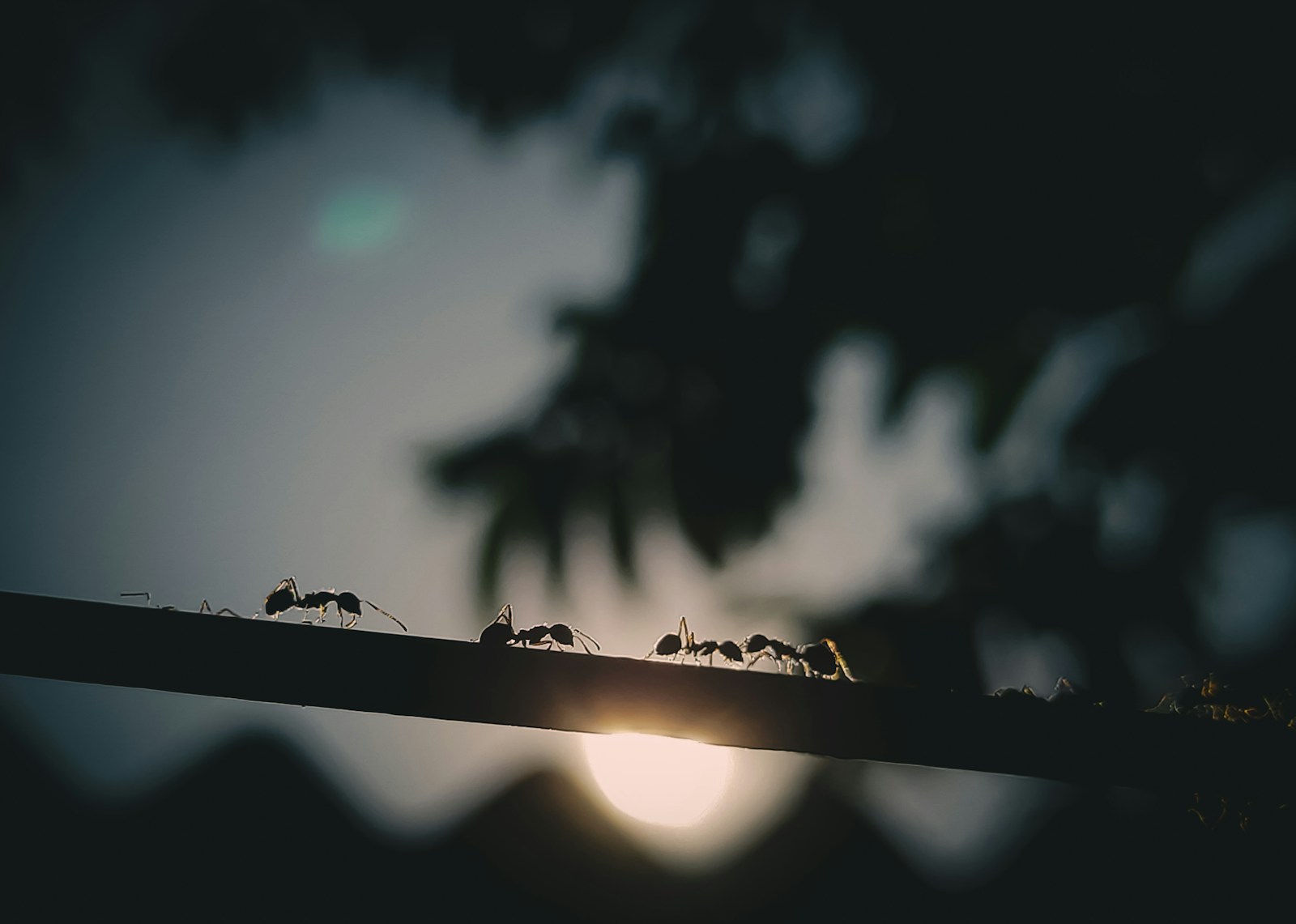
Photo: Prabir Kashyap / unsplash
Leave a Reply