















A change in the daily timing of stubble burning in India has created a massive blind spot in national monitoring, leading to a dangerous underestimation of the problem, according to new analyses by NASA scientists and iFOREST.
For decades, farmers in Punjab, Haryana and neighboring states have burned leftover rice stubble after harvest between October and December, contributing to the thick, toxic haze that blankets northern India.
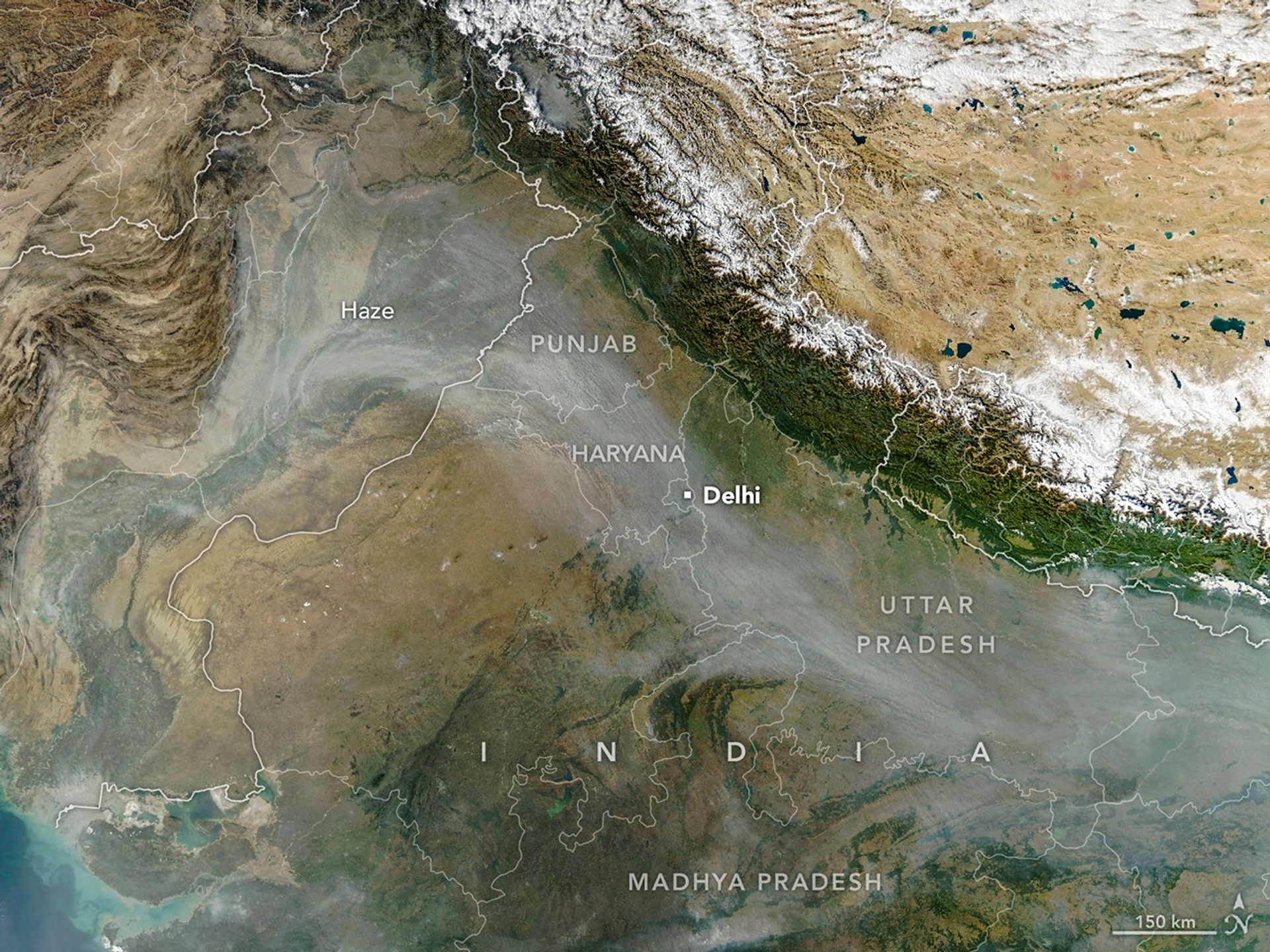
However, a new behavioral change has caught air quality experts off guard. While satellites previously detected most fires in the early afternoon, farmers are now burning predominantly in the late afternoon and evening.
This change has rendered India’s primary official monitoring system – which relies on MODIS and VIIRS satellites that pass overhead between 10:30am and 1:30pm – almost useless.
Hiren Jethva, a NASA atmospheric scientist, who used high-frequency data from a geostationary satellite to confirm the shift, said: ‘Farmers have changed their behavior. Most stubble fires now happen between 4pm and 6pm, meaning systems relying on older satellites miss many of the fires.’
The consequences are stark. The 2025 status report from the International Forum for Environment, Sustainability and Technology (iFOREST), reveals that over 90% of large farm fires in Punjab now occur after 3:00pm, compared to just 3% in 2021. This means official government data, which reports a dramatic 90% decline in fires, is dangerously misleading.
Chandra Bhushan, CEO at iFOREST, said, “Our analysis provides incontrovertible evidence that India’s current stubble-burning monitoring system is structurally misaligned with ground realities.
‘Farmers have shifted burning to the late afternoon, while our monitoring relies on satellites that capture active fires only during a narrow time window – 10:30am to 1:30pm. The result is a massive underestimation of fires, emissions, and their contribution to air pollution in Delhi. We urgently need to overhaul the system.’
Despite this monitoring failure, there is some genuine progress. iFOREST’s analysis of burnt areas shows a 25–35% reduction in Punjab and Haryana since their peak years, thanks to government efforts to promote alternatives like crop residue management machines.
The combined findings reveal a dual crisis: while progress is being made on the ground, air quality forecasting and policymaking are being hamstrung by incomplete data. As NASA scientist Pawan Gupta notes, stubble burning can contribute 40-70% of Delhi’s pollution on a given day during the peak season. Evening fires are particularly harmful, as weaker nighttime winds allow pollutants to accumulate closer to the ground.
On the policy road ahead, Ishaan Kochhar, Programme Lead, iFOREST said: ‘We cannot manage what we do not measure accurately. Policy decisions are currently being shaped by incomplete information.
‘To solve the stubble-burning problem in the Indo-Gangetic Plain, the government must urgently reform the monitoring protocol to integrate burnt-area mapping and geostationary data. We also need to expand our focus beyond Punjab and Haryana to emerging hotspots in Uttar Pradesh and Madhya Pradesh.’
Image: NASA
Leave a Reply