














A new modelling study suggests that even if Delhi fully bans crop burning and slashes local emissions, its winter air will remain dangerously polluted without coordinated action across three states.
Researchers from IIT Delhi used a high-resolution atmospheric model to test whether existing policies could clean Delhi’s air if applied only within the National Capital Region (NCR). The answer, published in npj Clean Air, is a clear no.
During the peak burning months of October and November, banning crop-residue burning exclusively inside the NCR cuts Delhi’s PM2.5 levels by a meagre 2 to 3%. That’s because the real source lies upwind: smoke from Punjab and Haryana travels hundreds of kilometres straight into the capital.
The study finds that extending the same ban across the full airshed – Punjab, Haryana and the NCR – yields a three- to four-fold larger benefit, reducing PM2.5 by roughly 10%.
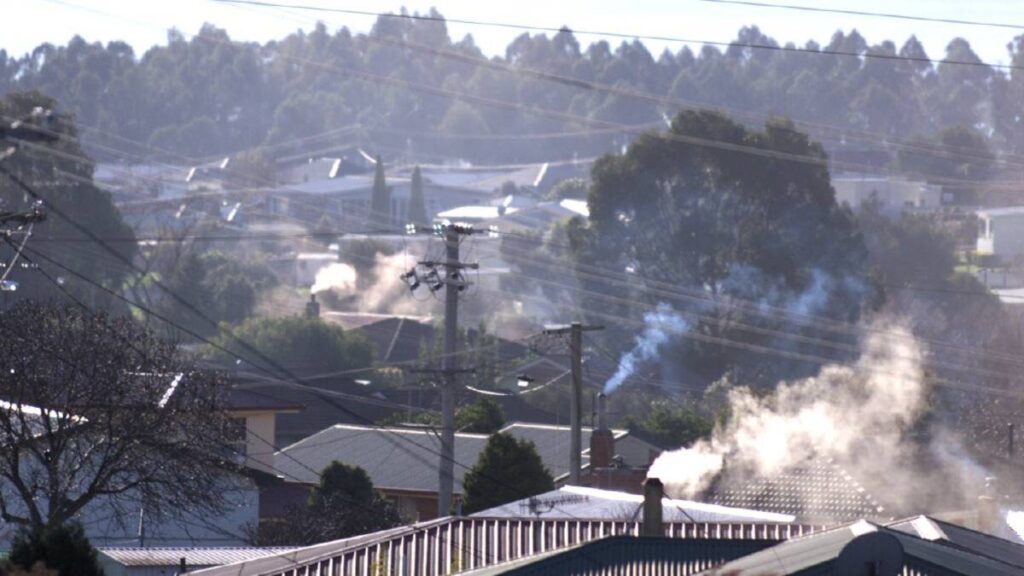
But even that is only a start. The largest single contributor to Delhi’s year-round pollution is not farm fires but the residential sector: household cooking and heating with solid fuels like wood and dung cakes. Cutting these emissions by half, while simultaneously banning crop burning across the airshed, lowers PM2.5 by around 30%.
Adding transport and industrial cuts such as stricter vehicle standards, cleaner fuels and better technology, pushes reductions toward 44% during winter months.
Significantly, these benefits persist even under the worst meteorological conditions: shallow boundary layers, stagnant air, and dry skies that normally trap pollution. Structural emission reductions work regardless of the weather.
Under a fully coordinated airshed strategy, the number of ‘very poor’ air quality days in Delhi drops from 67 to 36 over a five-month period, while ‘satisfactory’ days rise to 78 – more than half the study period.
The authors argue that India must move beyond city-centric emergency measures toward a formal airshed governance framework, where neighbouring states coordinate on residential, transport, industrial and agricultural emissions together.
Without that, Delhi’s winter smog will remain a public health crisis, no matter what the capital does on its own.
The full research can be read here.
Photo: Touann Gatouillat Vergos / Unsplash
Leave a Reply