











For his latest project, environmental film-maker Mark Dixon decided to focus on the air quality in Pittsburgh, a city he moved to in 2006. The film is a work in progress but here Mark explains how he got to this point.
 What is the moment a bud transforms into a flower? The process is often so slow that we don’t see it happen–we notice after the fact. With the aid of time-lapse photography, however, we can condense time and see the transformation at a pace that stirs the soul. It is not only beauty that grows more apparent with the compression of time; this is true of violence, too.
I have spent the last nine years working on a documentary film called “Inversion: The Unfinished Business of Pittsburgh’s Air.” Inversion tells the story of a community in the Pittsburgh region struggling to address the slow violence of air pollution. Both the beauty and the violence of this story unfold very slowly in the real world, but it is my hope that the power of documentary film to condense time stirs viewers towards action, towards clean air, and maybe even a more liveable planet.
The slow-roll stories of environmental injustice have not always been my focus. It’s hard for me to pinpoint the exact moment I became an environmentalist, but a little condensed retrospection might help. I didn’t take any environmental classes in college in the 90s. I shrugged off the suggestion that capitalism came at a cost. But then, in 2005, I attended Vice President Al Gore’s “Inconvenient Truth” lecture, outlining the climate consequences in store for us. At one point, Gore posed a question to the audience, speaking as a theoretical grandchild to all the people there. “What did you do,” my would-be grandchild asked me, “when you knew the true severity of climate change?”
I sat uncomfortably with that question through the rest of the program, trying to come up with an answer. What would I do? That evening I resolved to find an answer. I started exploring all things environmental. I went to the San Francisco Green Festival where I met people who had fully realigned their life and career aspirations with a liveable planet. This was the signal I needed. I quit my job at a technology start-up, emptied out my schedule, and prepared for… well… I didn’t know what.
My younger but often wiser brother encouraged me to attend a silent meditation retreat before I made any major decisions. The retreat would involve no talking. No eye contact. Just ten days of inward reflection with occasional instructions from the facilitators. I took the challenge.
A few days into the retreat, the idea for a 50-state environmental road trip dropped into my head. This idea became my first film project: YERT – Your Environmental Road Trip (YERT.com). My old college buddy and his wife, Ben and Julie Evans, and I filmed our way through 50 states in 52 weeks, releasing piles of short films distilled from 600 hours of interviews with 800 people from all walks of life – activists, scientists, authors, dreamers, and everyday people-on-the-street. We ultimately released a feature-length documentary film that made its way to Netflix. YERT changed our lives forever.
As the YERT promotional tours waned, I found that non-environmental work was no longer satisfying, so I refined my filmmaking craft and cobbled together a living as an environmental filmmaker. In 2014, I created and released The Power of One Voice, a short documentary film examining the life of Rachel Carson 50 years after the release of her iconic book, Silent Spring.
In 2015, I crowd-funded my way to the Paris Climate Summit for COP21 as a citizen journalist. The climate crisis, I discovered, was even more dire than I had realised. I had to do more. But not in a “travel all over” kind of way. There was a piece of the climate struggle waiting for me at home in Pittsburgh: air pollution.
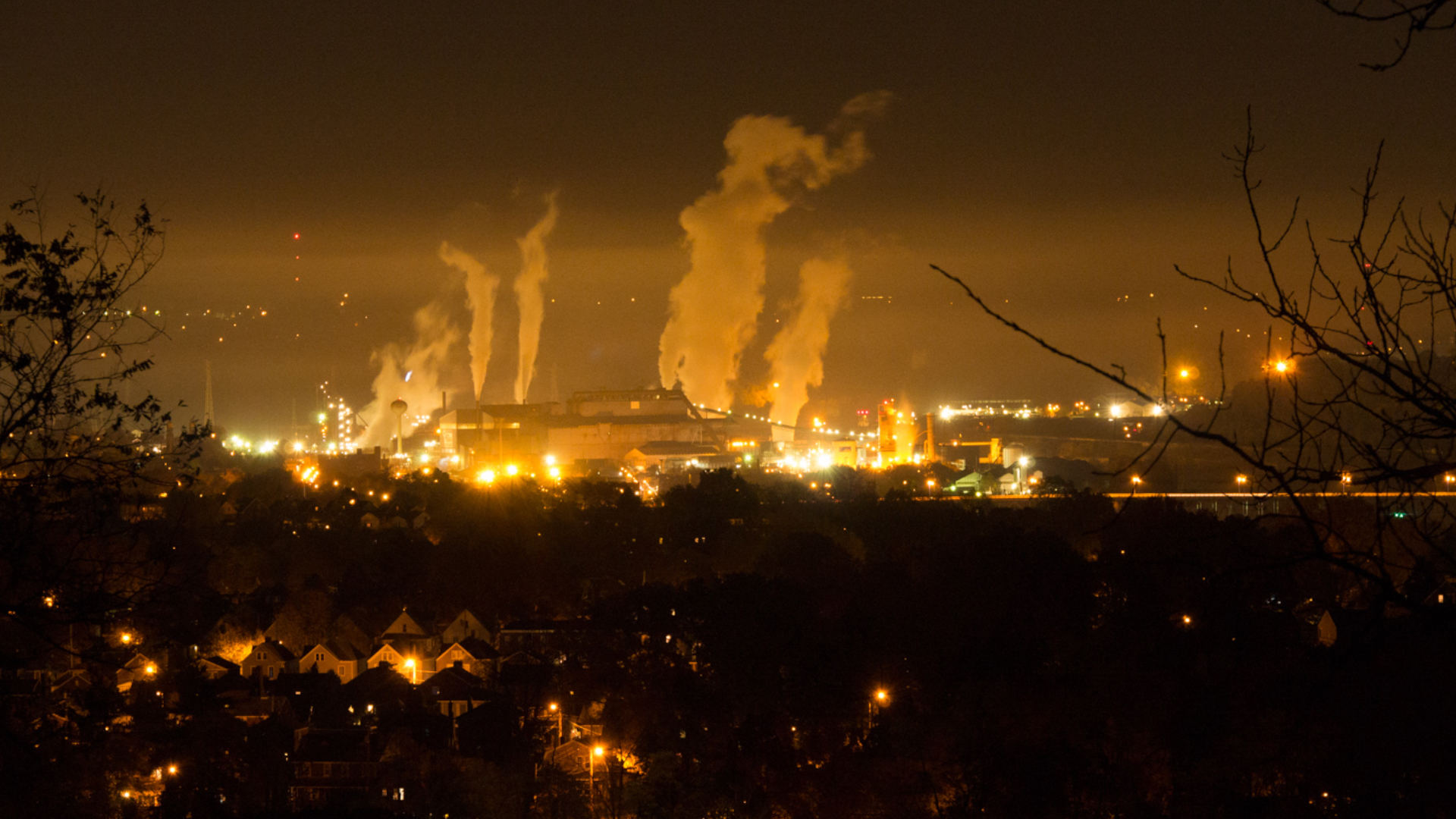
You may believe that Pittsburgh has cleaned up its air since the dirty old steel mill days of the past, but ongoing pollution from heavy industry means that the air quality in our lovely city ranks quite poorly among municipal regions in the United States. I understood this viscerally. I regularly stopped short on my jogs or changed directions to avoid getting caught up in foul, rotten-egg-scented tendrils of hydrogen sulphide wafting across the region.
I knew that the combustion of fossil fuels in aging industrial infrastructure was causing suffering in my chosen home while degrading the prospect of a liveable climate for everybody on earth. Here was a situation ripe for change. I decided to explore the issue with my filmmaker hat on.
I started filming everything I could related to air pollution: rallies, lectures, town halls, and a whole lot of health department meetings. I started my work compressing the story. I released short videos of public testimonials, condensing long meetings into short sound bites that might motivate action. In Pittsburgh’s industrial heyday, air pollution was easy to see, as dark plumes spewed out of factories all up and down the Mon Valley. How could I help my neighbours “see the air” and the pollution in it, now that much of the visible smoke was gone?
I found my answer in dozens of low cost monitors, spread across the region, that created a real-time air quality map. I embedded myself into a robust community of advocates, scientists, lawyers, foundations, and volunteers all working hard for clean air. They were working on smell reporting apps, cameras recording pollution emitted from industrial facilities, coordinating rallies and generally making the case for clean air every day.
But many politicians and community members alike were reluctant if not fearful to speak up about pollution. Over the past hundred years or so, industry had worked hard to build its own rich ecosystem of influence in the region. Then, on Christmas Eve of 2018, something happened that began to unravel that influence just a little. A fire broke out at the Clairton Coke Works.
The fire knocked out key pollution control equipment for roughly 100 days. Emissions of coke oven gas, a byproduct of steel manufacturing, are among the most potent pollutants considered by the EPA. US Steel was forced to explain what went wrong to the community and local government leaders. Air quality and health advocates now were joined by community members and even several politicians in criticism of the industrial giant in ways that had not happened before.
This type of pollution was no longer acceptable. Our local regulator, the Allegheny County Health Department, found itself caught between a polluter unwilling to meet the requirements of its permit and a community unwilling to tolerate lawless pollution. These events unfolded gradually over months and then years. For the casual observer, it would be easy to forget what had been asked, what had been promised. My work as a storyteller was to condense the pivotal moments of slow violence and the beautiful community response into a clear and stirring film.
What I am left with is the story told in Inversion. Soon, I will send it out to do its work, trusting that creative community members will learn from this story and walk away with new tools to improve the conditions where they live – in Pittsburgh and beyond, both now and well into the future.
Find out more about the project here: https://inversiondoc.com
Leave a Reply