














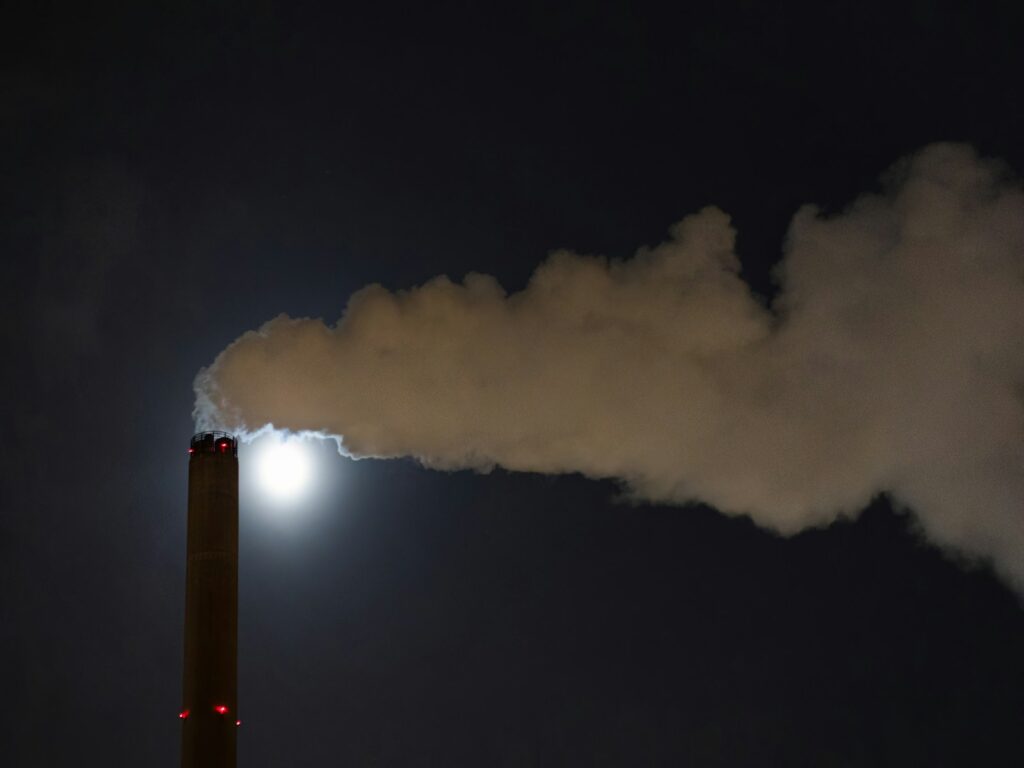




The smoke that darkened Los Angeles skies during the January 2025 Eaton fire carried a pollution load so vast that it dwarfed the entire county’s typical daily emissions from human activity, new research has revealed.
A study led by USC Dornsife College found that the fire, which burned through parts of Altadena and Pasadena, released carbon monoxide at rates more than 20 times higher than Los Angeles County’s average daily man-made emissions.

William Berelson, professor of Earth sciences at USC Dornsife and a co-author of the study, said: ‘People could see the smoke, but they couldn’t see the scale of the pollution it was carrying. This one fire was producing carbon monoxide on a scale that exceeded the entire county’s usual daily emissions from human activity.’
The research, which combined satellite imagery, computer modeling of smoke plumes and ground-based air measurements, estimated that the Eaton fire released approximately 153 million kilograms of carbon. Significantly, the study found that burning homes and other structures contributed more to the fire’s carbon emissions than trees and shrubs, helping to explain why the blaze had such a far-reaching impact.
Smoke from the fire reached downtown Los Angeles within hours of ignition and moved westward, hitting coastal areas several hours later. At multiple monitoring sites, levels of PM2.5 exceeded the Environmental Protection Agency’s 24-hour health standard for one to three days.
The researchers used data from the Carbon Census network of sensors deployed around Los Angeles by Berelson’s team, alongside readings from low-cost and reference-grade instruments. This multi-modal approach allowed them to track the smoke’s movement in near real-time and estimate what actually burned.
Their analysis revealed that the Eaton fire consisted of two distinct burning periods, which consumed structures and vegetation differently. During the most intense burning, emission rates of carbon monoxide were estimated to be between 21 and 38 times greater than average daily anthropogenic contributions. For carbon dioxide, the rate was roughly comparable to human-caused emissions.
The study also noted spikes in methane concentrations, pointing to wildfire-driven destruction of natural gas infrastructure – a uniquely urban dimension of the disaster.
By contrast, early emissions from the Palisades fire, which broke out the same day, were largely carried offshore by winds, sparing much of the city from its worst effects.
The findings underscore that urban wildfires must be seen as citywide air-quality emergencies with significant climate and public health consequences. Researchers at the Keck School of Medicine are now studying the respiratory, psychological, and other health effects on exposed populations.
Photo: Jessica Christian
Leave a Reply