
















A major new study has raised fresh concerns about the impact of nitrogen pollution, warning that much of China’s environment is under severe strain from levels that exceed what ecosystems can safely handle.
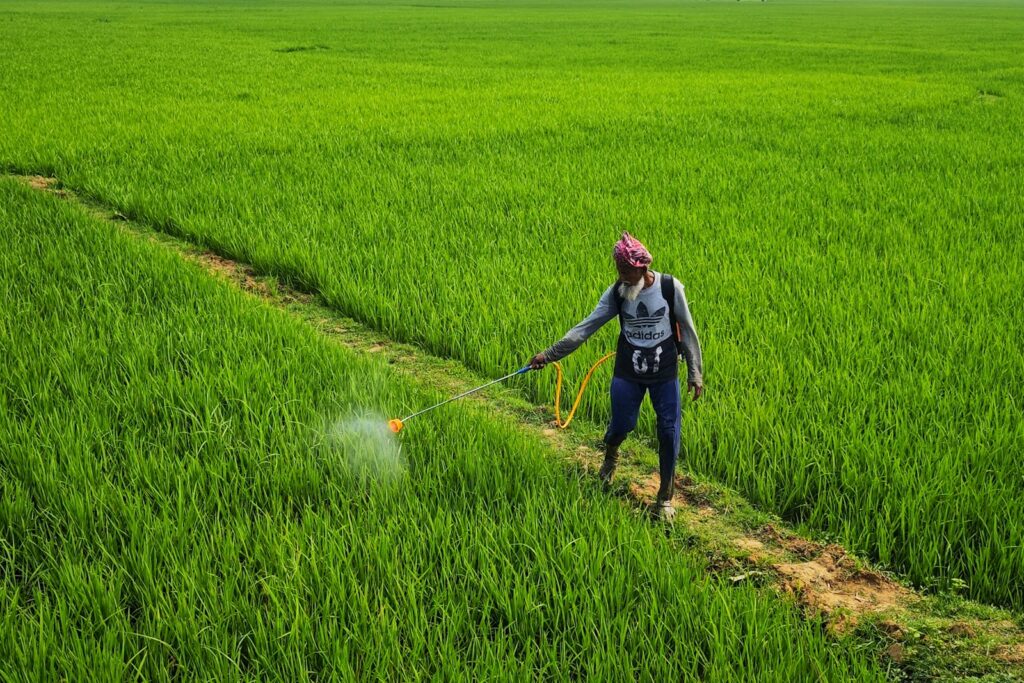
Nitrogen is essential for growing food, with synthetic fertilisers supporting more than half of the world’s population. But when too much of it escapes into the air, soil and water, it can cause widespread damage, from toxic smog and polluted drinking water to algae blooms that suffocate rivers and lakes.

Scientists often track this through the concept of planetary boundaries – a way of measuring whether human activity is pushing Earth’s natural systems beyond safe limits. According to the new research, the global nitrogen cycle is now one of the most critically overstretched.
In a study published in National Science Review, a team led by Baojing Gu at Zhejiang University took a new approach to the problem. Instead of applying a single national limit, they calculated ‘safe’ nitrogen levels for each of China’s 2,847 counties – recognising that different environments can tolerate different amounts.
They found that by 2020, nitrogen losses in China exceeded safe levels by:
- 54% for air pollution
- 262% for runoff into rivers and lakes
- 258% for contamination of groundwater
Overall, around 69% of the country’s land area breached at least one of these limits. Crucially, those areas are home to an estimated 1.3 billion people – about 96% of the population – raising concerns about both environmental damage and public health.
To tackle the issue, researchers reviewed hundreds of existing studies and identified 72 measures that could reduce nitrogen pollution across farming, industry and waste systems. These include improving fertiliser use, better managing livestock waste and upgrading treatment of human sewage.
Combined into what the team calls a cross-system strategy, these changes could cut nitrogen emissions by nearly half.
The researchers say the plan would not only benefit the environment but also make economic sense. While implementation would cost an estimated $102 billion, the wider benefits – such as healthier ecosystems, fewer health impacts and improved crop yields – could total around $256 billion.
However, the study also highlights a major challenge: cleaning up water pollution is far harder than reducing emissions into the air.
With the proposed measures in place, more than 80% of counties could bring air pollution back within safe levels. But over half would still fail to meet safety thresholds for rivers, lakes and groundwater.
Researchers say this is due to stricter water quality standards, long-standing pollution that has built up over time, and fragmented systems for managing water resources.
Because of this, the study argues that technical fixes alone will not be enough, particularly in the worst-affected areas.
Instead, it points to the need for broader societal changes, such as reducing food waste, cutting back on animal-based diets, improving recycling of manure and better linking policies on air and water pollution.
The researchers say their approach offers a new way of thinking about the problem. Rather than focusing only on total nitrogen use, it considers whether local environments are being pushed beyond what they can safely absorb.
They argue this could help governments design more targeted and effective policies — protecting both food production and the health of ecosystems in the long term.
The full research can be accessed here.
Leave a Reply