













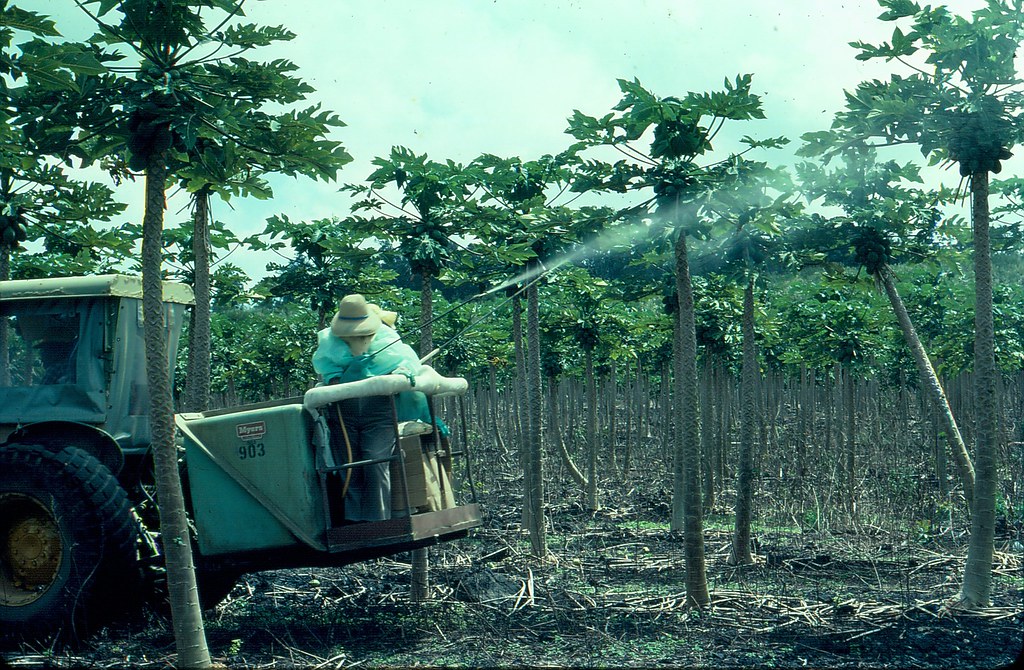




A pesticide used for decades on farms across the United States and around the world may significantly increase the risk of Parkinson’s disease, according to a major new study from UCLA Health.
Researchers report that long-term residential exposure to chlorpyrifos is associated with more than a 2.5-fold increase in the likelihood of developing the neurological disorder, offering some of the strongest evidence to date that a specific pesticide can contribute directly to Parkinson’s disease.

Chlorpyrifos, an organophosphate pesticide, is already banned in at least 44 countries across the planet. In the USA it has been illegal to use the chemical on food crops since 2023, but it remains registered for several non-food uses such as golf courses, non-food plants in greenhouses and for mosquito control.
However, the chemical remains widely used on crops in many countries around the world.
The study, published in the journal Molecular Neurodegeneration, combined detailed human population data with laboratory experiments in animals to reveal how the chemical damages the brain.
Parkinson’s disease affects nearly one million Americans and causes progressive symptoms such as tremors, muscle stiffness and impaired movement. While genetics are known to play a role, scientists have increasingly pointed to environmental exposures as key contributors to the disease.
To assess risk, UCLA researchers analysed data from more than 1,650 participants enrolled in the Parkinson’s Environment and Genes study, including 829 people with Parkinson’s disease and 824 without it. Using California’s detailed pesticide use reports along with participants’ residential and work histories, the team estimated individual exposure to chlorpyrifos over time.
It was found that individuals with long-term residential exposure had more than double the risk of developing Parkinson’s disease. In laboratory experiments, mice exposed to chlorpyrifos through inhalation developed movement problems and lost dopamine-producing neurons, the same type of brain cells that degenerate in Parkinson’s patients. The animals also showed brain inflammation and abnormal clumping of alpha-synuclein, a hallmark protein of the disease.
Further experiments in zebrafish revealed that chlorpyrifos disrupts autophagy, the cell’s internal ‘cleanup’ system that removes damaged proteins. When researchers restored this process or eliminated synuclein, neurons were protected from damage.
Dr. Jeff Bronstein, professor of neurology at UCLA Health and the study’s senior author said: ‘This study establishes chlorpyrifos as a specific environmental risk factor for Parkinson’s disease” adding that identifying the biological mechanism strengthens the case for a causal link and points toward potential strategies to protect vulnerable brain cells.
Researchers say the findings could help guide prevention efforts, encourage closer monitoring of people with known exposure, and inform future treatments aimed at boosting the brain’s natural defense systems.
The full research can be read here.
Photo: Eric Brehm
Leave a Reply