










Clean air campaigners and NHS lung health experts have welcomed the initiative, praising the Mayor and the West Midlands Combined Authority (WMCA).
The West Midlands has launched its first air quality warning system to alert residents to high pollution in their local area.
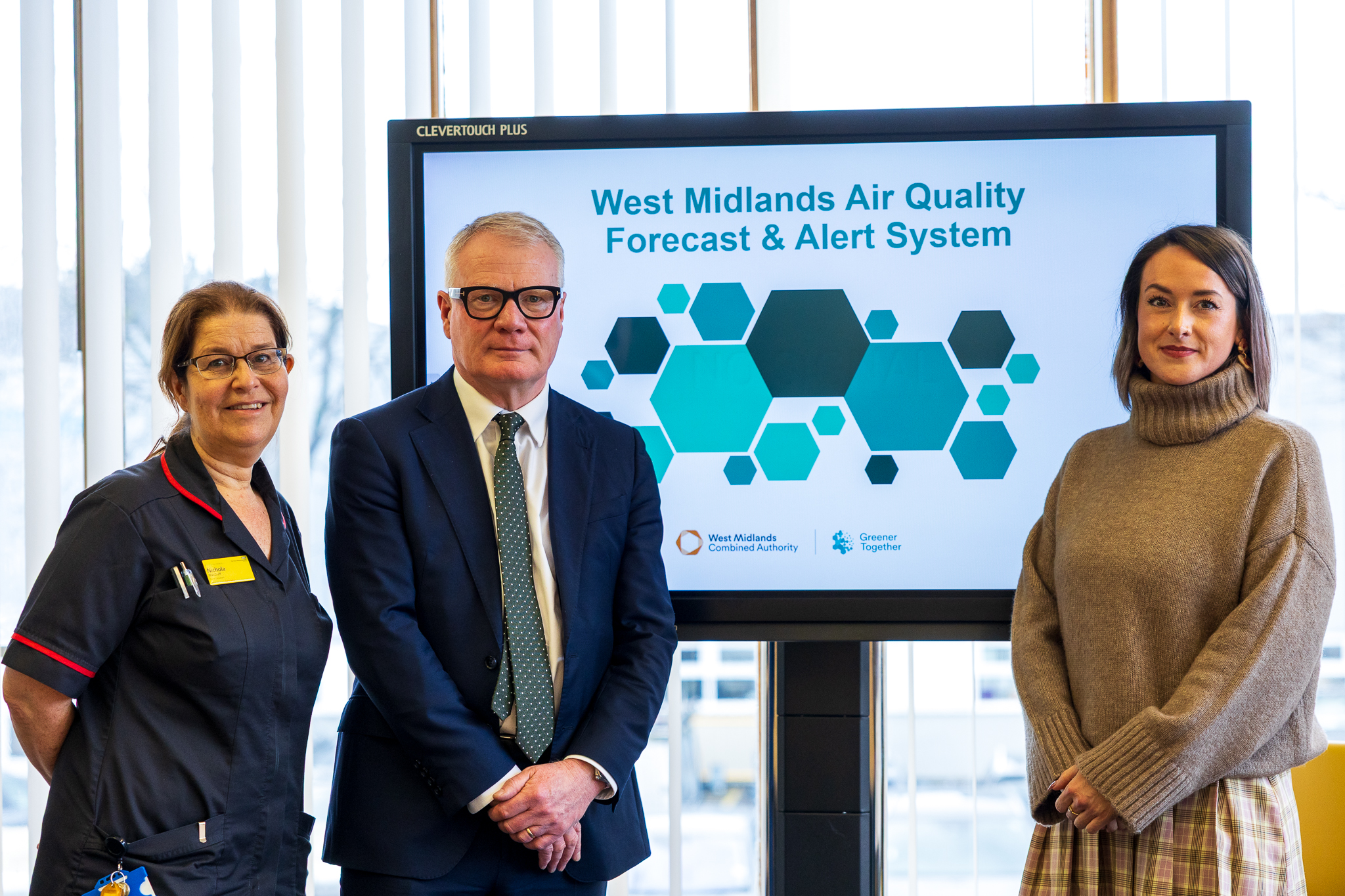
Image: Mayor Richard Parker with Nicky MacDuff, nurse consultant in respiratory medicine and Florence Cadge, clean air campaigner with Birmingham Healthy Air Coalition.
First switched on by Mayor Richard Parker on Tuesday 16th December, the system provides tips to help people protect themselves from the dangers of breathing poor-quality air. People can sign up on the Clean Air West Midlands website to receive alerts by text, voicemail or email.
The alerts aim to provide information for people living with long-term health conditions such as asthma, lung cancer and coronary heart disease and reduce premature deaths that are linked to poor air quality.
‘Dirty air has a devastating effect on lives,’ said Richard Parker, Mayor of the West Midlands. ‘It’s simply not acceptable that every year 2,300 people living in our region die prematurely because of air pollution, but we can change that.
‘Thanks to this warning system and its network of air sensors, we’re able to monitor air quality more precisely than ever before so our communities have the tools and information they need to protect themselves.
‘At the same time, we’re taking direct action to improve our air with a growing fleet of electric buses, hundreds of miles of new walking and cycling routes and by restoring nature. We’re transforming our towns and cities into greener, cleaner, healthier places for today and generations to come.’
The system, launched at New Cross Hospital in Wolverhampton, uses 90 sensors installed outside homes, schools, businesses, hospitals and sports centres to provide near real-time data. Alerts are sent when pollution levels, including microscopic particles and nitrogen dioxide, exceed safe World Health Organisation guidelines.
Nicky MacDuff, nurse consultant in respiratory medicine at Royal Wolverhampton NHS Trust, said: ‘In the West Midlands, most of us live in built-up areas where pollution levels fluctuate. This system will help vulnerable patients with chronic conditions plan activities for times when pollution is lowest, reducing exacerbations and keeping them well.’
Florence Cadge, clean air campaigner with Birmingham Healthy Air Coalition, added: ‘By keeping communities informed about air quality and practical steps to protect themselves, this system has the potential to reduce health risks, particularly for children, people with respiratory conditions, and other vulnerable groups.’
The Mayor and WMCA are also supporting schools and community groups to take local action. Seventeen institutions have shared £9,000 from the Clean Air Small Sparks Fund, funding projects such as walking clubs, street roller skating sessions and air pollution awareness campaigns.
Meanwhile, all primary schools can receive free copies of Auntie Duck – an air quality-themed storybook written by The Dog, Duck and Cat Charitable Trust with advice from Sandwell Council’s air quality experts.
Image: WMCA
In related news:
Leave a Reply