














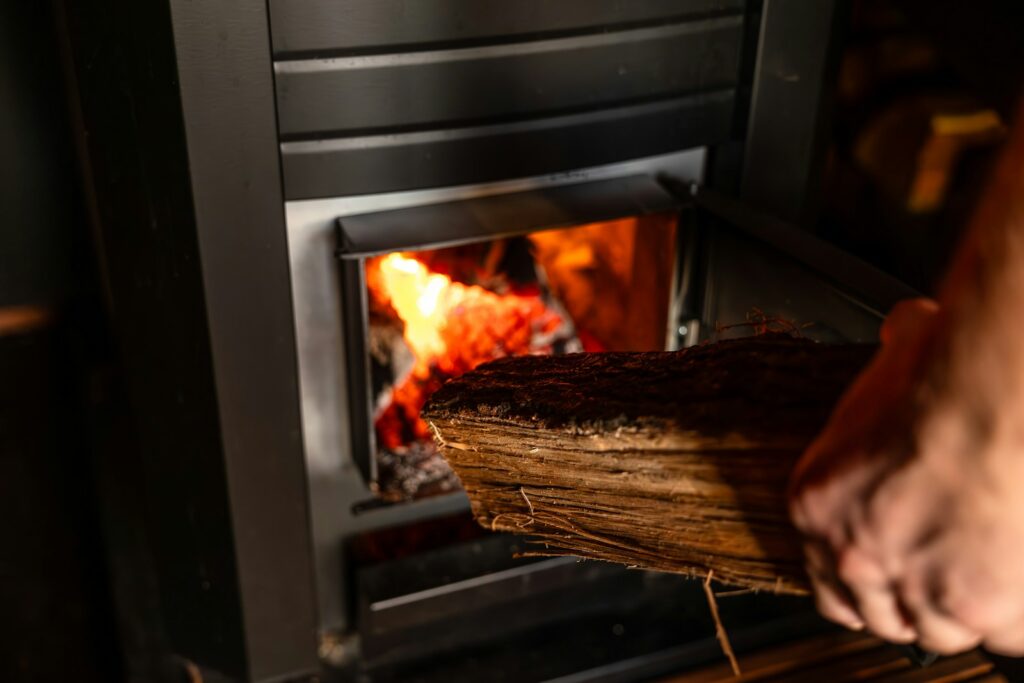

Local politicians in the Australian Capital Territory (ACT) have been advised that phasing out domestic wood heaters would significantly reduce air pollution and enable Canberra to meet national air quality standards. Yet despite this advice and previous commitments, the issue of residential wood smoke pollution remains politically contested.

A recently released report into air quality in Canberra states: ‘Given the significant contribution domestic wood smoke makes to PM2.5 in the ACT, it is expected that the elimination of wood smoke would significantly alter the PM2.5 concentrations in the ACT airshed.’ It continues: ‘If wood heater emissions were eliminated it could reasonably be expected that the ACT would meet the NEPM 2025 goals and go close to meeting the World Health Organisation 2021 guidelines.’
The Urban Air Quality Assessment was commissioned by the ACT Government to inform a regulatory impact assessment into the proposed phase-out of domestic wood heaters in Canberra. It followed a 2023 report by then ACT Commissioner for Sustainability and the Environment, Dr Sophie Lewis, which detailed the environmental, public health and climate impacts of wood heater emissions. Dr Lewis recommended wood heaters be phased out of Canberra neighbourhoods by 2045.
Following that report, the ACT Labor–Greens Coalition Government formally committed to phasing out wood heaters in line with Canberra’s legislated fossil fuel transition. Then ACT Greens Environment Minister Rebecca Vassarotti described the move as a landmark decision, a position echoed by environmental and public health experts, as well as local conservation and community groups. Other Australian jurisdictions grappling with wood smoke pollution have watched the ACT’s policy direction closely.
During the 2024 ACT election campaign, ACT Labor reaffirmed its commitment in a letter to community environmental group Clean Air Canberra. The letter, signed by current ACT Labor Environment Minister Suzanne Orr, stated: ‘ACT Labor recognises that the nature of social and physical environments will impact people’s wellbeing which it also aims to promote. ACT Labor similarly supports the strict enforcement of legislation regulating all forms of pollution. These principles are reflected in ACT Labor Government’s current position on wood heaters, which is that they should be phased out from the Territory by no later than 2045.’
However, after returning to government in its own right, ACT Labor has shifted its position. In September 2025, the government voted with the conservative Liberal opposition to defeat a motion put forward by the ACT Greens calling for community consultation on the phase-out.
The Greens Laura Nuttall’s motion sought publication of the Urban Air Quality Assessment and the 2024 air quality report, the establishment of a wood heater register, an investigation into the health system costs of wood smoke, and a finalised phase-out plan by 1st July 2026.
Ms Nuttall told media that significant community health issues stem from wood fire smoke in Canberra and argued the government currently has no clear plan to address them, saying: ‘It’s very clear that this is an issue that requires broad community consultation to draw a clear pathway forward. We need a clear plan on how the phase-out will happen that doesn’t kick the can down the road any longer.’
Environment Minister Suzanne Orr has since stated that the government had agreed only ‘in principle’ to setting a phase-out date, rather than committing to a definitive timeline.
Former Environment Minister Rebecca Vassarotti has strongly criticised the shift, describing it as a ‘complete backflip’ and a betrayal of community trust. Ms Vassarotti, who has since left politics, said the policy followed one of the ACT’s largest public consultations in 2022 and that a firm agreement had been reached in 2023.
‘I worked hard to build consensus,’ she said. ‘People have told me they feel angry and let down and that political expediency is again being put ahead of public health and environmental sustainability.
‘We secured funding, we had a plan. But since the last election, the government has delivered nothing.’
She characterised the decision as part of a broader political retreat since the October 2024 election and claimed implementation had stalled amid internal resistance and bureaucratic delays.
As debate continues, the question remains whether public health and environmental considerations will ultimately outweigh political popularity and expediency in determining the future of wood heating in Australia’s national capital.
Leave a Reply