











China has announced a major overhaul of its national air quality standards, introducing stricter limits on four key pollutants.
The revised Ambient Air Quality Standards, jointly issued by the Ministry of Ecology and Environment and the State Administration for Market Regulation, target fine particulate matter (PM2.5 and PM10), sulfur dioxide, and nitrogen dioxide.
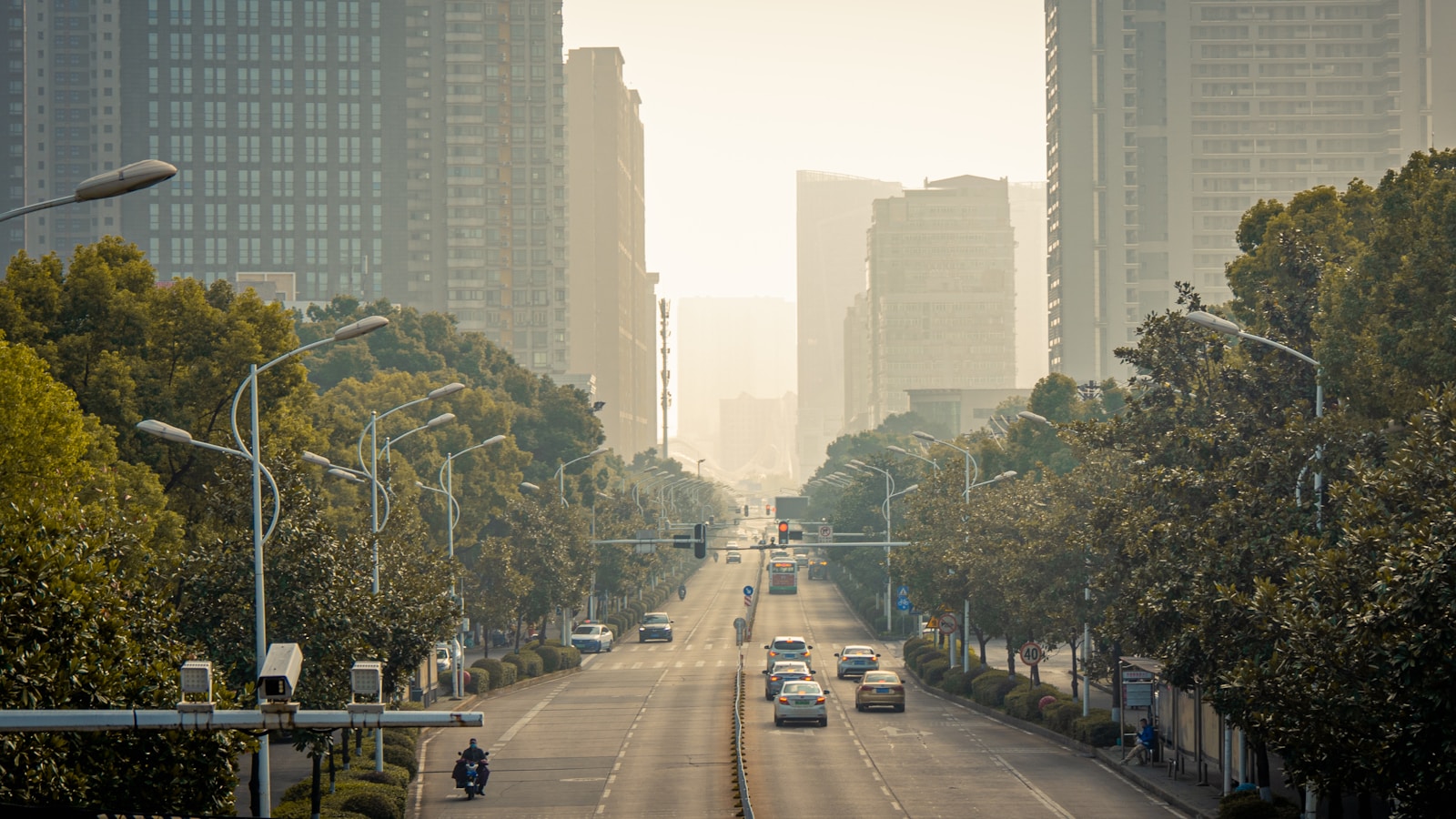
Under the updated secondary standards, the annual average concentration limit for PM2.5 will fall from 35 to 25 μg/m³. The daily average limit will be cut from 75 to 50 μg/m³. For PM10, the annual limit drops from 70 to 50 μg/m³ and the daily limit from 150 to 100 μg/m³
The new benchmarks align closely with the second-stage interim targets of the World Health Organization’s 2021 global air quality guidelines. Interim targets were introduced in the 2005 Global update to complement the WHO air quality guidelines:
‘Interim targets may be defined as air pollutant concentrations associated with a specific decrease in health risk that serve as incremental steps in progressive reduction of air pollution […] intended for use in areas where pollution is high.’
Implementation will occur in two phases. From March 2026 until 2030, transitional limits will apply: PM2.5 annual and daily caps of 30 and 60 μg/m³, and PM10 caps of 60 and 120 μg/m³.
The ministry described the revision as a reflection of China’s commitment to continuous environmental improvement. It replaces standards first introduced in 2012, which played a central role in the country’s decade-long battle against air pollution.
Between 2013 and 2025, China’s average annual PM2.5 concentration fell from 68 to 28 μg/m³, which the country claims is the fastest rate of improvement of any major nation.
In their press release, the ministry said: ‘The revision of the standards reflects the country’s determination to drive continuous environmental improvement under the guidance of higher benchmarks.’
They claim that the new standards are expected to deliver health benefits nearly ten times greater than the costs of implementation, once long-term gains are factored in.
The revision also aims to bring China’s air quality limits closer to international norms. Many countries and regions have tightened their standards in recent years, leaving China’s previous thresholds comparatively lenient.
Beyond health, the move is expected to support climate goals. Pollution control measures introduced under the new regime between 2026 and 2035 are projected to deliver carbon emission reductions of more than seven billion tonnes as a co-benefit.
‘Further tightening the standards is necessary to drive continuous air quality improvement nationwide, inject green momentum into economic development, and promote high-quality economic and social progress,’ the ministry said.
Photo: 他 白
Leave a Reply