

















Widespread deforestation and other land use changes across southeast Asia have significantly worsened air quality over the past two decades, contributing to thousands of premature deaths and billions of dollars in economic losses, according to new research.
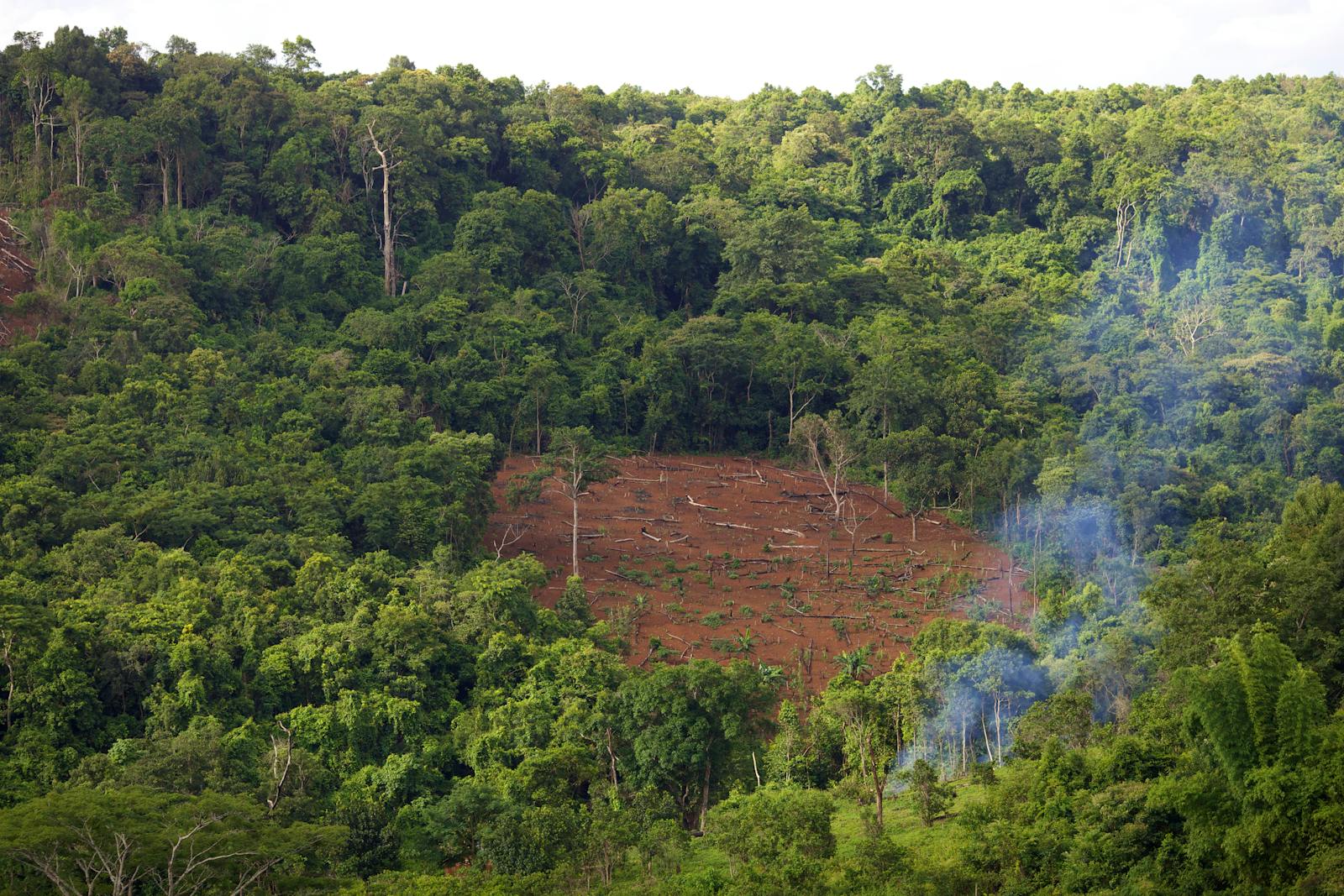
Using computer models, a team from Nanyang Technological University in Singapore found that land use and land cover changes between 2001 and 2018 increased concentrations of both PM2.5 and ground-level ozone across much of the region, with the most severe impacts linked to forest degradation and deforestation.
It is estimated that the worsening air pollution associated with these land changes contributed to around 13,000 excess deaths in southeast Asia in 2018 alone, alongside economic losses of approximately US$7.8 billion.
The study examined how deforestation, cropland expansion, urbanisation and afforestation altered atmospheric conditions across the region. Scientists used the Weather Research and Forecasting–Community Multiscale Air Quality model to analyse changes in PM2.5 and ozone concentrations over an 18-year period.
Principal investigator of the study, Professor Steve Yim, said: ‘Land-use change is often discussed in terms of climate or economic development, but its impacts on air quality and public health are less well understood.
‘Our study shows that land-use changes can significantly worsen air pollution in Southeast Asia, leading to substantial health impacts and economic losses.’
The findings suggest that forest loss was the single biggest contributor to deteriorating air quality, accounting for nearly 30% of the total health burden linked to land use changes. Researchers said the rapid expansion of plantations for commodities such as palm oil and rubber had substantially altered regional climate patterns and atmospheric chemistry.
Co-first author of the study, Dr Tingting Fang, Research Fellow at NTU, said: ‘Forests are one of nature’s most effective air filters. When forests are removed or degraded, our atmosphere loses an important natural sink that helps remove pollutants, allowing pollutants like PM2.5 and O3 to build up more easily. As a result, forest loss can significantly worsen air quality and increase health risks for millions of people across Southeast Asia.’
Air quality impacts varied across the region. Maritime southeast Asia, including parts of Indonesia and Malaysia, experienced some of the largest increases in ozone pollution, while continental countries such as Thailand, Viet Nam and Myanmar saw stronger increases in PM2.5 concentrations.
Indonesia recorded the highest estimated increase in pollution-related deaths, with around 4,800 additional fatalities linked to land use changes in 2018. Viet Nam and Thailand followed with approximately 2,800 and 1,800 deaths respectively.
The researchers found that more than 60% of the air pollution impacts occurred through what are known as biogeophysical pathways – changes to heat, moisture, rainfall and atmospheric circulation caused by land cover changes. These processes affected how pollutants formed, dispersed and accumulated in the atmosphere.
Some urban areas experienced localised air quality improvements. In cities including Jakarta and Ho Chi Minh City, rapid built-up expansion reduced evening cooling and slowed aerosol formation, leading to lower PM2.5 concentrations in some locations.
Despite these isolated improvements, the researchers warned that continued deforestation and agricultural expansion could further undermine regional air quality and public health.
Prof Yim concluded: ‘Our findings show that better land management can deliver important co-benefits. Protecting forests and carefully planning land development can help improve air quality, safeguard public health and support sustainable economic development across the region.’
The full research can be read here
Photo: Ian Taylor
Leave a Reply