
















Scientists have unveiled a powerful new way to detect and measure formaldehyde in the atmosphere, a breakthrough that could improve air pollution monitoring and help researchers better understand the chemistry behind smog, ozone formation and wildfire emissions.
Researchers at the Institute of Experimental Physics at Graz University of Technology in Austria and the Harvard-Smithsonian Center for Astrophysics, Atomic and Molecular Physics in the USA have developed a new ultraviolet laser-based technique capable of identifying formaldehyde with unprecedented detail and speed. The system can capture highly detailed measurements in just half a second while detecting molecular features that have never been observed before.
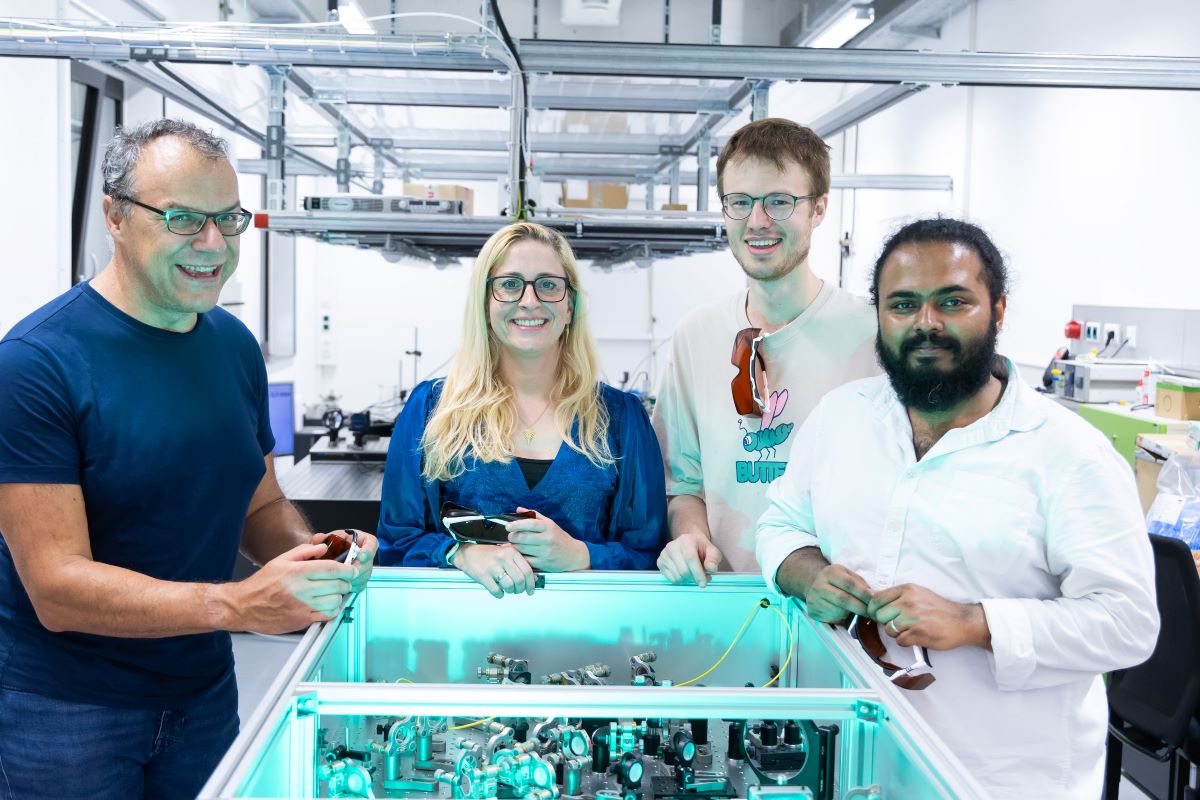
From left: Rolf Breinbauer, Birgitta Schultze-Bernhardt, Clemens Hofmann and Mithun Pal standing behind the UV dualcomb spectrometer.
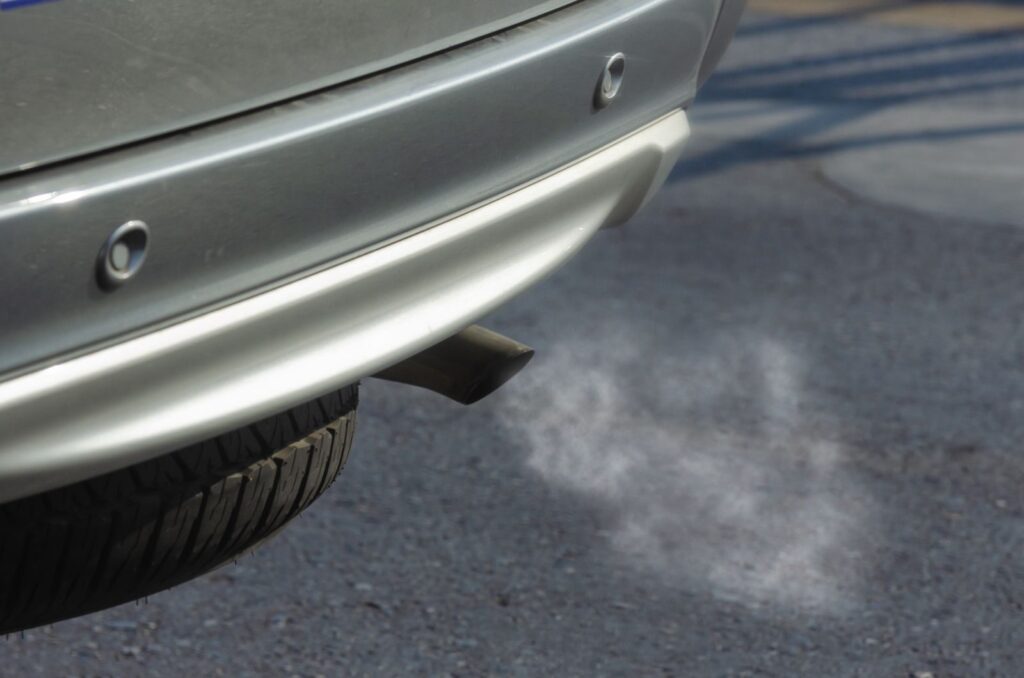
Formaldehyde may be best known as an indoor pollutant, but it also plays a crucial role in outdoor air quality. The compound is released by vehicle exhaust, industrial activities, biomass burning and natural processes in forests. Once in the atmosphere, it helps drive the chemical reactions that produce ground-level ozone and secondary pollutants, making it a key target for air quality researchers.
Tracking formaldehyde accurately, however, has long been a challenge. Existing measurement techniques often require lengthy observation times and can struggle to capture the complex ultraviolet signatures that reveal exactly how the molecule behaves in the atmosphere. Researchers note that published measurements of formaldehyde’s ultraviolet absorption properties can differ by as much as 20%, creating uncertainty in atmospheric models and satellite observations.
The new instrument uses ultraviolet dual-comb spectroscopy, a technology that effectively creates an ultra-precise molecular fingerprint. Unlike previous systems, it operates without complicated stabilisation equipment, making it simpler and potentially more practical for real-world applications. The researchers achieved a spectral resolution of 1 gigahertz across a broad ultraviolet range while completing measurements in just 500 milliseconds.
The enhanced performance allowed the team to resolve hundreds of previously unseen molecular transitions in formaldehyde, significantly expanding scientific knowledge of the pollutant’s ultraviolet behaviour. These new measurements could improve the reference data used by atmospheric models and satellite missions that monitor pollution from space.
Perhaps most exciting for air pollution researchers is the technology’s future potential. The team estimates that, with longer atmospheric measurement paths, the system could detect formaldehyde at concentrations relevant to real-world outdoor environments. Because the instrument is compact and does not require extensive stabilisation hardware, it could eventually be deployed for field monitoring near industrial sites, urban pollution hotspots or regions affected by wildfire smoke.
Birgitta Schultze-Bernhardt, who lead the research, said: ‘In principle, our device can accurately detect any semi-transparent, gaseous substance. And we are currently working on determining the concentration of several pollutants with a single measurement.’
The researchers believe the approach could eventually be adapted to monitor other important pollutants, including nitrogen dioxide, ozone and nitrous acid. If so, the technology may offer a new window into the fast-moving chemistry that shapes the air we breathe every day.
Photos: Oliver Wolf – TU Graz
Leave a Reply