

















Headline-grabbing schemes aim to reduce levels of methane produced by agriculture – but are they missing the point?
Cow burps are affecting the climate. It might sound daft, but it’s true.
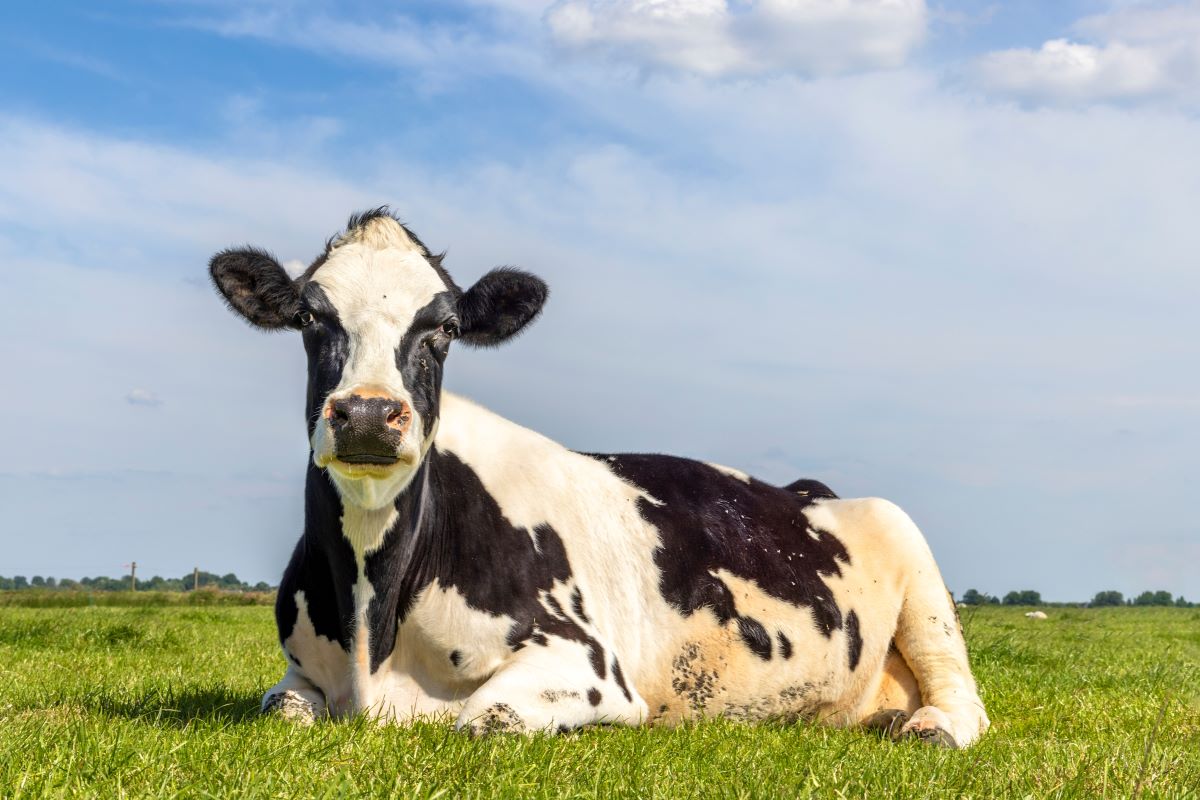
The issue is that the burps largely comprise methane (CH4), produced by microbes in the gut as they digest grass and other food. Large herds of cows produce a lot of methane. According to UK government figures, in 2020 the UK’s 9 million cows and calves produced a volume of methane equivalent to 24.8 million tonnes of CO2.
But methane traps more than 80 times more heat than CO2 over the first 20 years, so is a bigger contributor to global warming. Importantly, methane also breaks down after a dozen years. That means reductions in methane emissions could have a significant impact on the atmosphere — and relatively quickly.
This isn’t just a concern in the UK. At least 12% of all global emissions of methane derives from cattle and other farm animals, says the UN’s Food and Agriculture Organisation. As a result, around the world there’s a great deal of interest in how we can mitigate cow burps. Proposed solutions often make the news.
One approach is to handle what we might politely call the back end of the problem. In the UK, Defra pays grants to farmers to cover and seal slurry to prevent emissions, and to invest in methane-recovery schemes. But that doesn’t deal with the methane released into the air by the cows themselves.
Another approach is to vary what the cows eat. Cereals, seaweed, biochar and synthetic methane-suppressing feed products (MSFPs) all produce less methane than grass. Or there are schemes like Scotland’s Cool Cows breeding programme, which uses DNA testing and IVF to selectively breed calves that produce 2% less methane than their parents. Over successive generations, there is the promise of further reductions.
It’s all ingenious stuff – but how effective is it?
 ‘Reducing methane is essential in tackling climate change, all the modelling shows reductions are needed, and we need to focus on it,’ says Paul Behrens, British Academy Global Professor at the Oxford Martin School, University of Oxford, who specialises in the ways climate, energy and food systems intersect. ‘But I think these kinds of interventions have limited potential.’
‘For one thing, they only make a small difference,’ he continues. ‘They’re not getting anywhere close to reducing all or most of the methane. You’ll see all sorts of claims that an intervention like seaweed additives could reduce methane by, say, 80%, but these claims always need looking into. A real-world trial found only 28% reductions and, in fact, found reduced weight such that the amount of methane produced per kg of cattle remained unchanged! Meanwhile, the public thinks, “Well, seaweed has solved it and I can keep on eating beef regularly, right?”’
Some schemes are still relatively new and promise greater reductions in future, but Professor Behrens is still unconvinced. ‘Even if you could somehow magic away all the methane, 100%, you’re still left with a range of problems in the way we rear animals today: land use, biodiversity, antimicrobial resistance, zoonotic diseases, water and air pollution, and so on. Land use is fundamental.
‘Agriculture comprises the largest part of net primary production that we harness from the planet,’ he explains. ‘But climate change and extremes of weather are making it harder for biological systems to thrive. Parts of the planet now cannot or soon won’t be able to produce as much food given our current systems heavy in animal agriculture. If we can’t produce as much as we did, we need to be more direct and efficient. That’s why my research is focused on dietary shifts: eating more plant-based proteins, exploring a wide variety of alternatives, and investigating protein fermentation and so-called cultivated meats.’
The issue, then, isn’t what cows feed on — or burp out — but what humans eat. How do you get people, en mass, to change their diets?
‘I’ve a few things to say about that,’ says Professor Behrens. ‘First, we’re forced into a certain diet anyway. There’s an element of culture and consumer choice, but we underestimate how much of the food system is a result of regulations, corporate interests and subsidies. New Zealand is a big agricultural producer and exporter, for example, and there’s a lot of pressure from industry to keep things running just as they are.’
In 2019, the government of New Zealand committed to cut methane emissions from agriculture by between 24% and 47% by 2050. Late last year, this target was dropped in favour of ‘no additional warming’ — i.e. maintaining current levels of emissions.
‘By contrast, some countries are starting to change regulations so that their food environment is more plant rich,’ says Professor Behrens. ‘The Danish action plan for plant-based foods is taking a whole-of-food-system approach and changing the food environment. Targeting investment alone the whole supply chain, all the way from producers and farmers through to consumers. They are also looking to also billions in exports.
‘Even where this isn’t being pushed by government, I think we’ll see something of this shift happen anyway because of differentially higher food price inflation for animal-based products. There are various reasons it will become more expensive. As climate change makes more of the planet uninhabitable, there’s the impact on the animals themselves from heat risk, and then there’s the impact on their feed. We’re already seeing cattle in some areas become more reliant on supplementary feed – which costs farmers money—because they’ve not been able to get out and graze as much, because of flooding or extreme heat. Farmers will have to invest in climate adaptations like air-conditioned barns and physical infrastructure, which also adds costs onto the products.
‘But price isn’t always the best way to look at this, because of government intervention. Subsidies for farmers keep food prices down. In many high-income countries the government fully compensate farmers when cattle are killed by extreme weather or diseases. This is another subsidy by the state. In effect, the risk is socialised and everyone pays for it — through general taxation.’
With extreme weather events becoming more common, how long can any particular government go on subsidising farmers? ‘Exactly. And if farms are less productive anyway, because a herd got washed away, there is less supply of meat and prices still go up if demand is high. Subsidies like that can only be a short-term fix. Eating more plants is going to be the better approach for the environment, our health, and our wallets.’
Of course, a widespread switch to a more plant-rich diet would lead to smaller numbers of cattle and other animals on farms, which would in turn produce lower levels of methane.
‘And it’s not just methane, either,’ says Professor Behrens. ‘We have a research paper in the works at the moment on the impact on ammonia deposition by this kind of shift. We’re not even talking no meat at all, but a reduced-meat diet of some dairy every day, a chicken filet once a week and a burger every fortnight. The paper hasn’t been peer-reviewed yet, but our results so far are that you’d see an 86% reduction in ammonia, just by that shift in diet. That’s important for public health, because ammonia is the precursor to a lot of secondary aerosols that drive PM 2.5, which we’re often so worried about.’
‘But methane is important, not least because of its potential impact on global warming in the short term. We’re moving towards a 2.7℃ rise in temperatures worldwide by 2100. I really don’t think we can adapt to that. Society will collapse at some point. That’s why we need to think, now, about what interventions will be most effective. And I’m afraid I don’t think feeding cows cereal or seaweed will have much impact on overall levels of methane. A large number of people eating more plants, would.’
Does he have any sense of how much impact such an intervention might have? ‘Eating more plants in high-income countries is the biggest thing we can do in the food system. We could cut agricultural emissions by 61% and save a huge amount of land to store carbon on – in the UK, we’re talking an area almost the size of Scotland.
‘This is not about everyone going vegan, it’s about as many of us as possible cutting down and eating more delicious plants. This is a game changer when you also consider all the other environmental benefits for nature, water and our own health – and, of course, the air.’
Leave a Reply