


















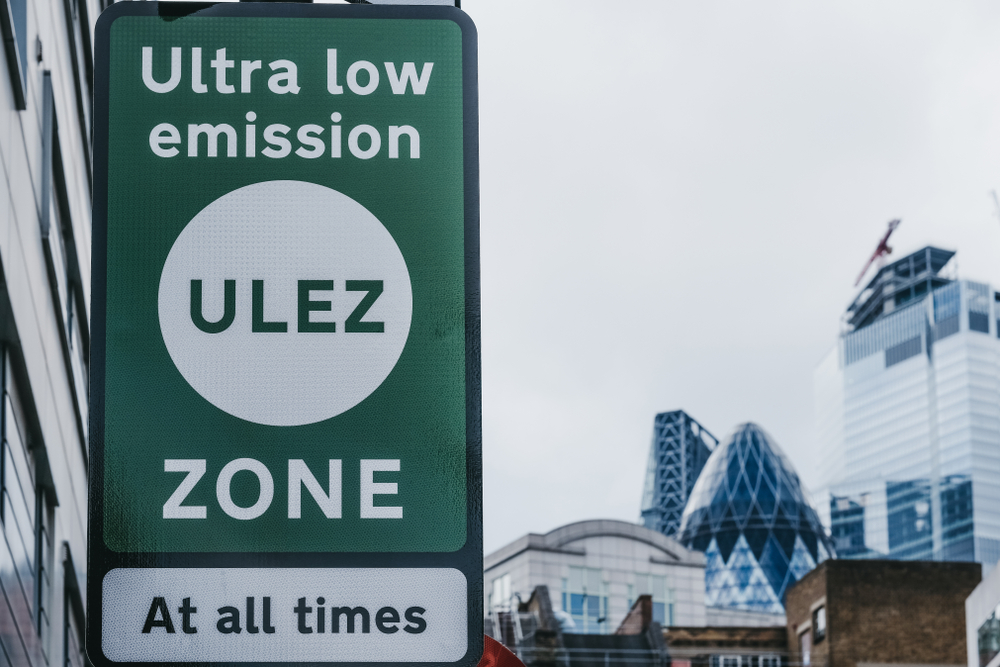
London’s ULEZ has improved children’s lung development, according to what researchers say is the strongest evidence yet.
A study of more than 3,400 children found improvements in air quality following the introduction of London’s Ultra low Emission Zone (ULEZ) were linked to faster lung growth in children.
Researchers, who published their study on Wednesday in The Lancet Public Health, monitored children aged six to nine in London and Luton over five years.
Before the ULEZ was introduced, children in the capital city had significantly smaller lungs than those in Luton, which was used as a comparison because it had similar traffic pollution but no clean air zone.
By the end of the study, however, lung capacity was similar in both groups. The researchers said: ‘While we would expect children’s lungs to grow year on year, our results indicate that the London children’s lung growth had accelerated during the four years to ‘catch up’ with the control group in Luton to reach similar levels of lung capacity.’
The study, which can be read in full here, measured forced expiratory volume in one second (FEV1), a standard measure of lung function, and children’s exposure to nitrogen dioxide (NO2), a pollutant associated with vehicle exhausts.
In the five years after the ULEZ was introduced, children’s exposure to NO2 fell more than twice as much and twice as quickly in London as it did in Luton. What’s more, for every year of falling NO2 exposure, children’s FEV1 increased by an additional 10ml in London compared with children in Luton.
The proportion of London children with clinically impaired lung function also fell from 14% to 9%, compared with a reduction from 9% to 7% in Luton.
Researchers say the findings are significant because lung development in childhood can affect health later in life. Children who do not reach their full lung capacity by early adulthood face a higher risk of conditions including asthma, COPD, cardiovascular disease and metabolic disease.
Expert reactions
Professor Chris Griffiths, Professor of Primary Care at the University of Oxford and at Queen Mary University of London, and joint senior author, said: ‘Traffic pollution in cities damages children’s health and development. We provide the strongest evidence yet on how these harms can be prevented. Ambitious clean air zones should be considered a priority for cities globally with traffic-related air pollution.’
Ian Mudway, Associate Professor in the School of Public Health at Imperial College London and joint senior author said: ‘Air pollution is a global issue. If we want to improve the lives of children living in high-traffic urban environments, we need bold and ambitious measures. Our data demonstrates that clean air zones can be an effective public health intervention to prevent damage to developing lungs.’
Dr Helen Wood, Research Fellow at Queen Mary and lead author, said: ‘We already knew that the ULEZ reduced air pollution but now we know that children’s lung health has improved at the same time, which is a really important finding for children and parents living in London. However, we must not be complacent – air pollution in both London and Luton – as well as other cities across the UK – remains above WHO guideline levels, so there is still work to be done.’
Professor Gurch Randhawa, Professor of Public Health at the University of Bedfordshire, and joint senior author said: ‘The findings provide evidence of the health benefits for children living in a clean air zone. This will be of interest to Luton and Bedfordshire as they plan for future development and regeneration.’
Health Minister Karin Smyth said: ‘This study is a powerful reminder of the impact that air quality has on children’s lung health, and will help to improve our understanding of how reductions in air pollution can restore normal lung growth among children, reduce the risk of respiratory illnesses in adulthood, and support our goal to give every child the best start in life.’
Professor Lucy Chappell, Chief Scientific Adviser at the Department of Health and Social Care (DHSC), said: ‘This research, funded by NIHR, will provide crucial evidence on real-life interventions that deliver life-changing health benefits for children.
‘I would like to thank the 3,400 children and their families who took part. Research can only take place with the input and support of participants, and this study is a great example of how the UK’s vibrant research sector is working with communities to transform lives.’
Image: Shutterstock
In related news:
Leave a Reply