



















New research has found that ozone pollution disrupts moth mating by destroying sex pheromones, suggesting widespread consequences for insect reproduction and pest control.
That air pollution has a deleterious effect on insects is well known. We have looked at the chaos it can cause in ant colonies, how it affects bees specifically and pollinators in general.
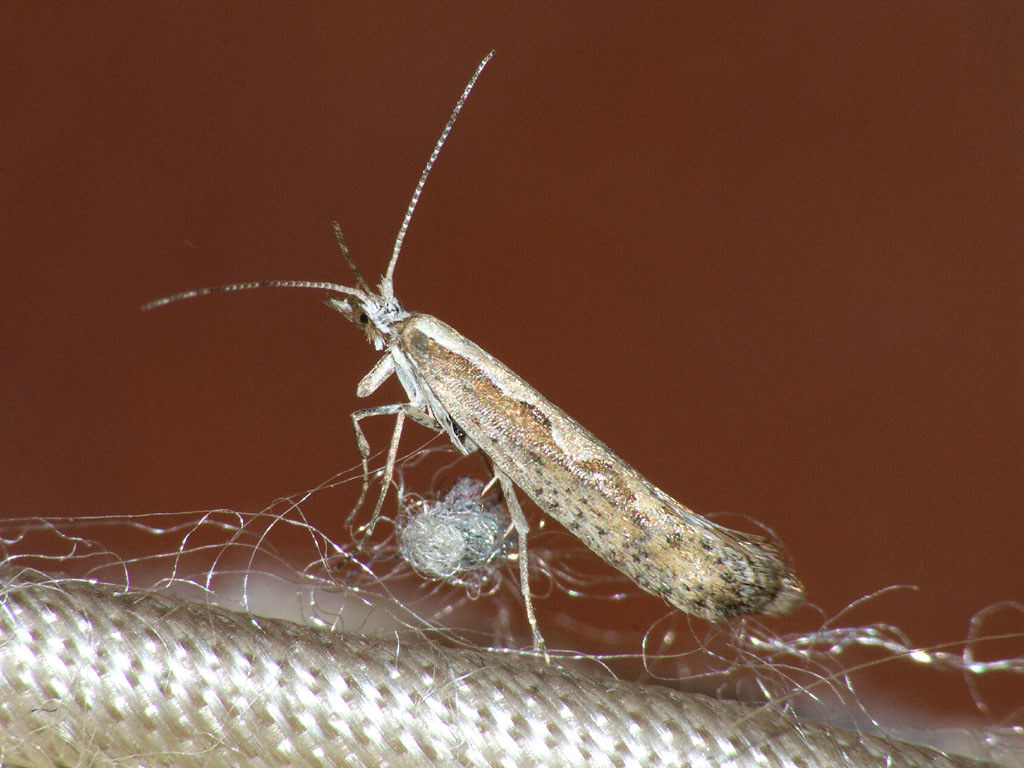
Now, new research has focussed on the diamondback moth, finding that air pollution is tearing apart the chemical signals that they use to find mates.
Scientists at the University of Eastern Finland exposed the diamondback moth, a major agricultural pest, to ozone concentrations commonly found in today’s troposphere. The results show that even moderate pollution levels degrade the moth’s sex pheromone, a three-component chemical blend females release to attract males.
The diamondback moth’s pheromone consists of three compounds in a precise ratio of approximately 1:3:6. When synthetic versions of these chemicals were exposed to ozone at 80 or 120 parts per billion – levels routinely reached in polluted regions during warm weather – their quantities dropped sharply. Crucially, the relative ratios of the three components also shifted.
Because male moths rely on that exact blend to recognise females of their own species, any alteration threatens successful mating.
Behavioural tests were undertaken to confirm the damage. Under clean air, males strongly preferred the pheromone over a neutral solvent. But when the pheromone was first exposed to ozone at just 40 ppb, males could no longer distinguish it from the solvent. Given a direct choice between clean-air-exposed pheromone and ozone-exposed pheromone, males consistently chose the un-degraded version.
More surprisingly, it was found that the problem starts before the pheromone even leaves the female moth.
When females were exposed to ozone for just two hours, their bodies produced a less effective chemical blend. Their pheromone glands contained smaller amounts of the key ingredients and showed a build-up of a basic building block called palmitic acid.
This suggests that ozone does not just destroy the pheromone in the air. Instead, it seems to disrupt the internal chemical assembly line inside the female that produces the scent in the first place, possibly by causing cell damage known as oxidative stress.
The implications extend far beyond diamondback moths. Most moth species use similar unsaturated compounds for sexual communication, all of which contain carbon-carbon double bonds vulnerable to ozone attack. As tropospheric ozone has risen globally by approximately 1.8 parts per billion per decade between 1990 and 2017 – the potential for widespread disruption of insect chemical communication has grown.
Pheromone-based pest management, including mass trapping and mating disruption, has long been a successful and environmentally friendly alternative to broad-spectrum insecticides. The new findings suggest these strategies may become less effective in polluted air. Diurnal insects could be especially vulnerable, as ozone levels typically peak during daylight hours.
Francesco Sorrentino, University of Eastern Finland said: ‘Air pollution doesn’t just affect air quality – it alters the chemical signals insects rely on for communication. Our results show that even ozone levels commonly found in today’s atmosphere can disrupt moth mating behaviour, which raises real concerns for both insect ecology and the effectiveness of pheromone-based pest management in polluted environments.’
The full research can be read here
Photo: Unsplash
Leave a Reply