
















Doctors, clinicians and health campaigners have gathered in Parliament Square today (2nd July) to call for a new Clean Air Act, urging the Government to introduce legislation that better reflects the modern health risks posed by air pollution.
The action comes ahead of the 70th anniversary of the original Clean Air Act, which was introduced following the Great Smog of 1952. While widely regarded as landmark legislation, campaigners argue it has not been substantially updated to address today’s pollution challenges.
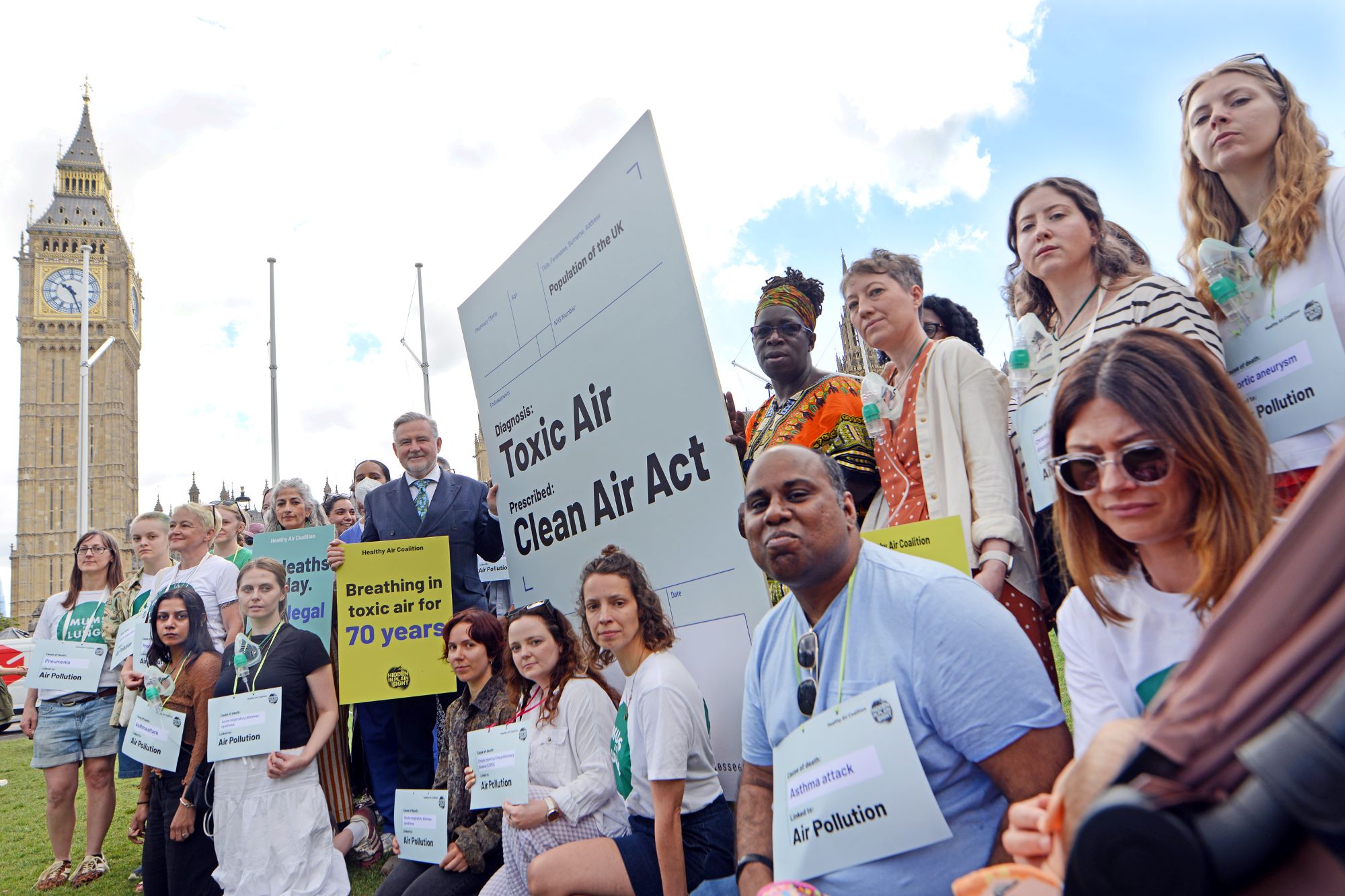
The demonstration, organised by the Healthy Air Coalition as part of its Hidden in Plain Sight campaign, saw 82 medical professionals and campaigners assemble outside Parliament. The number symbolised the estimated 82 people who die each day in the UK from health conditions linked to or worsened by air pollution.
Campaigners are calling for a new Clean Air Act that aligns UK air quality standards with the World Health Organization’s recommended limits, introduces tougher measures to tackle fine particulate matter (PM2.5) and addresses modern sources of pollution, including tyre and brake wear, domestic wood burning, agricultural emissions and growing traffic levels.
Air pollution remains one of the UK’s leading environmental health risks, contributing to an estimated 30,000 deaths each year – around 574 every week.
Recent analysis by the Healthy Air Coalition found that 343 of England’s 361 local authorities exceed the World Health Organization’s annual guideline for PM2.5. The data also suggests that poor air quality is not confined to major cities, with some rural areas recording pollution levels comparable to large urban centres.
The coalition says the widespread nature of air pollution requires a modern legislative response, arguing that stronger national standards would help reduce preventable illness and deaths while protecting public health for future generations.
Dr Camilla Kingdon, Chair of the Healthy Coalition and senior NHS paediatrician, says: ‘Five hundred people die every week from toxic air in this country. 70 years on from the original Clean Air Act becoming law, this is far from the progress we need to see. There has been a lapse of political will, repeated year after year, while the legislation that could change it sits in the ‘too hard’ box.
‘Today, the Healthy Air Coalition and clinicians from across the health community are standing in Parliament Square with a simple message: this is what a prescription for the nation’s health looks like. A Clean Air Act is not a niche environmental demand. It is what the science urges, what our communities deserve, what the NHS and our economy require. The Government must now deliver.’
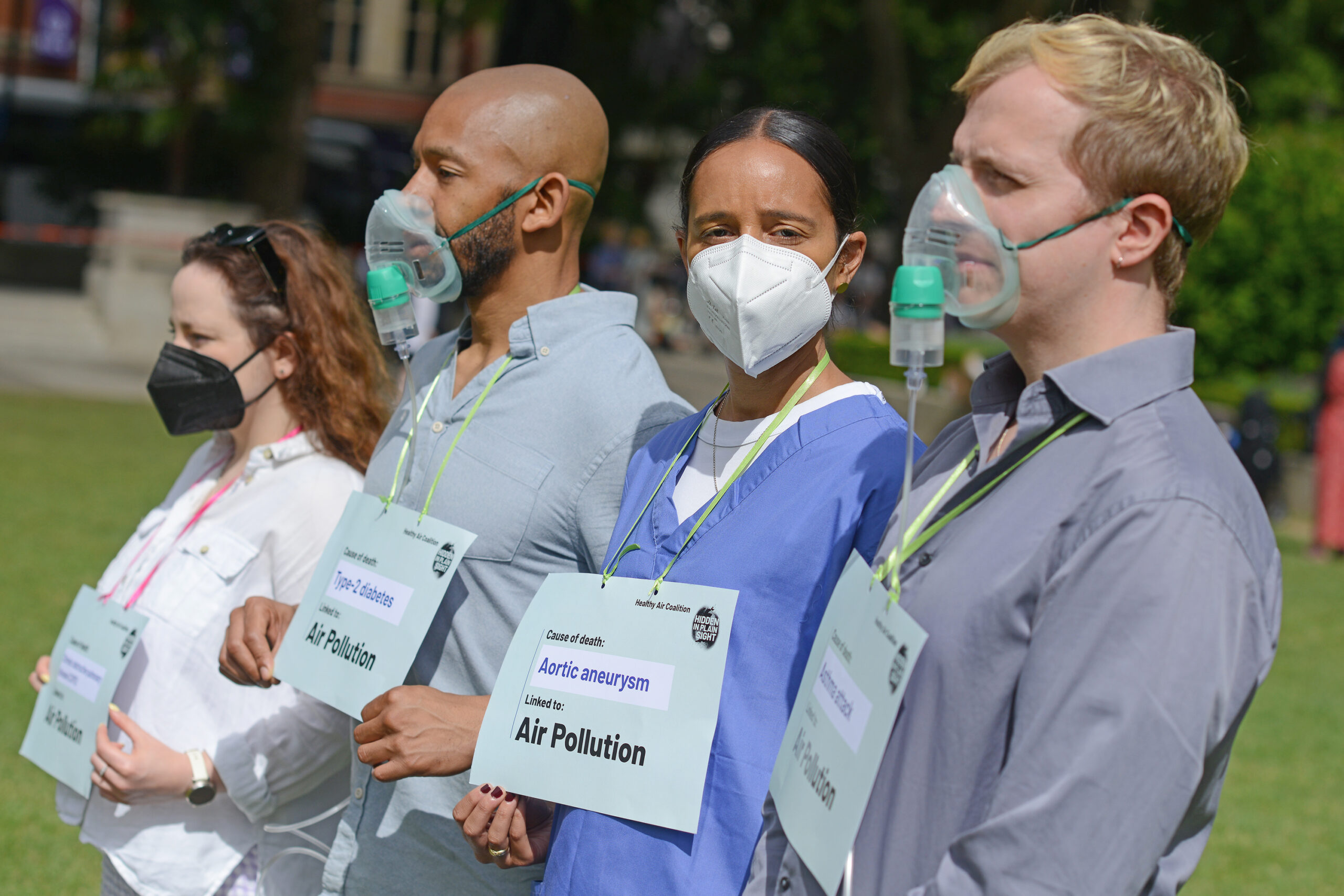
Dr Bethan Davies, Sustainability Lead at the British and Irish Association of Stroke Physicians, says: ‘Doctors around the country see the far-reaching consequences of toxic air in their patients every day. Long-term exposure to fine particle pollution damages blood vessels, accelerates inflammation and significantly increases the risk of stroke and other serious illnesses. Today, we are emphasising the fundamental dangers of dirty air and delivering this life-saving prescription directly to the people, giving them the power to act. The treatment is simple: a Clean Air Act aligned with WHO guidelines. The Government has the prescription. Now it needs to fill it.’
Barry Gardiner, MP for Brent West, who secured the debate in Parliament on air pollution on the same day as the Healthy Air Coalition’s intervention, says:
‘I was proud that the Labour Party pledged a new Clean Air Act guided by World Health Organization guidelines back in 2023. Now in government, we need to deliver, protecting people’s health and tackling inequality.
’82 people die every day from air pollution.
‘This is a health emergency and we must meet the WHO guidelines. I am determined that today’s debate should be a real turning point, and that the Clean Air Act is finally brought up to date. We need a new piece of legislation that reflects the society we live in today, not that in 1956.’
Photos: Daniel Lynch
Leave a Reply