















Air pollution levels in Camden continued to improve in 2025, with nitrogen dioxide (NO2) concentrations falling by an average of six per cent across the council’s automatic monitoring network.
The figures are contained in Camden Council’s 2025 Air Quality Annual Status Report, which includes confirmed and ratified monitoring data from across the borough.

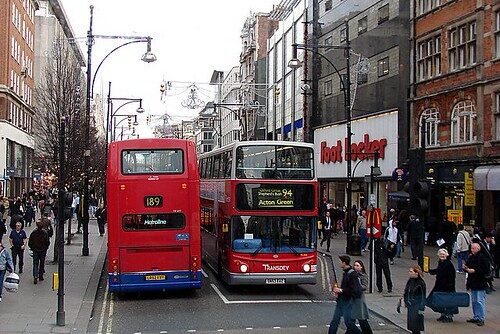
One of the most significant improvements was recorded on Camden High Street, where annual average NO2 concentrations fell by 27% compared with 2024.
The monitoring station recorded a reduction from 26 µg/m³ to 19 µg/m³. The council said the change can be attributed to the closure of a section of Camden High Street between Britannia Junction and Jamestown Road and Hawley Crescent to motor vehicles for an 18-month trial, which began in May 2025.
Councillor James Slater, Cabinet Member for Planning and a Sustainable Camden, said: ‘Improving air quality is one of our top priorities, and we have made significant progress in recent years. This includes helping to tackle air pollution through cleaner transport, stricter planning policies, electric vehicle infrastructure, and educational sessions reaching thousands of residents and schoolchildren.
‘We were the first local authority in the country to adopt World Health Organization air quality standards, which go further than national legal limits and are working with our communities and partners in the borough and beyond to reduce sources of air pollution as quickly as possible.
‘The continued improvement to air quality is encouraging, especially the significant change recorded so far on Camden High Street, which directly relates to our trial pedestrianisation of this very busy section of highway.’
The council reported that 337 diffusion tube monitoring sites had sufficient data to be included in the annual report. Only three recorded NO2 levels above the 40 µg/m³ legal limit, with all three located along Euston Road, described as Camden’s busiest road for traffic.
Longer-term figures also show a substantial decline. Between 2019 and 2025, average annual NO2 concentrations fell by 42% across 90 sites with data available for the full period.
PM2.5 also fell, with concentrations down by an average of 1.33 µg/m³, or 10%, across the automatic monitoring network since 2019.
Camden also expanded its monitoring programme in 2025, adding 99 diffusion tube sites and bringing the total number of monitored sites to 420.
The council said 4,844 young people took part in 50 Clean Air for Schools events during the year, while its “Engine off, every stop” campaign generated more than 75 million combined impressions.
By the end of 2025, all of Camden Council’s vehicle fleet was ULEZ compliant, with 25% electrically powered.
The council is now developing a new Clean Air Action Plan for 2027-2030, which will address a wider range of pollution sources and place greater emphasis on indoor air quality and pollution incidents linked to the climate crisis.
Photo: Ineke van Galen
Leave a Reply