













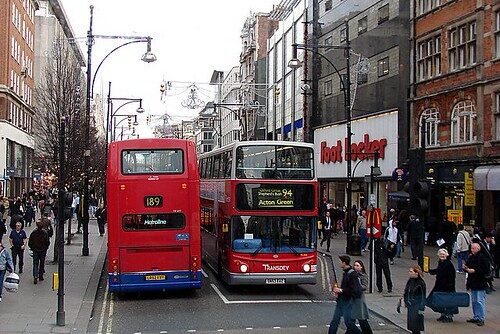

Evening traffic in London’s West End has surged far beyond morning levels, with new research showing that 6 – 7pm is now the capital’s busiest hour for cars entering central London.
Analysis published by Clean Cities reveals that traffic entering the Congestion Charge zone between 6pm and 7pm is 56% higher than during the traditional morning peak of 8-9am. On a typical weekday, 6,170 vehicles enter the zone in the evening peak, compared with 3,955 in the morning.
Campaigners say the spike coincides directly with the end of traffic controls. The Transport for London Congestion Charge currently stops at 6pm on weekdays, while most on-street parking in the West End becomes free from 6:30pm.
According to Clean Cities, the removal of these measures is actively encouraging more drivers into central London just as theatres, restaurants and shops become busiest.
The findings are based on publicly available TfL traffic data and Freedom of Information requests examining car entries into the charging zone during a typical week.
The group argues that the data exposes a policy gap. When the Congestion Charge previously operated until 10pm on weeknights, there was a noticeable drop in evening car entries. After the later charging hours were scrapped, traffic volumes climbed sharply once again.
The pressure on roads comes amid rising public frustration over congestion. Polling commissioned by Clean Cities found that 95% of Londoners believe congestion is a problem, with nearly two-thirds describing it as an important issue. Just 3% said it was not a problem at all.
Campaigners are now calling on the Mayor of London and borough councils to develop a coordinated action plan for the wider West End area, extending beyond Oxford Street. Their proposals include reintroducing weekday evening Congestion Charging, extending controlled parking hours and reforming parking tariffs to discourage the growing dominance of SUVs.
They also recommend reallocating kerbside space away from general parking and towards uses such as loading bays, taxi ranks and improved pedestrian areas. Supporters argue that such measures would not only ease congestion but also improve air quality, road safety and the overall experience for residents, workers and visitors.
The debate lands at a politically sensitive moment, with local elections approaching and transport policy once again under scrutiny. Clean Cities says without decisive action, evening congestion will continue to undermine efforts to create a more people-focused, accessible and economically vibrant central London.
For now, the data suggests that while London once braced for the morning rush hour, it is the post-6pm surge that is now placing the greatest strain on the capital’s streets.
Leave a Reply