


















Three-quarters of people in the UK say they would be more likely to buy a newly built home if it comes with solar panels, according to new research commissioned by E.ON UK.
The nationally representative survey of 2,500 adults found that 75% of respondents would prefer a new-build property fitted with rooftop solar rather than one without. The findings suggest strong demand among homebuyers for built-in renewable energy generation as part of modern housing developments.
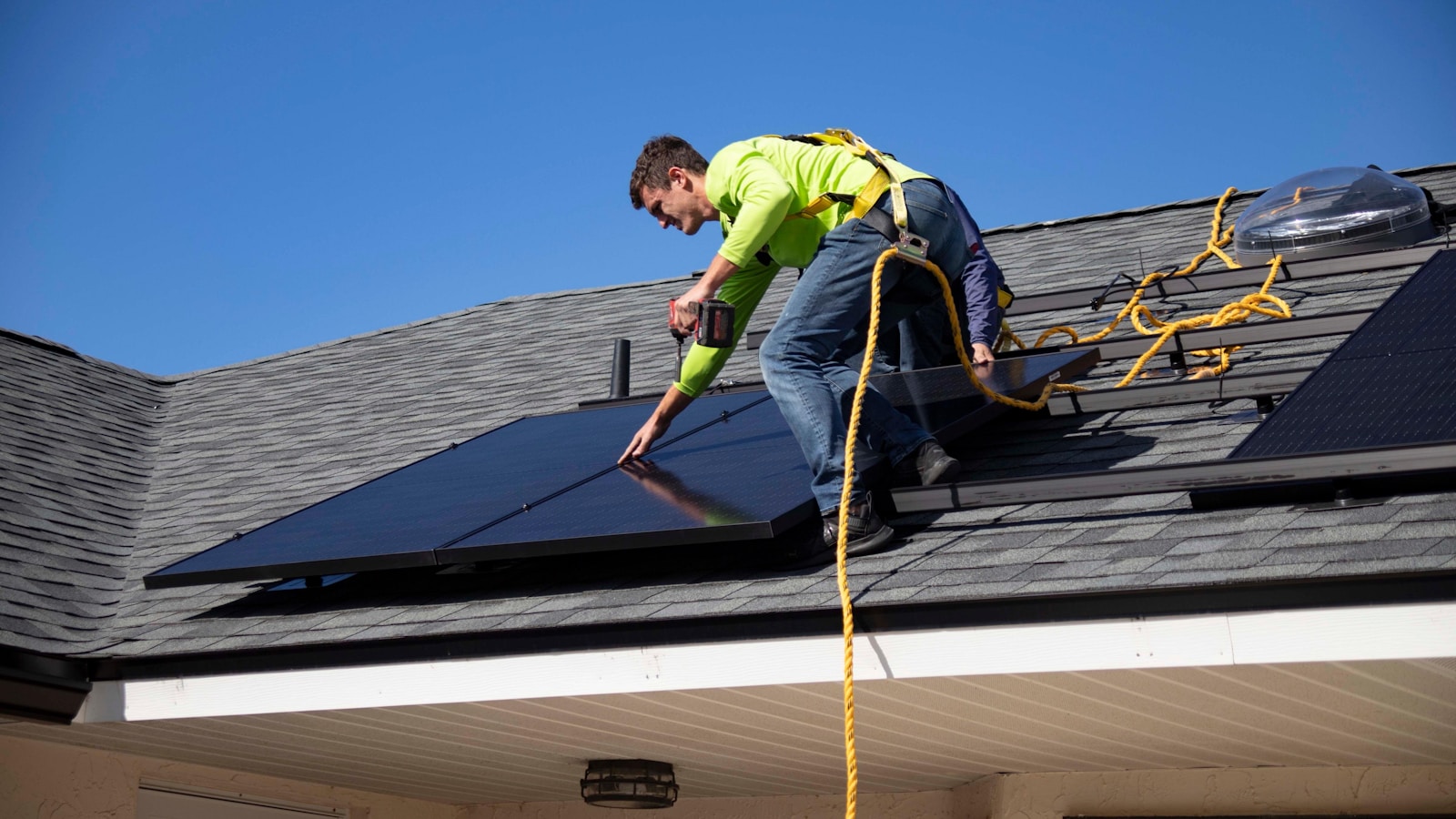
Support for wider adoption is also high. More than two-thirds of those surveyed (68%) said they would back a government requirement for solar panels on all newly built homes.
The research comes ahead of the expected publication of the Future Homes Standard, which will introduce tougher energy-efficiency rules for new properties. Rooftop solar is widely expected to play an important role in helping developers meet the new requirements.
Among several clean-energy technologies, solar panels ranked as the feature people most want to see included in new homes.
According to the survey:
- Solar panels: 72%
- Heat pumps: 41%
- Electric vehicle charging points: 41%
- Battery storage: 38%
Solar panels were also found to influence purchasing decisions. Around two-thirds of respondents (66%) said they would consider paying a slightly higher purchase price for a new home if it meant lower energy bills over time.
More broadly, four in five people (80%) said homes that allow them to generate and manage their own electricity are appealing. Meanwhile, 85% said predictable or fixed energy costs are an important factor when choosing a property.
Despite strong interest in energy-efficient housing, awareness of the Future Homes Standard remains limited. Only 13% of survey respondents said they had heard of the policy.
However, the research suggests there is widespread support for stronger regulation. Nearly nine in ten people (87%) said government policy should ensure new homes are designed to reduce household energy bills.
A typical newly built home without additional energy technologies currently spends around £1,797 per year on electricity and heating.
Installing the minimum level of solar required under existing building regulations can reduce annual bills by around £100. However, combining larger solar installations with battery storage, a heat pump and smart energy controls could significantly cut costs.
According to estimates linked to E.ON’s ‘Lower Bills, Built In’ proposition, a fully electrified home powered largely by renewable energy could see annual energy costs fall to about £600, illustrating the potential impact of integrated low-carbon technologies.
Chris Norbury, CEO of E.ON UK, said: ‘It is clear people expect low-carbon technologies as standard in new-build houses. They are switched on to what smart home solutions can do for them, and our research shows they understand solar panels can help maximise savings by generating the energy needed to make the most of other assets such as batteries and heat pumps.
‘The Future Homes Standard is a vital opportunity to ensure new houses aren’t just energy efficient on paper, but designed to help people take control of their energy use and lower their bills. This cannot be achieved without solar panels. By mandating solar panels in quantities that deliver sufficient generation for each property, the government has an opportunity to help people significantly cut their energy bills while reducing network pressure, increasing energy security and creating more green jobs.’
Leave a Reply