















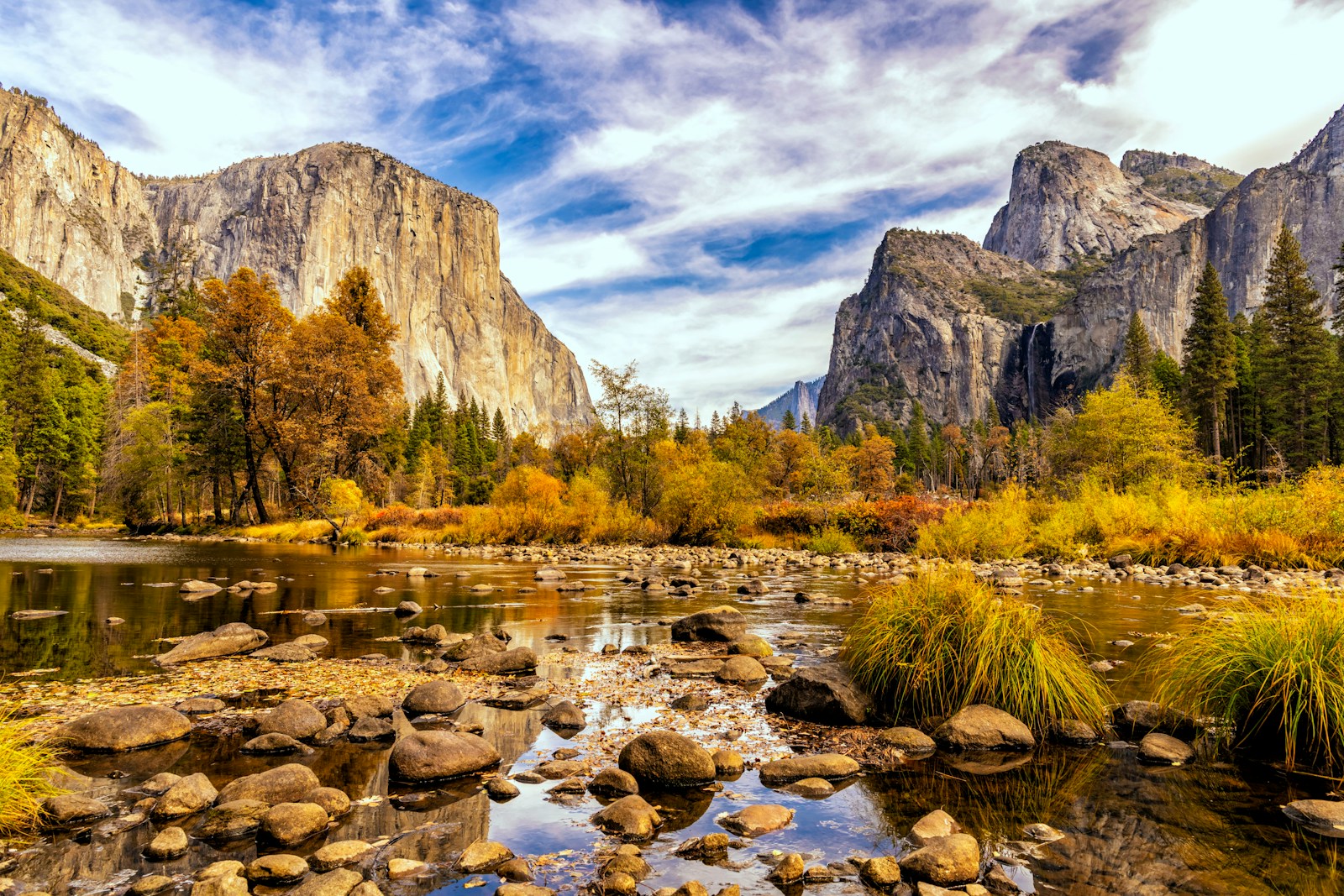
Some of America’s most iconic national parks face significant wildfire exposure this summer, with climate modelling projecting more than 32,000 acres at risk across Yosemite, Sequoia, Kings Canyon and the Great Smoky Mountains before the end of August.
Conditions heading into the peak fire season are causing the concern. California’s Sierra Nevada snowpack collapsed to just 18% of its average level as of 1st April 2026, the second lowest on record, following an exceptionally hot and dry March.
Snowpack is the snow that builds up on the ground over winter, acting as a natural reservoir. As temperatures rise in spring and summer, the snow melts gradually and releases water into rivers, streams and soil, keeping landscapes moist.
When snowpack is low, as it is in the Sierra Nevada, the land dries out earlier and faster than usual, turning vegetation into fuel that can ignite and spread fire much more readily.
The projections come from Artio, a carbon insurance firm specialising in climate risk modelling, which used historical satellite fire data alongside climate variables including temperature, humidity, wind speed and rainfall to simulate how fires could spread across different terrains and vegetation types.
The analysis was run across multiple internationally recognised climate scenarios to capture a range of possible outcomes rather than relying on a single projection.
Of the four parks assessed, Sequoia National Park faces the highest proportional risk, with around 7,080 acres — (around 1.74% of the park) projected to be at risk.
Yosemite has the largest absolute area – 11,610 acres -under threat, while Kings Canyon faces around 10,822 acres of exposure and the Great Smoky Mountains around 3,160 acres.
The researchers point out that while percentage figures may appear modest in isolation, the ecological stakes are considerable. Yosemite, Sequoia and Kings Canyon are home to some of the oldest forest systems on earth, including ancient old-growth trees that have accumulated immense biodiversity value and carbon stocks over centuries. Recovery from severe fire events in such ecosystems can take decades.
The potential emergence of El Niño conditions this year is expected to bring heightened weather variability and further elevate wildfire risk across the region.
In total, Artio’s modelling identifies more than 130 km2 across the four parks where fire risk converges across multiple climate scenarios.
Bilal Hussain, CEO and Co-founder, Artio said: ‘Wildfire risk is becoming increasingly easy to predict, driven by more precise tree species mapping and AI-enabled analysis. This kind of modelling allows us to move beyond broad warnings and pinpoint where fires are most likely to take hold, turning climate risk into something that can be clearly understood and managed.
‘As climate variability intensifies, the threat to national parks needs to be addressed. Through measurable and geographically at-risk signals, stakeholders have a window to deploy preventative measures before damage occurs.’
Photo: Rakshith Hatwar
Leave a Reply