



















A new study suggests that as countries across Asia clean up their air, the South Asian summer monsoon, upon which over a billion people depend for water and agriculture, is likely to strengthen. But the size and even the direction of that change depends heavily on which country is doing the cleaning up.
The research, led by Ankit Bhandekar of the University of Reading along with a large international team of climate scientists, draws on a set of climate model experiments called the Regional Aerosol Model Intercomparison Project (RAMIP).
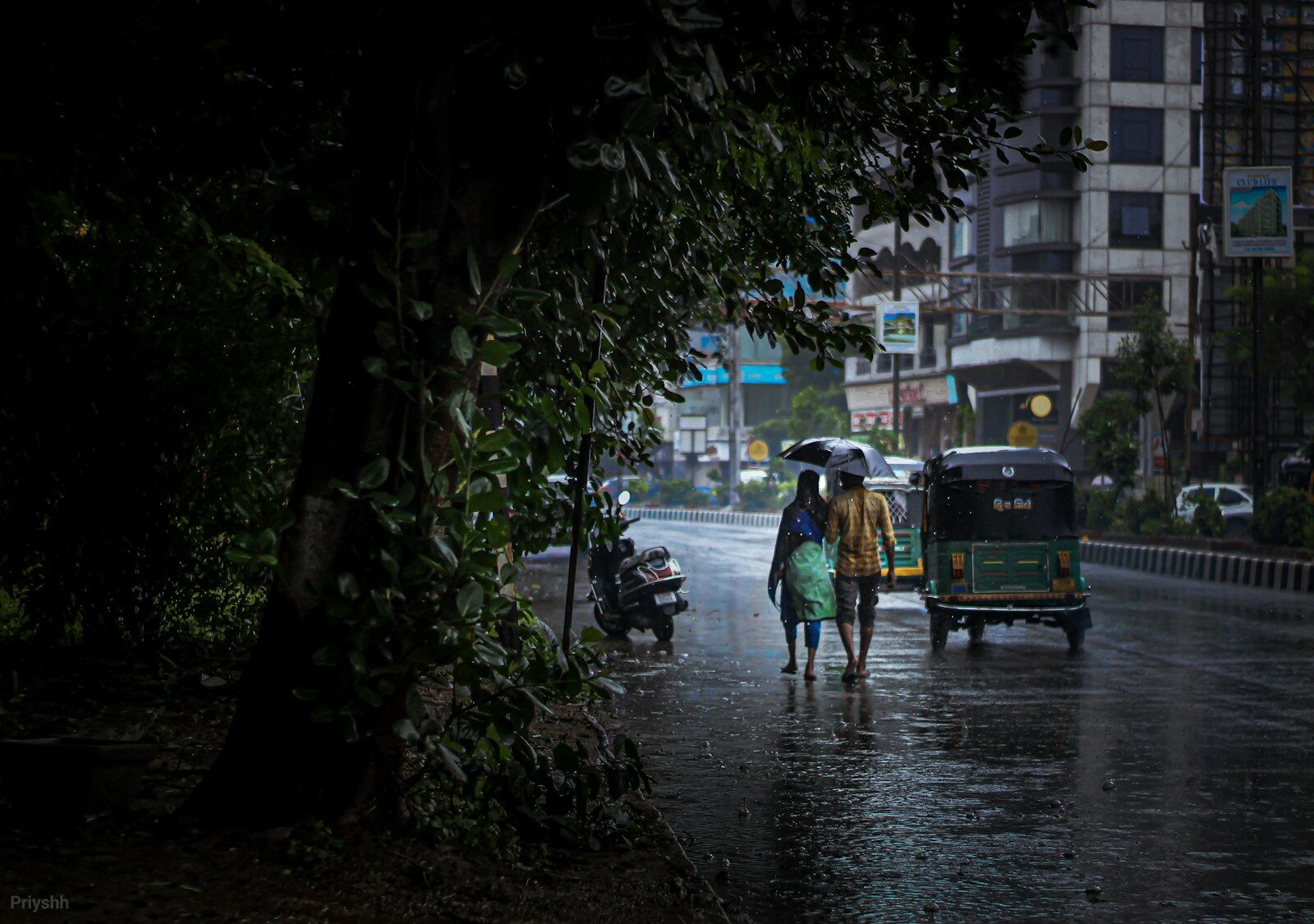
While aerosols are a major cause of air pollution, they also influence climate by scattering or absorbing sunlight and altering cloud behavior.
Unlike greenhouse gases, which mix globally and warm the planet fairly uniformly, aerosols are short-lived and their climate effects are concentrated near their source, while also reaching distant regions through atmospheric teleconnections. As nations tighten air-quality regulations in the coming decades, the researchers wanted to know how monsoon rainfall would respond depending on whether the pollution cuts happen in South Asia, East Asia or globally.
Using ten different climate models, the team found that reducing aerosol pollution within South Asia itself produces a modest boost to monsoon rainfall, particularly over the northern Bay of Bengal, the Western Ghats mountains and the Indo-Gangetic Plain.
Cutting aerosols worldwide produces an even larger rainfall increase, because it also shifts global atmospheric circulation patterns in ways that favour more moisture reaching South Asia.
Reducing pollution in East Asia alone, by contrast, showed uncertain and sometimes opposite effects, occasionally suppressing rainfall over parts of India, a result the researchers say reflects genuine scientific uncertainty about how emissions in one region ripple across the atmosphere to affect weather in another.
Air pollution causes millions of premature deaths across Asia each year, so emission cuts must remain urgent health priority. But because the same cuts can reshape rainfall far beyond national borders, the authors argue that decisions about air quality increasingly need to be treated as a shared, regional issue rather than one country’s problem alone.
Bhandekar said: Cleaning up pollution is good news almost everywhere it happens, but our findings show one country’s clean air plan can quietly cost another country’s rain.
‘Millions of farmers across India depend on monsoon rain that starts with decisions made thousands of miles away. If China and India coordinate their air quality plans, rather than acting in isolation, they have a better chance of avoiding these unintended tradeoffs.’
The full research can be read here.
Photo: Priyash Vasava
Leave a Reply