



















Scented cleaning products can create invisible air pollution indoors, with nanoparticles forming at levels comparable to, or greater than, those experienced near busy roads, new research suggests.
A research team led by Brandon Boor, an assistant professor of civil and construction engineering at Purdue University, found that fragrances in both conventional cleaning products and botanical, essential oil-based products can react rapidly with ozone in the air to form ultrafine particles.
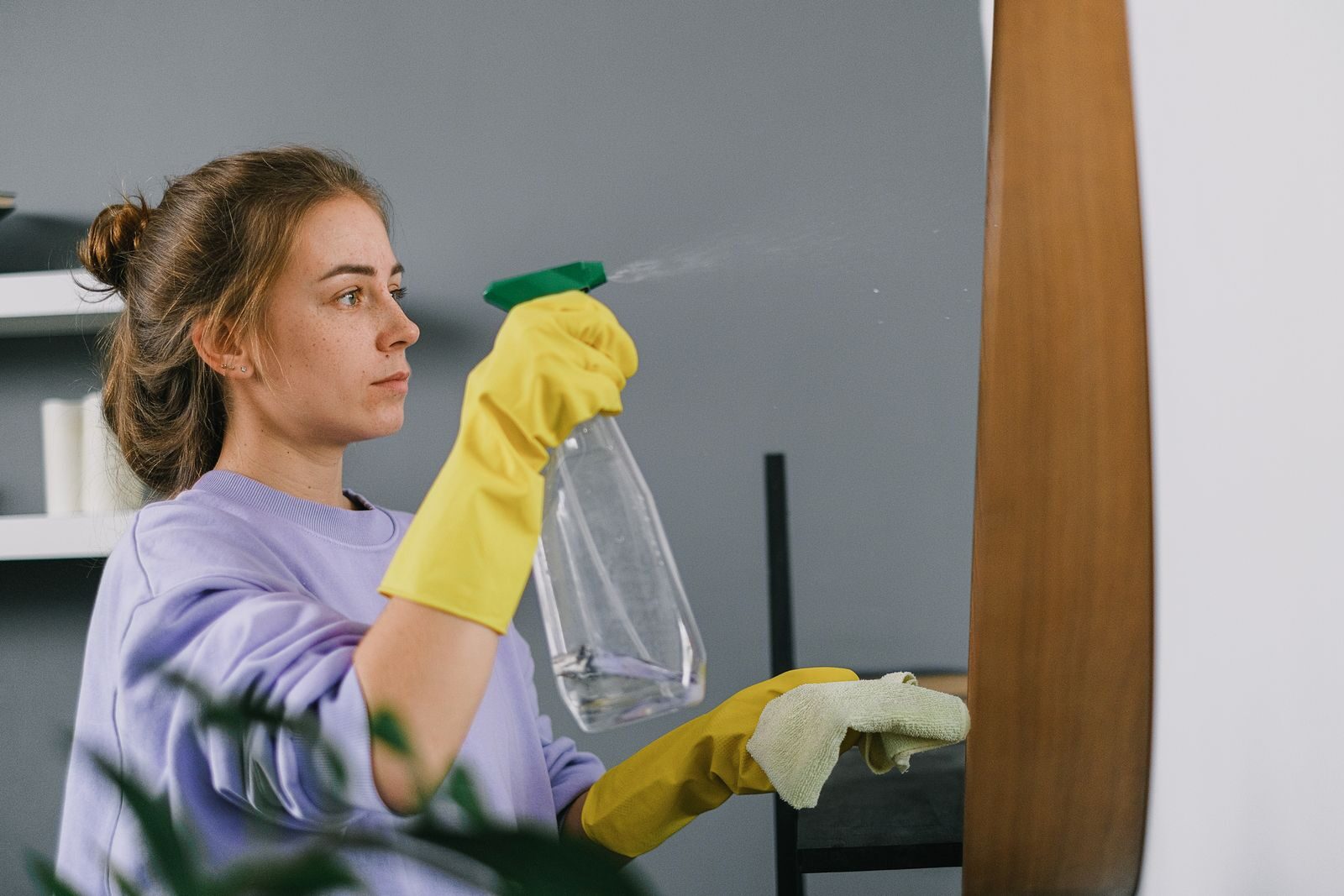
The researchers tested scented cleaning liquids, disinfectant sprays and wipes in a model house at Purdue University, which includes a kitchen, bathroom and wood flooring.
They found that activities including mopping, spraying and wiping surfaces generated billions or trillions of nanoparticles, depending on the product used. Most were between 1 and 30 nanometres wide, making them small enough to penetrate deep into the respiratory system.
Significantly, the particles are also small enough to be missed by many domestic air quality monitors.
Boor said the findings highlighted a potential trade-off between cleaning surfaces and indoor air quality: ‘Importantly, cleaning removes viruses and bacteria from surfaces, but it can also generate invisible air pollution. There’s no visible dust or smoke in the air, but these particles are forming.’
The study focused on terpenes, chemical compounds commonly used to create fragrances. These include pinene, associated with pine, limonene from citrus, thymol from thyme and linalool from lavender.
As Boor pointed out: ‘Clean air should not smell like highly concentrated citrus fruit. It should not really smell of anything.’
While similar chemical reactions occur outdoors, the researchers said terpene concentrations can be much higher when scented cleaning products are used indoors. They found particles could form within minutes of cleaning.
Boor said: ‘By the time you finish cleaning up an indoor space, you’ve already formed a lot of nanoparticles and inhaled them.’
The researchers said the potential health effects require consideration because ultrafine particles can deposit throughout the airways and deep in the lungs, where they may contribute to irritation and inflammation.
A separate study by Boor and Purdue professor Ernest Blatchley also examined the use of germicidal far-UV (UV-C) lamps alongside scented cleaning products. The lamps can generate ozone, which reacted with fragrance compounds and led to even greater particle formation in the researchers’ model house.
Boor said the research was intended to inform consumers rather than alarm them. He recommends choosing low-fragrance or fragrance-free cleaning products, avoiding the use of several scented products during the same cleaning session and improving ventilation by opening windows or using exhaust fans.
Photo: SHVETS production
Leave a Reply