

















Urban tree planting is quite the thing at the moment and for many good reasons: they provide shade, catch dust and absorb pollutants. In an over-heating world they’re a simple way of making life slightly more bearable.
But, as they say, if something seems too good to be true… Some trees release natural chemicals that, when mixed with sunlight and car exhaust, can actually create ground-level ozone and a new study from Beijing shows that this problem is bigger than previously thought, and it gets much worse on hot days.
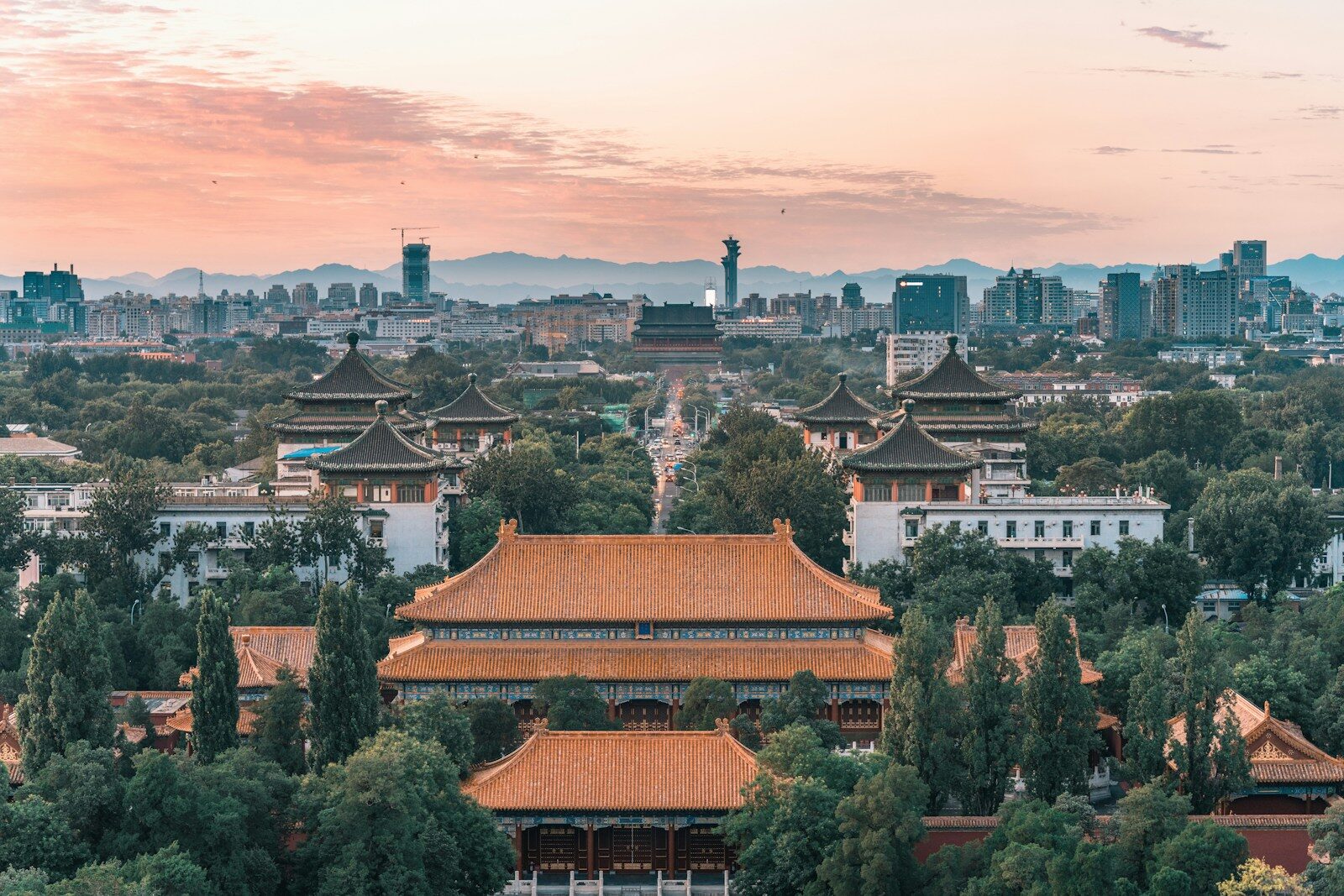
Researchers set up real-time air monitors on a 100-meter tower in Beijing. They tracked chemical signals every fraction of a second for three months. What they found was surprising: although trees produced only about 10% of all volatile organic compounds (VOCs) in the air, these natural emissions caused nearly half of the chemical reactivity that drives ozone formation.
The main culprit was isoprene, a chemical released by trees such as willows and poplars. When temperatures rose from 20°C to 35°C, the reactivity of tree-emitted VOCs jumped seven to eight times, while human-made VOCs (from paints, fuels, and cleaners) only increased by 40%. On extremely hot days, trees became the dominant ozone-maker, responsible for up to 74% of the reactive chemicals in the air.
Why Beijing? The city has planted many isoprene-emitting species, about 35% of its trees fall into this category. Compared to other cities worldwide, Beijing’s isoprene levels were several times higher, even where greenery was similar.
Thomas Karl, co-author and atmospheric physicist at the University of Innsbruck, explains: ‘In European cities, we find considerably fewer tree species that release isoprene. Native tree species often emit monoterpenes, which are also ozone-forming, but are released in smaller amounts than isoprene.’
But the study’s authors stress this is not an argument against urban trees. Instead, they suggest cities should choose low-emitting species when replacing old trees. In Beijing, swapping just 10% of high-emitting trees for better ones could cut isoprene emissions by nearly 30%.
They also emphasise that cutting nitrogen oxides (NOx) from cars and industry remains vital, as ozone needs both tree chemicals and NOx to form. On hot, sunny days, controlling NOx becomes even more important.
Karl concluded: ‘The findings do not call for less urban greening or the removal of mature trees. Instead, they suggest adding BVOC emission potential to tree-selection criteria.’
The full research can be found here.
Photo: zhang kaiyv / Unsplash
Leave a Reply