












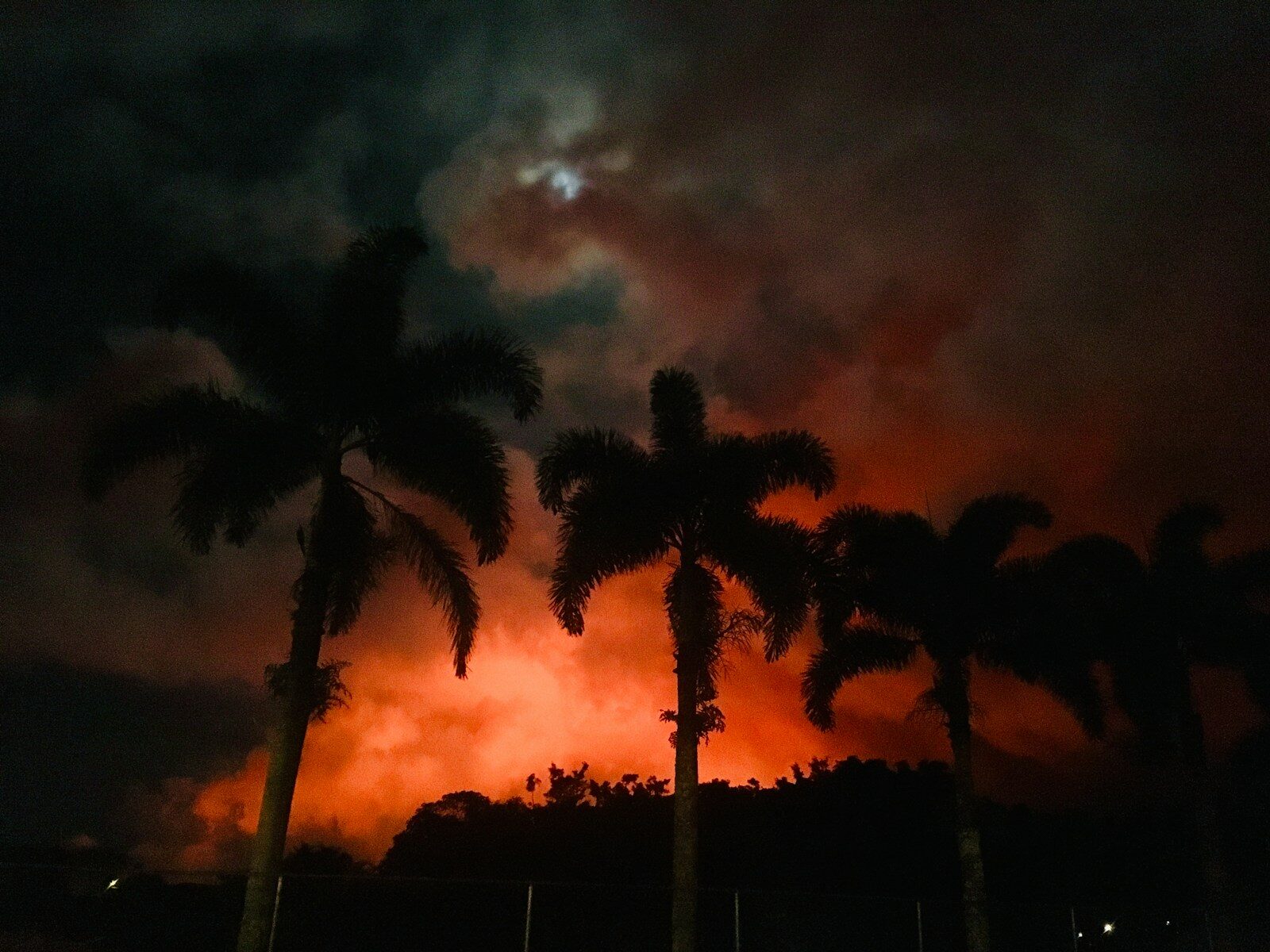
People living on Maui had elevated levels of several metals in their bodies months after devastating wildfires swept through communities on the Hawaiian island, with higher exposure also linked to abnormal lung function, new research has found.
The study, led by researchers at the University of Hawaiʻi at Mānoa, analysed urine samples from around 1,400 adults between six and 18 months after the August 2023 fires. Researchers tested for 24 metals and carried out standard breathing tests during the same visits.
It was found that participants had substantially higher concentrations of several metals. Antimony levels were almost 40 times higher than US reference values, while manganese was 3.8 times higher, barium 2.3 times higher and arsenic 2.2 times higher.
Higher combined exposure to metals was associated with several measures of abnormal lung function. Arsenic, cadmium, copper and antimony appeared to contribute particularly strongly to these associations.
The researchers caution that the findings do not prove the wildfire was responsible for all of the contamination detected.
Maui did not have biomonitoring data from before the fires, making it impossible to determine precisely how much of the metal burden resulted from the disaster. Exposure may also reflect Hawaii’s geology, historic agricultural and industrial activity, diet and other environmental sources.
However, the fires may have introduced additional contaminants while disturbing and redistributing pollutants already present in soil, dust and buildings.
Ruben Juarez, Maui Wildfire Exposure Study (MauiWES) co-director and professor of health economics at the University of Hawaiʻi at Mānoa, said: ‘The biggest message is that exposure may not end when the smoke clears. What we are likely seeing is a complex combination of exposures – some that may have been present for years and others that may have been generated or remobilized by the wildfire.’
The researchers say the Maui fires also demonstrate why the health effects of urban wildfires can differ from those of fires that mainly burn vegetation.
When fires destroy homes and infrastructure, they can burn materials including electronics, vehicles, treated timber and electrical systems, producing complex mixtures of contaminants. Pollutants already present in the environment can also be disturbed and spread through ash, dust and soil.
Alika Maunakea, MauiWES co-director and professor at the UH Mānoa John A. Burns School of Medicine. said: ‘We have traditionally thought about wildfire exposure primarily through the lens of smoke. But when an entire community burns, we are dealing with a much more complicated exposure environment.
‘The biology is telling us that we need to understand not only what was in the air during the fire, but what was already present in the landscape, what the disaster may have mobilised, and what is actually getting into people’s bodies during the months and years that follow.’
The study also found differences between areas of Maui. Lahaina residents had relatively high levels of arsenic and cadmium, while thise in Wailuku/Kahului had the highest concentrations of copper, iron and molybdenum. Lung-function abnormalities also varied between communities.
The findings, published in the Proceedings of the National Academy of Sciences on 28 September, point to the need for longer-term monitoring following major urban wildfires, including testing of soil, dust and ash alongside health surveillance.
A new five-year, $3.6 million National Institute of Environmental Health Sciences-funded project will now investigate the sources of contamination. Researchers plan to follow about 1,000 Hawaii residents, combining environmental sampling, biological testing and assessments of heart and lung health.
The aim is to establish which exposures predated the fires, which were left behind by historic contamination and which may have been created or redistributed by the disaster.
Juarez said: ‘We know these findings may be difficult for families who have already been through so much. Our responsibility is not simply to publish the science. It is to help people understand what we are finding, return information to the community, connect people with care when they need it, and continue learning alongside Maui as the community recovers.’
Photo: Madeline Onassis
Leave a Reply