

















The number of car journeys made to London schools has fallen to its lowest level in a decade, with new data showing more children are walking, wheeling and cycling to school.
Figures from Transport for London (TfL) show that car journeys to and from school fell by 16% between 2015/16 and 2024/25, from around 461,000 to 387,000 journeys. That equates to an average of 73,915 fewer car trips on each school day than a decade ago.
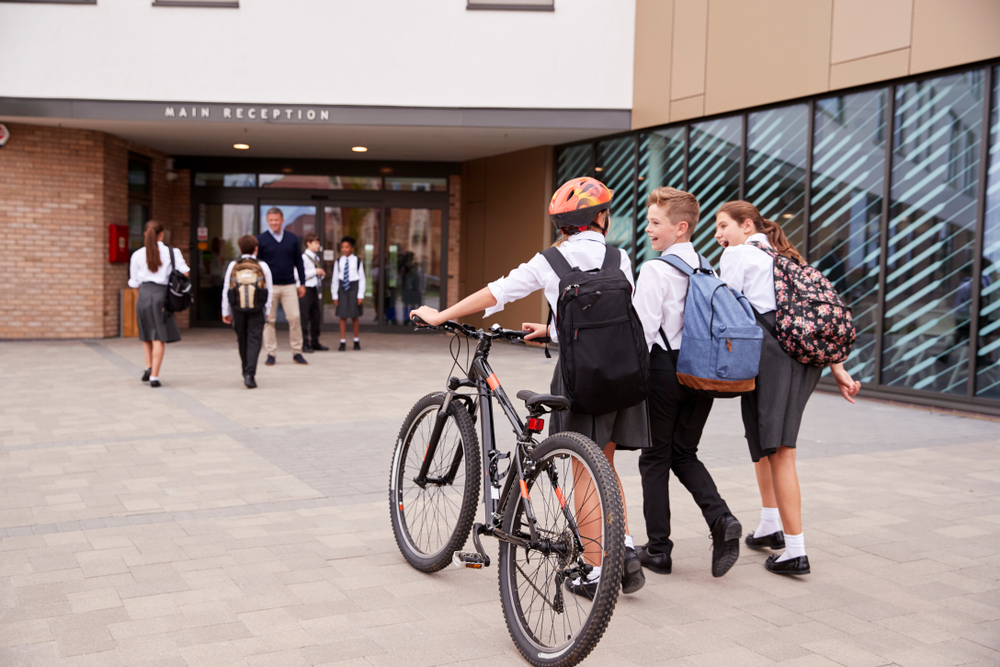
In 2024/25, two-thirds (66%) of primary school-aged children travelled to school using active travel.
The figures have been highlighted by London Mayor Sadiq Khan as evidence of changes introduced during his time in office, including the expansion of School Streets, cycle training and safer routes to school.
There are now more than 870 School Streets across the capital, compared with none in 2016. The schemes restrict motor traffic outside schools during drop-off and pick-up times, with the aim of creating safer and cleaner environments for children.
Monitoring by Breathe London has found that School Streets can reduce nitrogen dioxide levels by up to 23% during morning drop-off.
TfL has an ambition to expand the schemes to 1,000 schools, while the Mayor’s updated Vision Zero Action Plan includes plans to extend School Streets to secondary schools.
Cycling has also increased, with more than 196,000 children receiving free cycle training through TfL’s Bikeability programme between 2021/22 and 2025/26 and more than 90% of London schools now have scooter and/or cycle parking.
Almost half of the capital’s schools are also signed up to TfL’s Travel for Life programme, which provides children with activities covering active travel, road safety and air quality. The programme is being used by more than half a million children.
The Mayor’s Greener Schools programme has also supported more than 40 schools with measures including solar panels and LED lighting, with participating schools collectively saving around 470 tonnes of carbon a year.
Sadiq Khan said: ‘Whether it’s walking or wheeling, active travel is excellent for children’s physical and mental health, increasing their confidence and helping them focus in the classroom – and fewer cars on the road also means less air pollution in their lungs.
‘In the past ten years I’ve prioritised making it easier and safer for children to walk, cycle, scoot and wheel safely and independently, and these figures show my policies are working, with more young Londoners than ever reaping the benefits of active travel.
‘But we’re not complacent. I remain committed to building on our progress and making it safer, easier and more enjoyable for even more Londoners to get around the capital on foot or by bike. This is vital not just for our health, but also for our environment and our children’s futures, as we continue building a greener and better London for everyone.’
Claire McDonald, co-founder, Solve The School Run, said: ‘This is great news for the children of London. Less driving to school means fewer cars on the road – giving the 66% of children who walk and cycle to school everyday more space, less danger, and cleaner air.
‘As a London-wide parent network, we have seen how school streets have transformed our children’s journeys to school. We experience how fewer cars mean more movement, less stress and increased independence for our kids.
‘At Solve The School Run, we think every child deserves the freedom and health benefits a school street brings.’
Leave a Reply