
















A major air quality monitoring project is helping conservationists identify where traffic pollution is causing the greatest damage to Dorset’s internationally important heathlands, with restoration work already underway at several sites.
Dorset Council and Bournemouth, Christchurch and Poole Council have been working alongside volunteers to gather new data on pollution levels affecting some of the county’s rarest habitats.
Dorset’s lowland heathlands are among the UK’s most threatened landscapes and are home to a wide range of rare birds, reptiles, insects and plants. However, experts warn these fragile ecosystems are especially vulnerable to nitrogen pollution from road traffic and agriculture, which can alter soil conditions and damage sensitive species such as lichens and mosses.
Between August 2025 and January 2026, 15 trained volunteers collected monthly air samples at 14 heathland locations, focusing particularly on sites close to major roads where emissions are likely to have the greatest environmental impact.
Monitoring tubes were used to measure levels of nitrogen dioxide and ammonia, two pollutants strongly linked to vehicle emissions and farming activity.
The results showed ammonia levels exceeded thresholds known to harm lichens and mosses at every site monitored. Some areas were also approaching pollution levels capable of affecting wider vegetation communities.
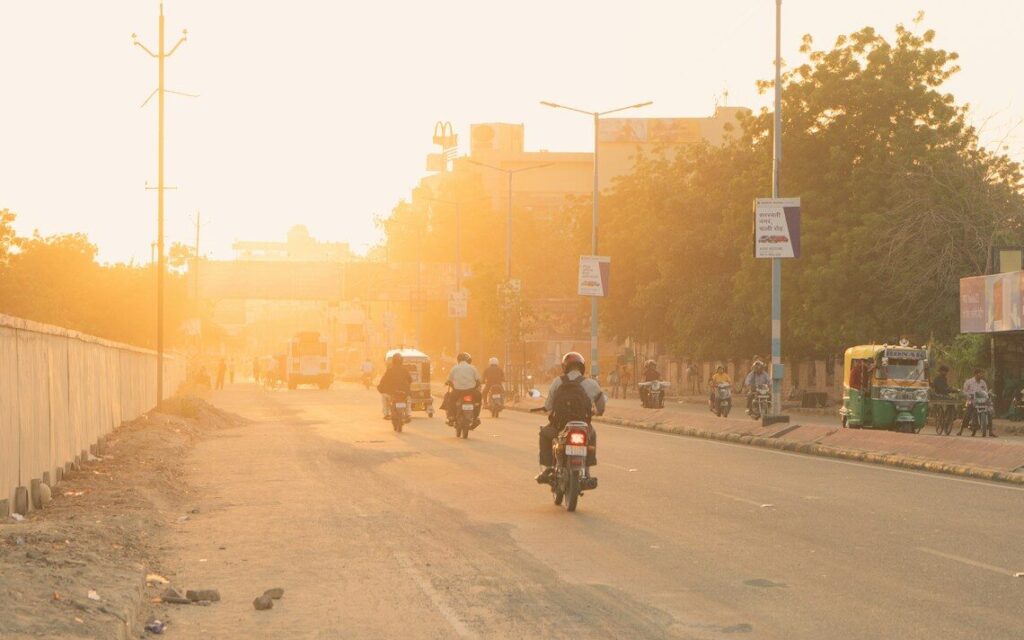
Although NO2 remained within national legal limits, the study confirmed that traffic remains a significant source of nitrogen pollution on Dorset’s heaths.
Sites near the A338, A35 and Alderney and Wallisdown roads recorded some of the highest levels of pollution.
The findings are now being used to prioritise restoration work and guide future planning decisions. Heathlands have been classified as high, medium or low risk based on pollution data, traffic volumes and habitat condition.
Where nutrient enrichment has been identified within 200m of busy roads, land managers will carry out targeted restoration work to remove excess nutrients from the soil.
This includes cutting back invasive vegetation such as brambles, pine, silver birch and bracken, which store nutrients in their biomass. In some locations, the organic-rich top layer of soil will also be removed to create nutrient-poor bare ground better suited to heathland species.
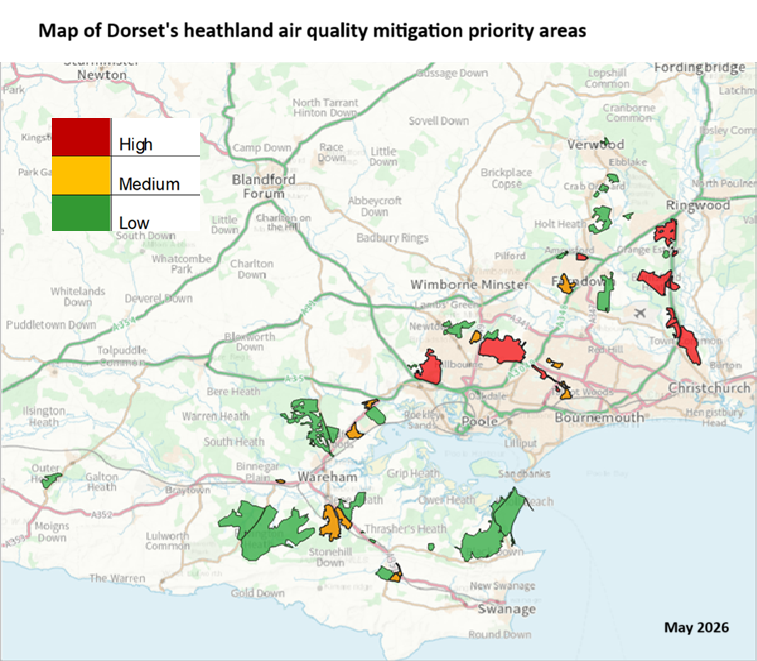
Vegetation surveys have also been completed to assess habitat condition and track the long-term effects of pollution.
Restoration projects have already begun at Avon Heath (main picture), Upton Heath and Matchams View, with further schemes planned annually as part of wider efforts to support the goals of Dorset’s Local Nature Recovery Strategy.
Councillor Andy Hadley, BCP Council Cabinet Member for Climate Response, Environment and Energy, said: ‘Moving away from fossil fuel vehicles is key to improving air quality for both people and wildlife. This work highlights the impact of traffic on our fragile heathlands, particularly around the conurbation and busy arterial routes.
‘Protecting our heathlands is a shared responsibility, and this project shows how collaboration and citizen science can help focus efforts to safeguard these vital habitats for the future.’
Leave a Reply