
















The degree to which disadvantaged communities in California suffer poor air quality compared to their affluent neighbours has fallen, but not for the right reasons.
Air quality in California has improved overall since the mid-2000s, but new research suggests that apparent progress in reducing pollution inequities may be misleading.

A study examining PM2.5 exposure from 2006 to 2018 found that while total PM2.5 levels declined, largely due to regulations targeting traffic and industrial emissions, longstanding disparities by race, ethnicity and socioeconomic status persisted.
Communities with lower socioeconomic status, as well as non-Hispanic Black and Hispanic populations, consistently experienced higher pollution exposure throughout the study period.
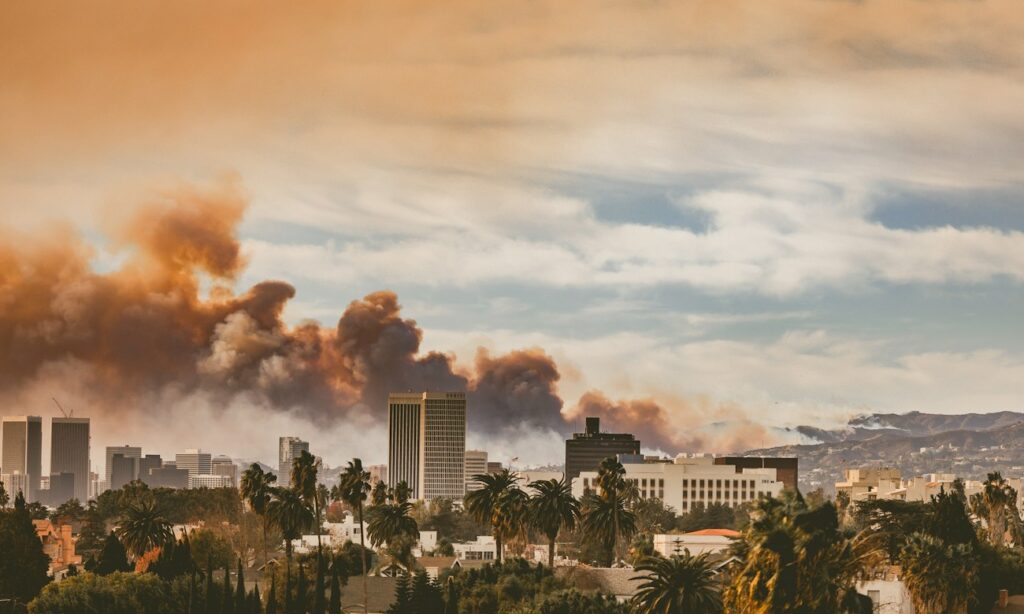
At the same time, wildfires emerged as a major and increasingly influential source of PM2.5, with sharp spikes in exposure during severe fire years such as 2008 and 2018. Unlike industrial pollution, which is concentrated in urban and often disadvantaged areas, wildfire smoke disperses more widely and unpredictably.
The study found that during high-fire years, this smoke disproportionately increased PM2.5 exposure in areas with whiter and more affluent populations. This influx of wildfire pollution artificially narrowed the overall exposure gap by raising pollution levels for groups that traditionally breathed cleaner air.
The study estimates that between 9.4% and 59.5% of the observed reduction in total PM2.5 disparities can be attributed not to cleaner air in disadvantaged communities, but to rising wildfire smoke exposure among populations that were previously less exposed.
For example, it was seen that wildfire smoke accounted for 44.3% of the narrowing gap between Hispanic and non-Hispanic populations.
‘Wildfire PM2.5 has exaggerated the progress in reducing inequities in traditional sources of PM2.5,’ the authors state. The danger, they warn, is that this masking effect could lead to complacency, as the underlying, systemic injustice of unequal exposure to industrial pollution persists.
As climate change drives more frequent and intense wildfires, the study warns that targeted efforts remain essential to reduce sources of air pollution in disadvantaged communities, or true inequities in exposure will continue to be obscured rather than resolved.
The full research can be read here.
Photo: Mike Newbry
Leave a Reply