
















More than 40,000 young children are among 174,694 people who have suffered acute respiratory infections in parts of Indonesia affected by forest and land fires, as air pollution across the Kalimantan region reaches hazardous levels.
The Health Ministry said Tuesday that 40,363 of the respiratory cases recorded since 18th August involved children under five.
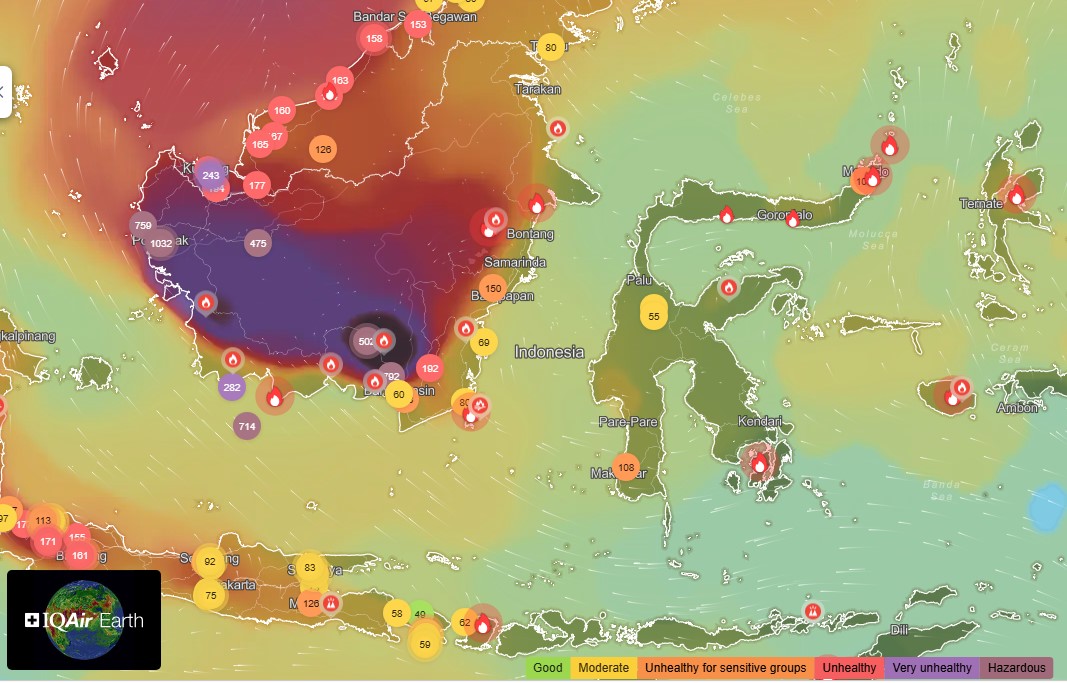
The figures come as Indonesia’s Meteorology, Climatology and Geophysical Agency (BMKG) reported dangerously high levels of PM2.5 matter across Kalimantan, where thick haze has persisted amid widespread fires that have been raging for weeks..
Measurements taken from Monday morning to Tuesday morning showed that several locations recorded average PM2.5 concentrations in the ‘very unhealthy’ or ‘hazardous’ categories.
Palangka Raya recorded the highest average concentration, at 695.4 μg/m³, with a peak reading of 1,465.3 μg/m³ – a staggering level given that under Indonesia’s air-quality standards, an average daily PM2.5 concentration above 250.5 μg/m³, is classified as hazardous.
The Health Ministry said it was strengthening health services in affected areas, providing oxygen concentrators, oxygen cylinders and masks, while deploying additional medical personnel and monitoring respiratory infections.
Then Suyanti, the ministry’s director of environmental health said: ‘We are mobilising logistical assistance in the form of oxygen concentrators, masks, oxygen cylinders, and preparing a Health Laboratory to help conduct air quality testing. We are also mobilizing Health Reserve Workers (TCK) in districts and cities.’
The ministry has also recommended that local governments consider distance learning when air quality deteriorates, in an effort to reduce children’s exposure to wildfire smoke.
Greenpeace Indonesia forest campaigner Belgis Habiba, who recently returned from Pontianak in West Kalimantan, said pollution levels there were dramatically elevated.
At the end of last week she said: ‘The air is actually no longer fit to breathe’, adding that pollution levels were up to 20 times higher than in Jakarta.
Conditions have been so bad that Japanese helicopters sent in to fight the fires can’t do so because the level of smoke makes flying too dangerous.
Last week, indigenous and civil society groups in West Kalimantan filed a class-action lawsuit accusing the government of failing to prevent and adequately respond to severe wildfires and resulting air pollution. The lawsuit seeks to have the fires declared a national disaster, while data indicates nearly 900,000 hectares have already burned across Indonesia this year, with fire activity expected to intensify in the coming months,
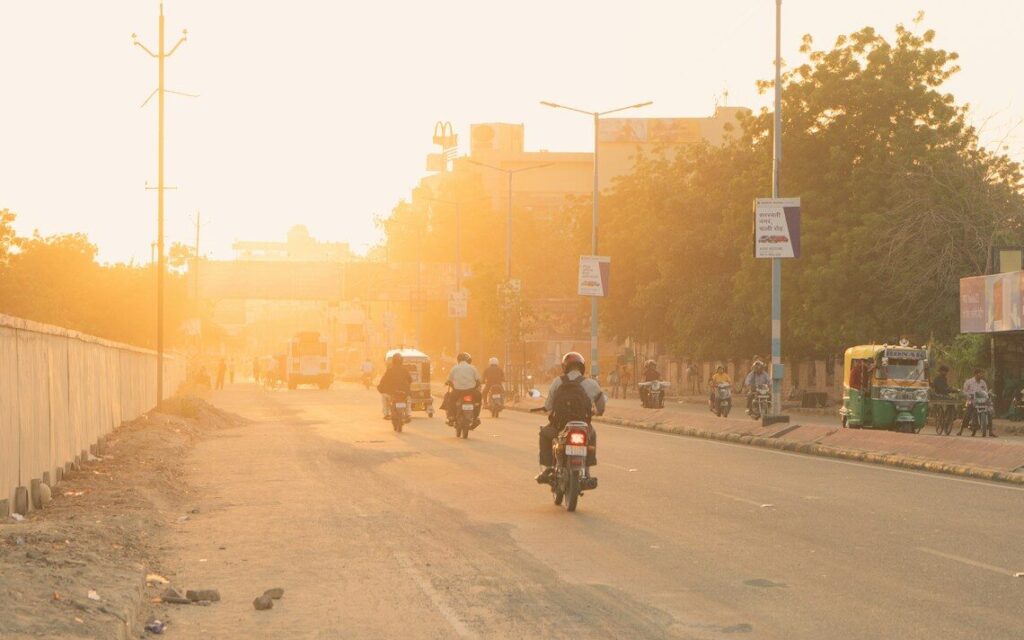
Photo: David Kristianto
Leave a Reply