

















Extreme heat and air pollution are increasingly occurring at the same time across India, raising concerns about the combined risks to public health, new research suggests.
A study by researchers at Hong Kong Baptist University examined heatwave and PM2.5 events across India between 2017 and 2024. The team found that these compound events became significantly more frequent after 2020.
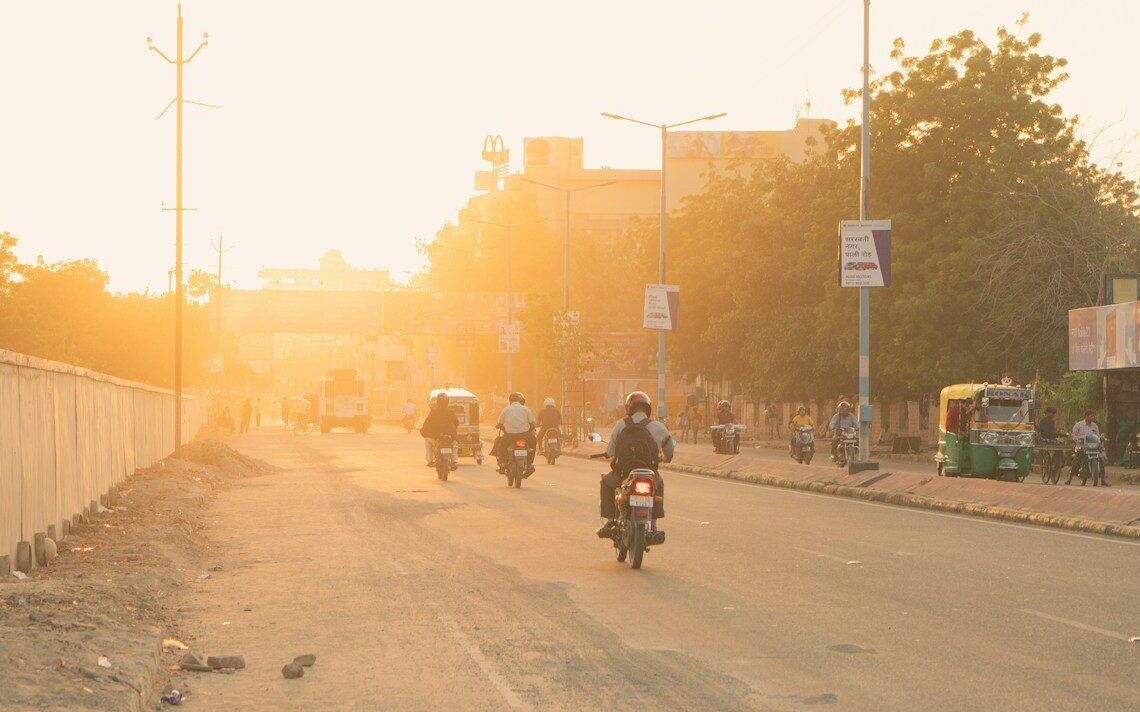
The trend was particularly notable in northern India, where, in April 2022, more than 70% of severe PM2.5 pollution episodes in the region occurred at the same time as heatwaves.
Researchers say large-scale weather patterns play an important role in bringing the two hazards together. An area of high-pressure circulation over northern India can intensify heat while also creating winds that transport pollution-forming chemicals into the region.
The hot, stagnant conditions can then accelerate chemical reactions in the atmosphere, increasing the formation of secondary organic aerosols (SOA) – a major component of PM2.5. The researchers found that SOA production was around 2.3 times higher during compound heat and pollution events.
Huibin Dai, lead author of the study said: ‘Most studies have focused on heat waves and air pollution separately. This study shows that large-scale atmospheric circulation can simultaneously intensify heat and promote secondary aerosol formation, creating favorable conditions for compound heat-PM2.5 extremes. It highlights an important pathway through which climate variability can influence both weather extremes and air quality.’
The findings suggest that tackling future air pollution will require more than reducing emissions. Changes in climate, weather patterns and atmospheric chemistry could also influence when and where pollution becomes most severe.
With climate change expected to increase the frequency of extreme heat, researchers say understanding these interactions will become increasingly important, particularly in densely populated areas.
Dai said: ‘The next step is to investigate how compound heat-PM2.5 extremes will evolve under future climate change and to quantify their impacts on human health. Ultimately, this work aims to better understand the mechanisms behind compound heat-PM2.5 extremes and provide scientific evidence to support early prevention, risk reduction, and climate adaptation.’
The full research can be read here.
Photo: Brett Clouser (@brettclouser)
Leave a Reply