

















An independent health assessment has revealed that residents living near Saxon Pit in Cambridgeshire, are experiencing a complex web of environmental stressors, with dust emerging as the most serious concern.
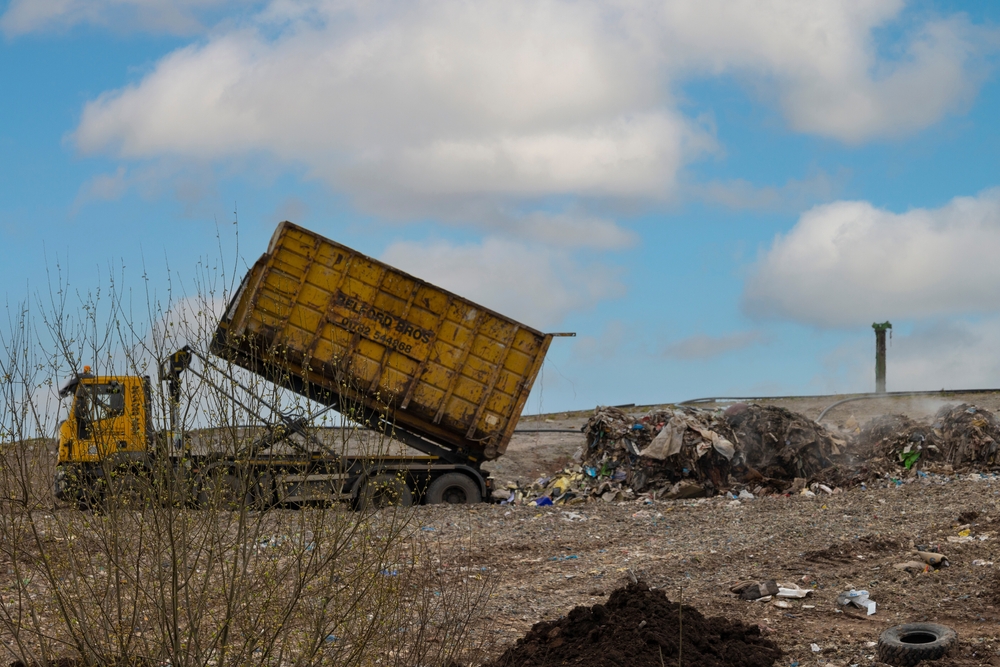
Saxon Pit is a former brickworks and clay quarry on the western edge of Whittlesey, Cambridgeshire, now operating as a waste management and aggregates site. Three businesses – one of which which processes incinerator bottom ash – operate there.
Back in 2020, the Environment Agency revealed that 122,858 tonnes of non-conforming waste – some containing hazardous contaminants – had been unlawfully buried in the pit between 2017 and 2018. The EA later decided the waste could stay there, a move that was predictably unpopular locally.
Residents have long complained of dust, noise and odours. In 2025 alone, the EA received 243 complaints. A January 2026 public health report found that air quality was not monitored at the site boundary and the chemical composition of dust had not been analysed. It concluded the regulatory system ‘does not instill public confidence.’
Exacerbating matters a planning application has been submitted to expand operations, including a near-doubling of throughput and HGV movements.
As a consequence of this widespread distrust and skepticism, Cambridgeshire County Council commissioned a Cumulative Health Impact Assessment (CHIA), the results of which have been published today (7th October).
238 residents were surveyed and 18 people living within a kilometre of the site were interviewed.
Dust was reported by 88% of respondents over the past year, while 73% of residents also reported concerns about perceived poor air quality. 65% were ‘very concerned’ that local air quality could affect their health. Nearly eight in ten (79%) said dust was worse than a few years ago.
The study’s central finding is that these stressors do not exist in isolation. Some 93% of respondents reported experiencing two or more environmental stressors simultaneously – averaging four out of eight possible issues including dust, air quality, odour, noise and traffic. Over eight in ten (82%) said the combined effect of multiple problems feels worse than each on its own, and 71% said the impact has built up over time.
Commenting in the report’s foreword, Sally Cartwright, Director of Public Health for Cambridgeshire, said: ‘This study provides clear evidence that residents experience cumulative impacts which affect aspects of their lives and wellbeing. Considering individual activities or exposures in isolation may not fully reflect how they are experienced by residents who live in the area.’
The research also highlighted stark health inequalities. Residents with a self-reported health condition or disability reported significantly worse outcomes: 40% experienced frequent sleep disturbance compared to 17% of those without, and 49% reported low wellbeing versus 13%. Those who spend most of the day at home also reported higher impacts.
While the study does not establish a causal link between the site and specific health effects, it documents a clear distance gradient for most stressors – noise impact, for example, fell from 51% within 200m of the site to 17% between 500m to 1km away.
The report also noted that 13 of 18 interviewees had reported problems to authorities, but four had stopped because they saw no visible change. Residents’ most common request was for independent testing of dust and air composition.
The quote used in our headline sums up the feeling of many of those surveyed and interviewed. Another added: ‘It’s noisy, but you get used to some things. Then another thing comes along and adds to it.’
Cambridgeshire County Council will now review the findings alongside its January 2026 public health report before deciding on any additional actions.
Leave a Reply