










Some of the world’s most polluted countries are receiving less than $2 per person a year in international funding to tackle air pollution, according to new research.
Pakistan, Nepal, Myanmar, Cameroon and the Democratic Republic of Congo were among five of the most polluted countries to receive the lowest levels of funding in 2024, according to the Clean Air Fund’s State of Global Air Quality Funding report.
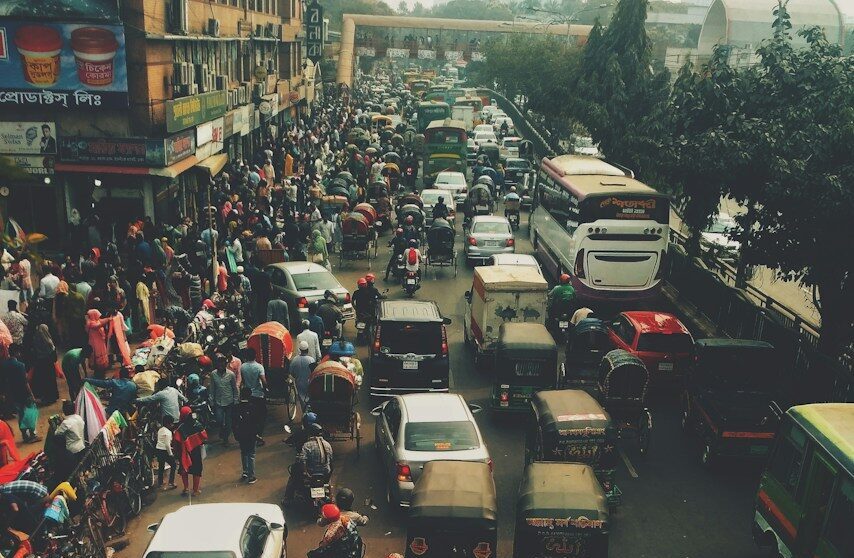
The analysis found that less than 1% of international development funding in 2024 was directed towards outdoor air quality projects, despite air pollution being responsible for almost eight million premature deaths every year.
The economic cost is also substantial, with air pollution estimated to cause losses equivalent to around 6% of global gross domestic product.
Sean Maguire, executive director of strategic partnerships at Clean Air Fund, said: ‘Air quality funding is not going where pollution exposure and health risks are greatest. Funding remains worryingly low, concentrated on a limited number of places, and misaligned with countries facing the greatest burden.
‘With development budgets under growing pressure, clean air objectives must be built into wider development investment, so every dollar works harder and delivers benefits for health, climate and economies at the same time.’
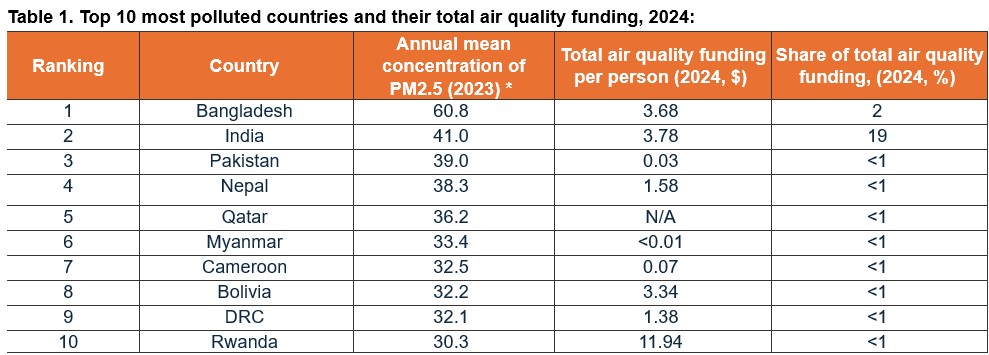
The report found that $4.7 billion was committed to outdoor air quality projects in 2024, an increase from the previous year and close to the 2022 peak. However, overall air quality funding fell by 6% during 2024, its first annual decline in five years.
Across the wider 2020-2024 period, $124.6 billion was committed to air quality initiatives, 9% more than the previous five-year period.
The research found major disparities in where the money goes.
Southeast Asia received $4.4 billion in outdoor air quality funding between 2020 and 2024, equivalent to $6.70 per person and more than a quarter of global funding.
But 97% of that money went to the Philippines and Indonesia, despite the report identifying Laos and Myanmar among the countries with some of the highest levels of fine particulate pollution in the region.
Laos, Myanmar and Timor-Leste received the lowest levels of air quality funding in Southeast Asia, according to the report.
Dr Fu Lu, Clean Air Fund’s regional director for Southeast Asia, said: ‘While it is positive that the air pollution challenges of Southeast Asia are being recognised, funding for the region cannot be limited to a small number of countries, leaving some of the most polluted places behind.
‘Investment in railways, public transport and cleaner mobility is demonstrating how better connectivity and economic development can go hand in hand with cleaner air. We need these benefits to be shared by many more people and places.’
The report also found that loans made up 89% of air quality funding between 2020 and 2024, potentially limiting access for countries with high pollution levels but little capacity to take on additional debt.
The Clean Air Fund is calling for clean air to be made an explicit objective of international development strategies and for more support to countries with high pollution but limited borrowing capacity.
It also wants investment prioritised towards measures capable of delivering rapid reductions in pollution, including action on black carbon and ozone-forming pollutants.
The findings come ahead of the annual meetings of the International Monetary Fund and World Bank Group in Bangkok from 12th to 18th October.
Clean Air Fund warned that the recent increase in funding could prove difficult to sustain as international aid budgets come under pressure. The latest figures also do not yet reflect the sharp contraction in official development assistance recorded in 2025.
Barbara Buchner, CEO of Climate Policy Initiative said: ‘Tracking where air quality finance actually flows is an essential first step to addressing the gaps. Our analysis shows that money is not yet consistently following need, and that countries facing some of the highest pollution levels often have the least access to finance. As aid budgets tighten, funders need clear evidence to better target resources where they are needed most.’
The full report can be read here.
Photo: Niloy Biswas
Leave a Reply